
Key Takeaways
- Accounting depreciation is not tax-deductible in Malaysia. Capital allowances are the tax relief that replaces it for qualifying assets.
- A claim usually combines a one-off initial allowance with an annual allowance, spreading the cost of the asset over several years.
- Rates depend on the asset, from 14 percent annual allowance on general plant and machinery to industrial building allowance of 10 percent initial and 3 percent annual.
- Budget 2026 introduced an Accelerated Capital Allowance window offering faster write-off for qualifying machinery, ICT equipment and software.
- Selling an asset can trigger a balancing charge or a balancing allowance, and disposing within two years claws back the relief.
- Unused capital allowances can be carried forward indefinitely against the same business.
- Always confirm the current rates and the 2026 window with your tax agent before relying on them.
- Records matter. Keep invoices and an asset register to support every claim.
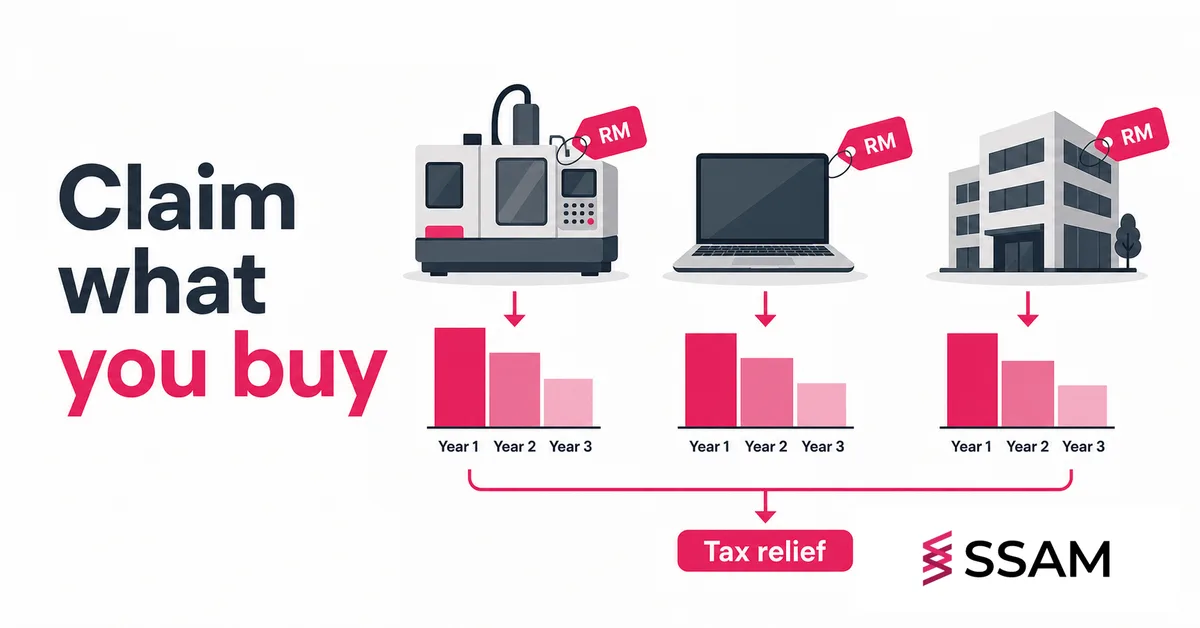
Capital allowances in Malaysia are the tax relief that lets a business deduct the cost of qualifying assets from its taxable income over time. They exist because accounting depreciation, the figure in your management accounts, is not deductible for tax. Instead, the law replaces it with a standardised set of allowances. If you have bought machinery, equipment, vehicles or a commercial building, understanding capital allowances is how you turn that spending into real tax savings, and it is one of the most reliable ways to reduce corporate tax legally.
This guide explains what qualifies, the main rates, the new 2026 acceleration window, and what happens when you sell an asset, with a worked example you can follow. It is written for SME owners and finance staff who want to claim correctly rather than leave relief on the table. The rates and rules below should be confirmed against current LHDN guidance and Budget 2026 before you rely on them for a filing.
What Are Capital Allowances?
Capital allowances are deductions you can claim against business income for money spent on qualifying capital assets. When you buy an asset that will be used in the business over several years, you cannot deduct the whole cost as an expense, and you cannot deduct the depreciation you book in your accounts. The tax system adds that depreciation back and gives you capital allowances instead, so that the relief is consistent across all businesses.
The spending that qualifies is called qualifying expenditure, and it covers plant, machinery, equipment, fixtures, vehicles and certain buildings used in the business. The allowances are governed mainly by Schedule 3 and Section 42 of the Income Tax Act 1967. The effect is that the cost is written off for tax over a number of years through a combination of an initial allowance and an annual allowance.
How Do Capital Allowances Work?
They work in two parts. In the year you buy a qualifying asset you claim a one-off initial allowance, usually 20 percent of the cost. Then each year, including the first, you claim an annual allowance at a rate set for that asset type, until the cost is fully written off. The remaining unclaimed value is called the residual or tax written down value, and unused allowances can be carried forward.
Capital Allowance Rates by Asset Type
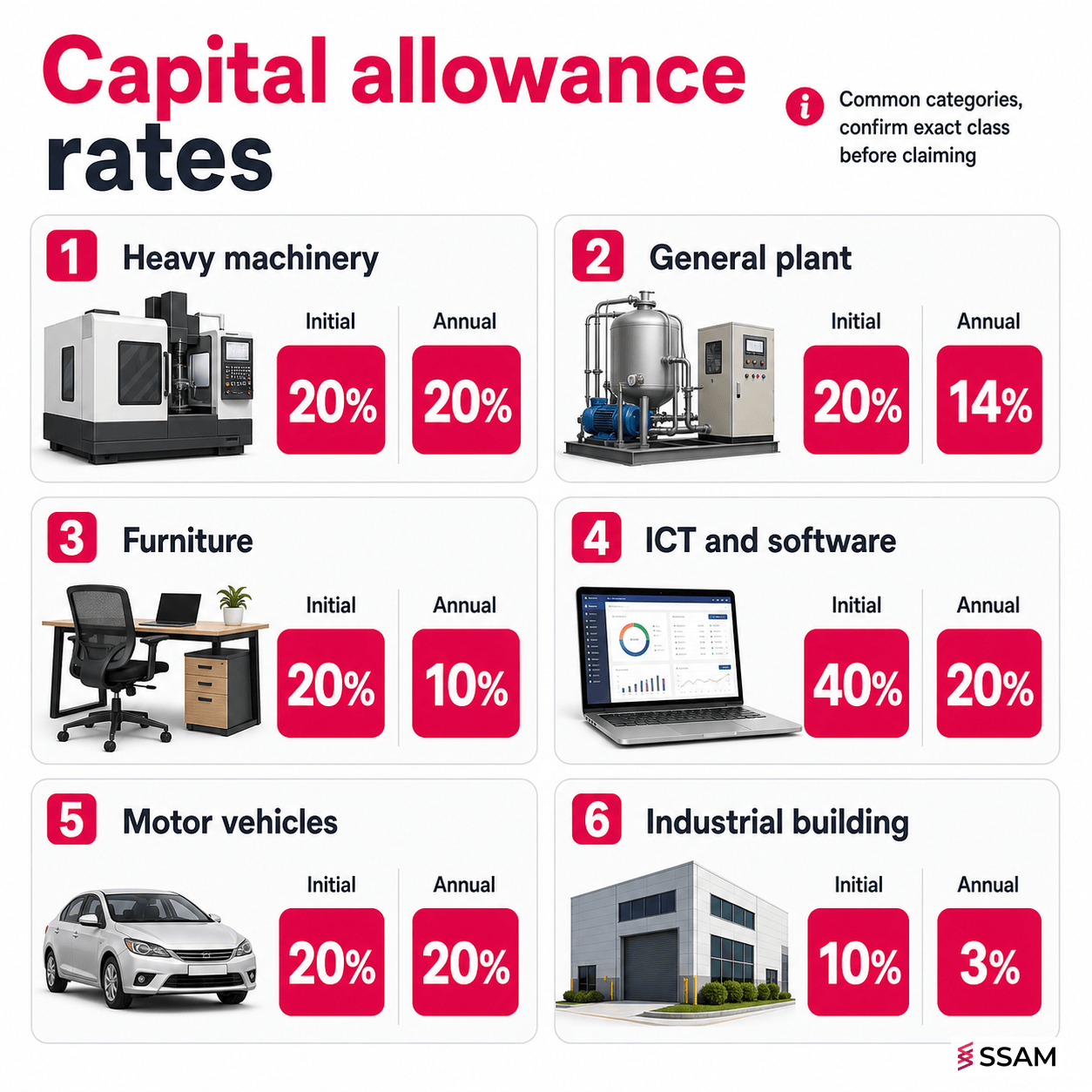
The initial allowance is commonly 20 percent, while the annual allowance varies by the kind of asset. The table below shows the typical rates. Treat it as a guide and confirm the figure for your specific asset, because some categories have variations.
| Asset type | Initial allowance | Annual allowance |
|---|---|---|
| Heavy machinery | 20% | 20% |
| General plant and machinery | 20% | 14% |
| Furniture and fixtures | 20% | 10% |
| Office equipment | 20% | 10% |
| ICT equipment and software | 40% | 20% |
| Motor vehicles | 20% | 20% |
There is also a useful rule for low-cost items. Small-value assets costing under RM2,000 each can attract a 100 percent allowance in the year of purchase, subject to an annual cap on the total claimed this way. This lets you write off minor equipment immediately rather than tracking it over years.
Plant, Machinery, and Equipment
Most business assets fall here. General plant and machinery typically carries a 20 percent initial allowance and a 14 percent annual allowance, while heavy machinery sits at 20 percent for both. ICT equipment and software are written off faster, reflecting their shorter useful life. For years, the treatment of intangibles such as software was restricted under the plant definition, so confirm the current position for software and development costs, which has been clarified in recent rules.
Motor Vehicles and the QE Limits
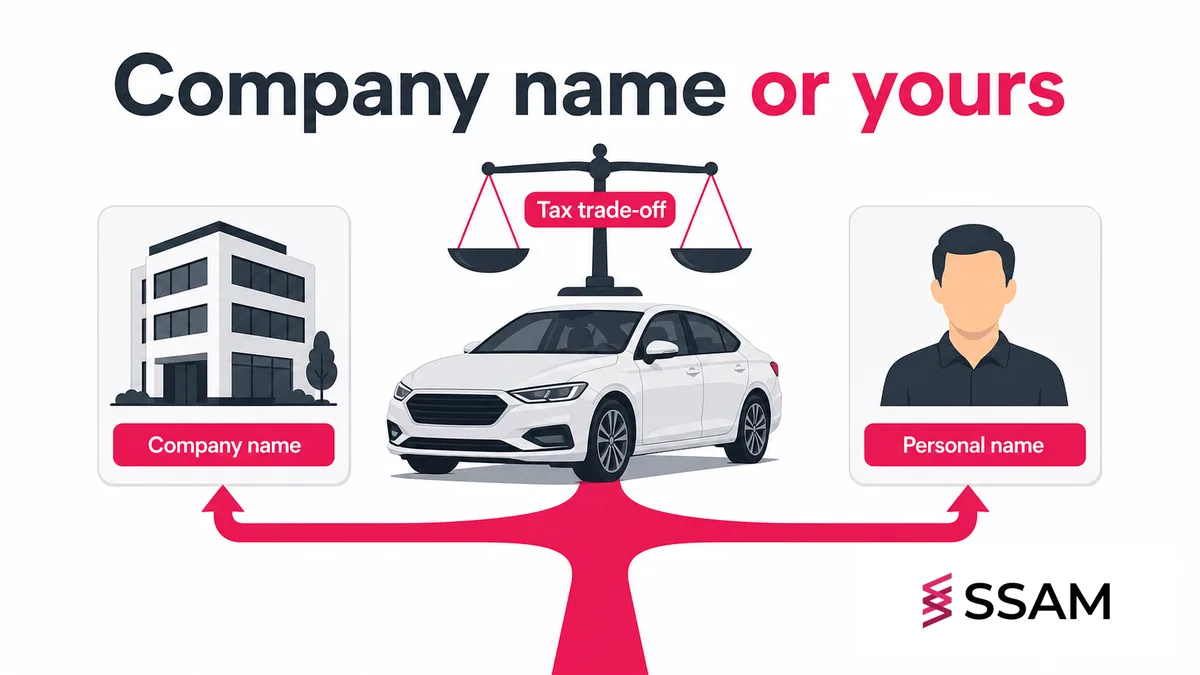
Motor vehicles attract a 20 percent initial allowance and a 20 percent annual allowance, but with an important cap on qualifying expenditure. For a new passenger car costing RM150,000 or less, qualifying expenditure is limited to RM100,000. For one costing more, it is capped at RM50,000. Commercial vehicles such as pickups, lorries and vans escape the cap and qualify on their full cost. If you are weighing up a vehicle purchase, our guide on whether your company car tax makes sense under the company goes deeper into this trade-off.
Industrial Building Allowance
Buildings are treated separately from plant and machinery through the industrial building allowance. Where a building qualifies, for example a factory, warehouse or other building used in a qualifying industrial activity, you can claim an initial allowance of 10 percent and an annual allowance of 3 percent on the qualifying construction or purchase cost. Because the annual rate is low, the relief is spread over a long period, so it is worth identifying qualifying buildings early and keeping the cost records that support the claim. Ordinary commercial offices and shops do not automatically qualify, so check the specific use against the rules.
Accelerated Capital Allowance for 2026
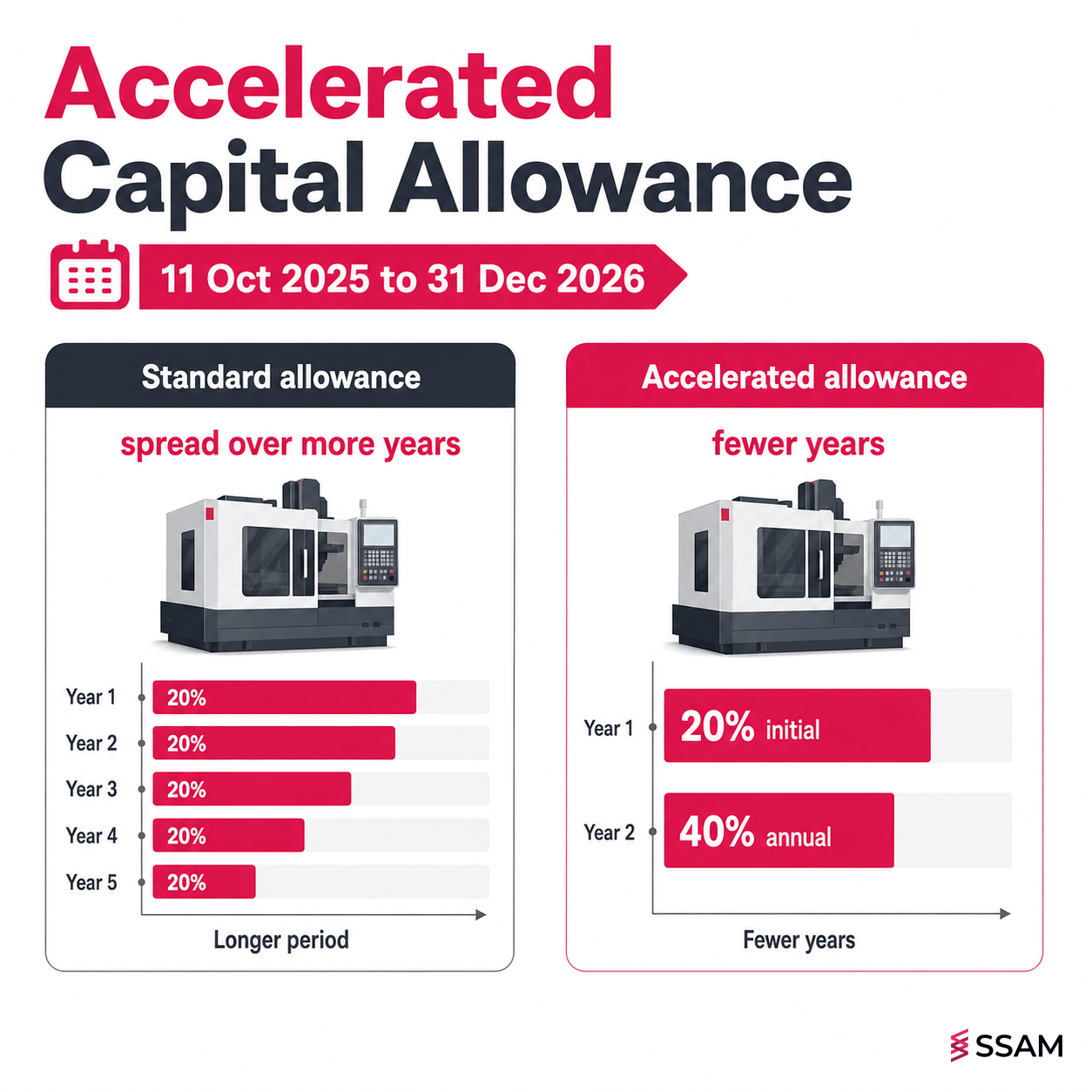
Budget 2026 introduced an Accelerated Capital Allowance window that lets businesses write off qualifying assets faster. For qualifying capital expenditure incurred from 11 October 2025 to 31 December 2026, the accelerated treatment offers a 20 percent initial allowance together with a 40 percent annual allowance, which writes the asset off over a much shorter period than the standard rates. The window is aimed at categories such as heavy and general machinery from local manufacturers, and ICT equipment and software. It sits alongside the other tax incentives for SMEs worth claiming in the same year.
The practical benefit is timing. Bringing forward relief improves cash flow in the years you invest, which matters most for capital-intensive businesses and those modernising their systems. If you are planning significant asset purchases, the timing of the spend relative to this window can change your tax position, so it is worth a quick check before you commit. Verify the exact qualifying categories and conditions against the Budget 2026 measures, because eligibility is specific.
What Happens When You Sell an Asset
When you dispose of an asset on which you have claimed capital allowances, you settle up with a balancing adjustment. Compare the sale proceeds with the residual expenditure, the tax written down value at that point. If you sell for more than the residual value, the excess is a balancing charge, which is added back to your income, restricted to the allowances you actually claimed. If you sell for less, the shortfall is a balancing allowance, an extra deduction.
Two rules catch people out. First, if you dispose of the asset within two years of purchase, the capital allowances can be clawed back, on the basis that it was not really a long-term business asset. Second, transfers between parties under common control happen at tax written down value under the controlled transfer rules, rather than at market price, so you cannot reset the cost base by moving an asset within a group. A short worked example brings the mechanics together.
| Stage | Allowance claimed | Residual expenditure |
|---|---|---|
| Buy general machine for RM80,000 | Initial 20% RM16,000 plus annual 14% RM11,200, total RM27,200 | RM52,800 |
| Year 2 | Annual 14% RM11,200 | RM41,600 |
| Year 3 | Annual 14% RM11,200 | RM30,400 |
| Year 4: sell for RM35,000 | No annual allowance in the year of disposal | Proceeds RM35,000 exceed residual RM30,400, so a balancing charge of RM4,600 is added back |
If instead the machine had sold for RM20,000, the residual of RM30,400 would exceed the proceeds, giving a balancing allowance of RM10,400 as an extra deduction in that year. If you are selling the whole business rather than a single asset, the capital gains tax on a business sale comes into play as well.
How to Claim Capital Allowances Correctly
Claiming correctly is mostly about records and consistency. Keep the purchase invoices, an up-to-date fixed asset register, and a capital allowance schedule that tracks qualifying expenditure, allowances claimed and residual values for each asset. Claim the initial allowance in the year the expenditure is incurred and the asset is in use for the business, then the annual allowance each year until the asset is written off or disposed of.
A few principles keep you safe. Do not claim on accounting depreciation, claim on qualifying expenditure instead. Apply the right rate for each asset type. Watch the motor vehicle caps and the two-year clawback. Carry forward any unutilised capital allowances, which can be carried forward indefinitely against the same business source, although a substantial change in company ownership can restrict this. Getting fit-out and renovation costs categorised correctly is a common grey area, so it is worth a professional eye. Our guide to common tax filing mistakes covers errors that often surface here, and keeping clean records also helps you manage your wider Sdn Bhd running costs.
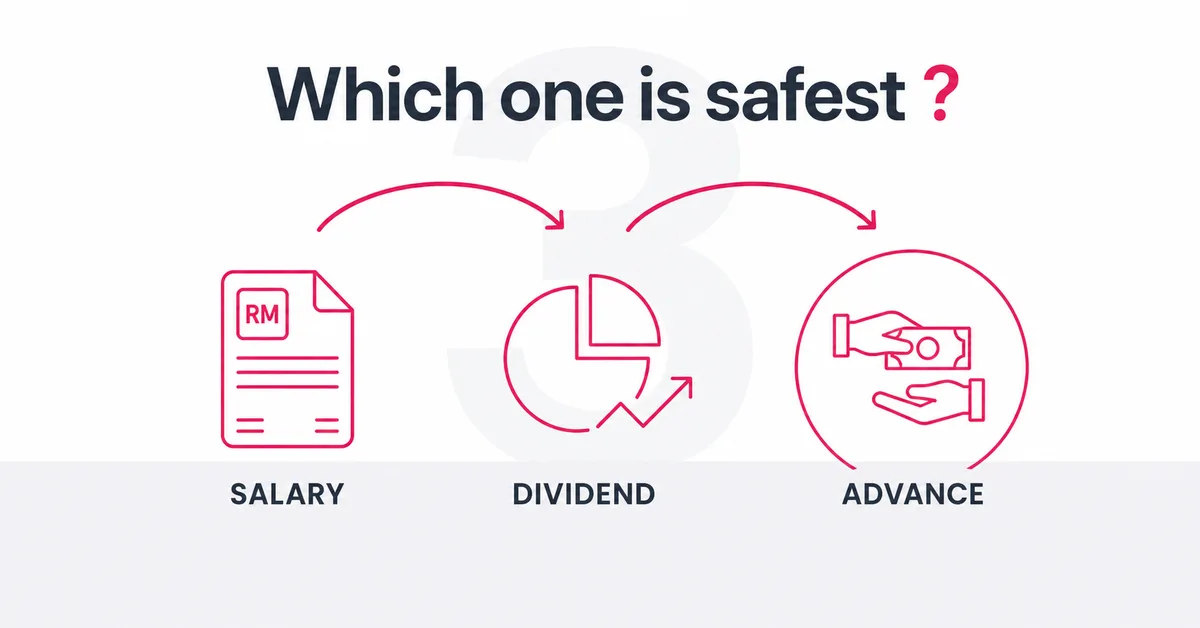
Capital allowances are one piece of a bigger picture. How you structure ownership, from the choice between a sole proprietorship and a Sdn Bhd to how you take money out as an advance to a director versus salary and dividend, affects how much those allowances are worth to you. If you want to be sure you are claiming everything you are entitled to, this is a good area to get help. SSAM Group is a licensed tax agent whose tax planning in Kuala Lumpur helps Malaysian businesses identify qualifying expenditure, apply the right rates, and use timing windows such as the 2026 acceleration. Speak to SSAM to make sure your asset spending is working as hard as it can on your tax bill.
Frequently Asked Questions
What is the difference between initial allowance and annual allowance?
The initial allowance is a one-off deduction, usually 20 percent of the cost, claimed in the year you buy a qualifying asset and put it to use. The annual allowance is claimed every year, including the first, at a rate set for that asset type, and continues until the asset is fully written off or disposed of.
Can I claim capital allowance on a company car?
Yes, motor vehicles qualify, with a 20 percent initial allowance and 20 percent annual allowance. However, qualifying expenditure on a passenger car is capped at RM100,000 if it costs RM150,000 or less, and at RM50,000 if it costs more. Commercial vehicles such as pickups and vans qualify on their full cost with no cap.
Is renovation or fit-out eligible for capital allowance?
It depends on what the work involves. Items that are genuinely plant, fixtures or equipment can qualify, while general building works may not, and some renovation costs fall under separate, time-limited deduction rules rather than capital allowances. Because the line is fine, categorise each cost carefully and confirm the treatment before claiming.
What is a balancing charge?
A balancing charge arises when you sell an asset for more than its residual, or tax written down, value. The excess is added back to your taxable income, restricted to the total capital allowances you previously claimed on that asset. It effectively reverses relief you no longer need because the asset held its value.
Can I carry forward unused capital allowances?
Yes. Unutilised capital allowances can be carried forward indefinitely and set against income from the same business source in future years. Be aware that a substantial change of more than 50 percent in a company's shareholders can restrict the carry-forward, subject to a concession for companies remaining in the same active business.
Data Sources and References
- Lembaga Hasil Dalam Negeri (LHDN), Public Rulings on qualifying expenditure, computation of capital allowances and industrial building allowance: https://www.hasil.gov.my
- PwC Worldwide Tax Summaries, Malaysia (capital allowances and disposals): https://taxsummaries.pwc.com/malaysia
The information in this article is provided for general informational purposes only and does not constitute tax, accounting, financial or legal advice. Tax laws change frequently and may not apply to your situation. Always consult a qualified professional before acting on any information here.