

Key Takeaways
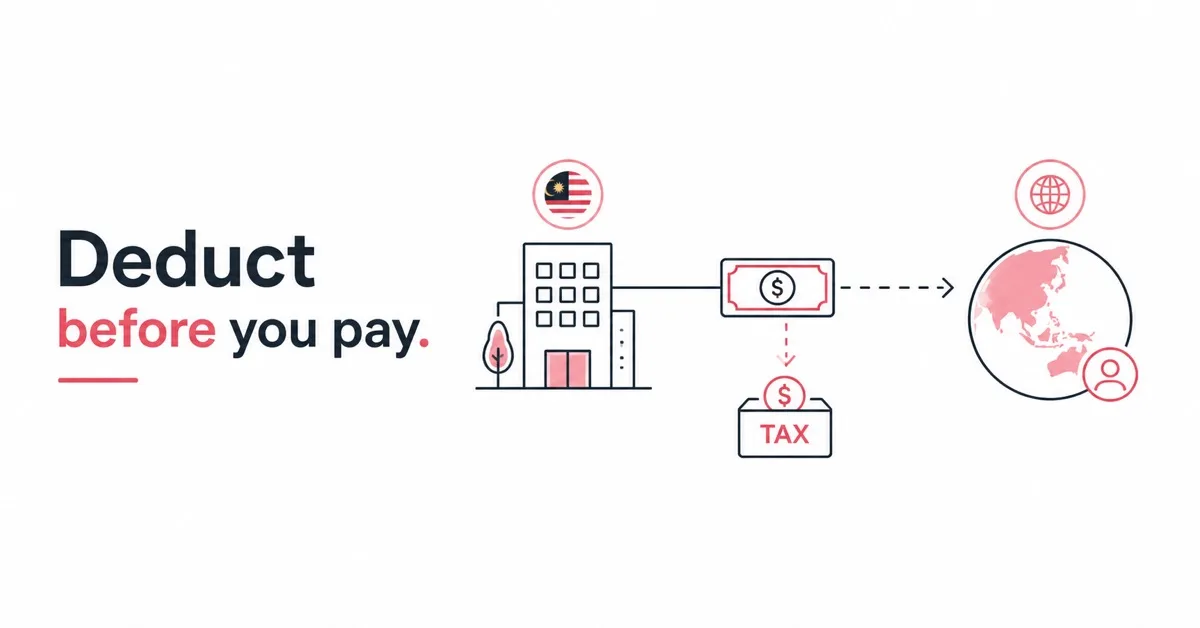
- Withholding tax is tax you must deduct from certain payments to non-residents and remit to LHDN, not an extra cost you add on top.
- The rate depends on the payment type, from 10 percent on royalties and technical fees to 15 percent on interest, with contract payments at 10 percent plus 3 percent.
- Services physically performed outside Malaysia are generally not caught, but royalties are taxable regardless of where the rights sit.
- Get it wrong and you face a 10 percent penalty and, worse, disallowance of the entire expense in your tax computation.
- Remit within one month of paying or crediting the non-resident, using the correct form.
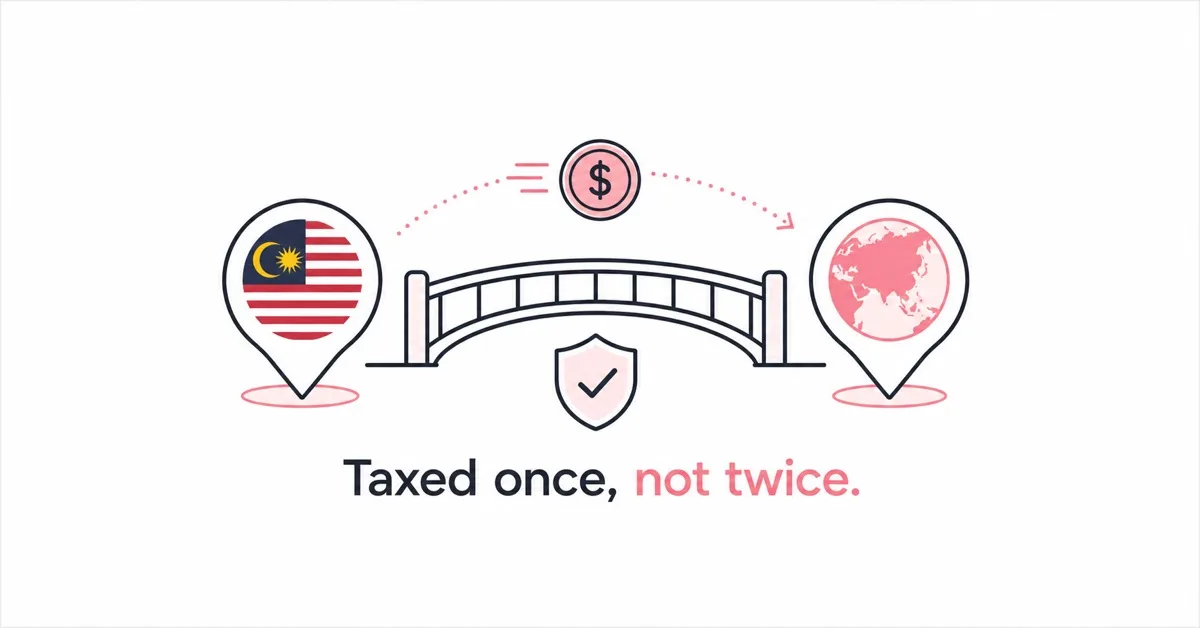
- A double tax agreement can reduce the rate, provided you hold the payee's certificate of tax residence.
Withholding tax on a foreign vendor in Malaysia is the tax you must deduct from certain payments to non-residents and pay over to LHDN on their behalf. If your business pays an overseas freelancer, software provider, lender or agency, this is one of the easiest obligations to miss and one of the most expensive to get wrong. The danger is not just a penalty. Fail to withhold and you can lose the tax deduction on the entire payment, which can cost far more than the tax itself.
This guide explains when withholding tax applies, the rates by payment type, the crucial difference between services performed in Malaysia and offshore, and how to pay it correctly and on time. It is written for SME owners and finance staff who are paying foreign suppliers and want to stay compliant. The rates, forms and deadlines below should be confirmed against current LHDN guidance before you rely on them, because the digital-services rules in particular change often.
What Is Withholding Tax?
Withholding tax is an amount you deduct from a payment to a non-resident and remit directly to LHDN, rather than paying the full sum to the vendor. The non-resident is the one being taxed on income they earn from a Malaysian source, but the law makes you, the payer, responsible for collecting it at source. So if a payment of RM10,000 attracts 10 percent withholding tax, you send RM9,000 to the vendor and RM1,000 to LHDN.
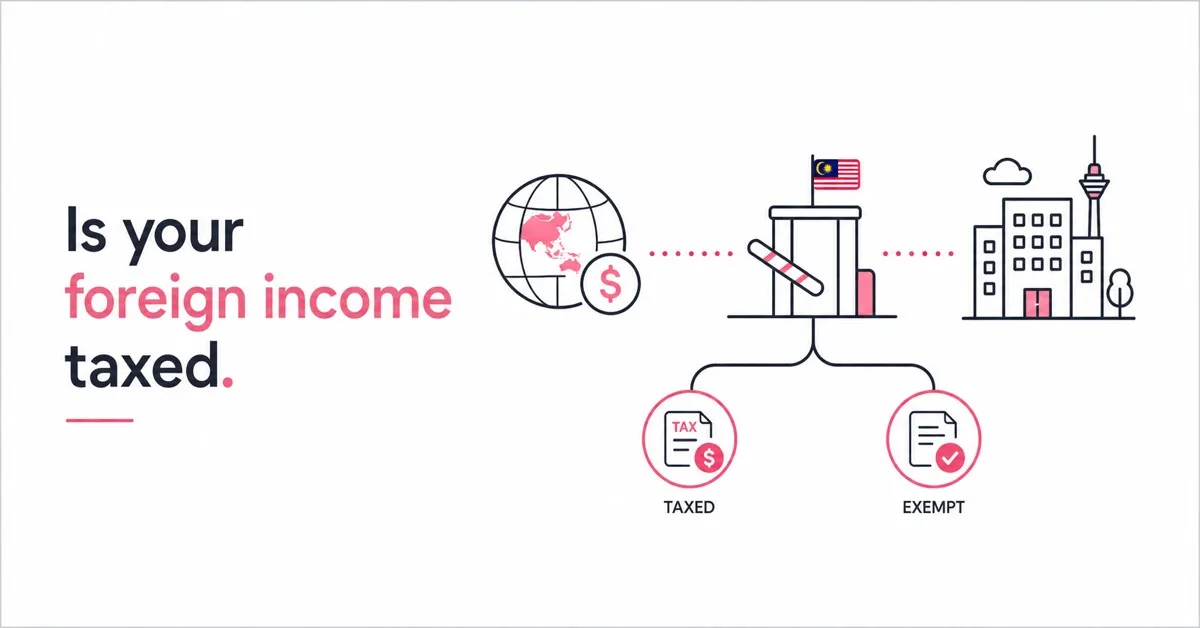
It applies to specific categories of payment to non-residents, such as royalties, interest, contract payments and fees for technical or other services, each with its own rate, legal section and prescribed form. It is not a tax on you, but the responsibility and the consequences of getting it wrong fall on you as the payer. That is why understanding it before you pay an overseas supplier is essential. It is the mirror image of money coming the other way, which is governed by the foreign-sourced income tax rules.
Do You Need to Withhold Tax on a Foreign Payment?
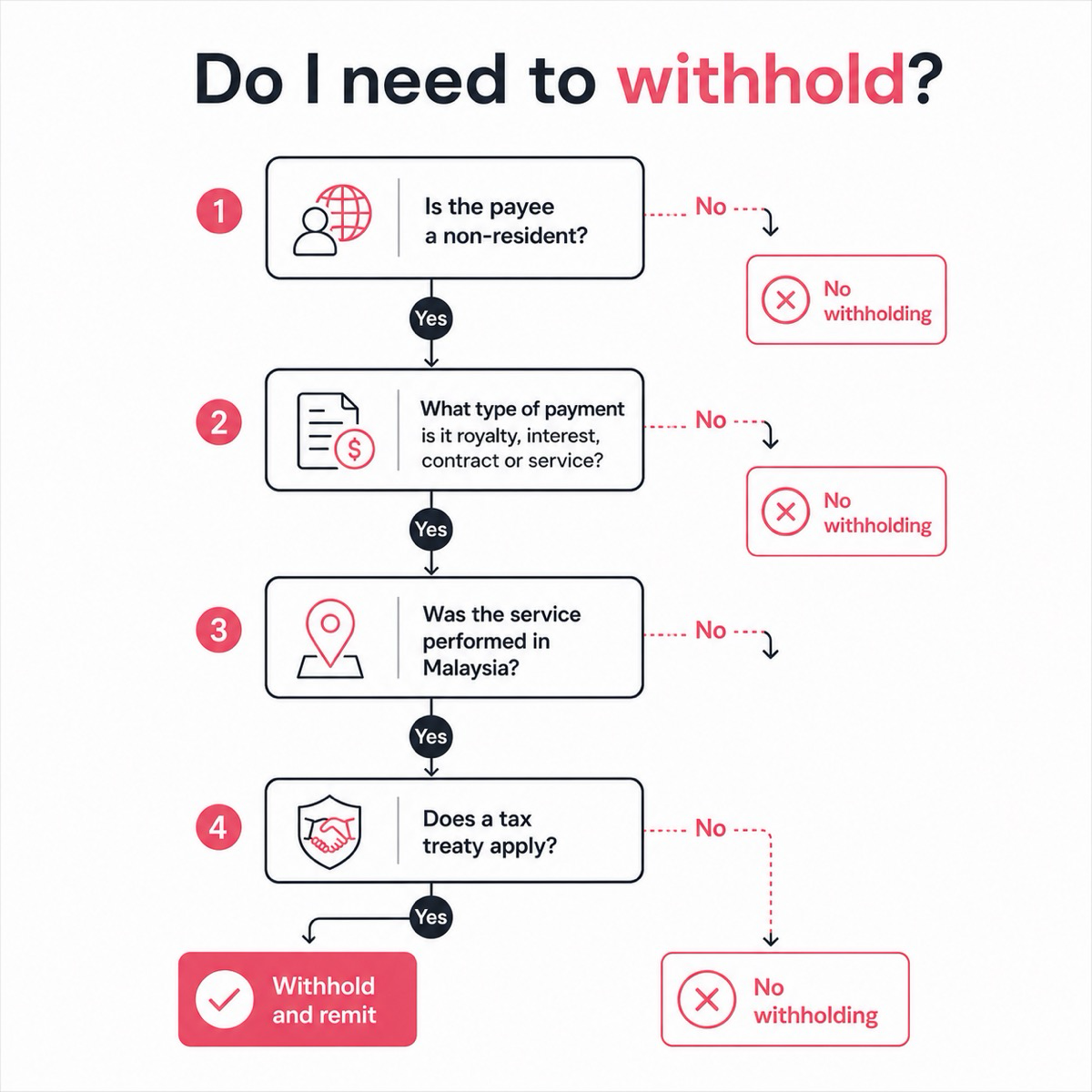
It depends on two things: the type of payment and where any service is performed. Payments such as royalties, interest and contract or technical fees to a non-resident are generally caught, while services physically performed outside Malaysia are usually not. The safest approach is to check the payment type and the place of performance before you pay, because the obligation sits with you.
Withholding Tax Rates by Payment Type
The rate is set by the type of payment, and each comes with a legal section and a prescribed form for remitting it. The table below summarises the main categories for payments to non-residents. These are the domestic rates, which a tax treaty can reduce, as explained further down.
| Payment type | Rate | Section | Form |
|---|---|---|---|
| Contract payments | 10% + 3% | 107A | CP37A |
| Interest | 15% | 109 | CP37 |
| Royalties | 10% | 109 | CP37 |
| Special classes of income (technical and service fees) | 10% | 109B | CP37D |
| Non-resident public entertainers | 15% | 109A | CP154 |
Contract Payments, Interest, Royalties
Contract payments to a non-resident contractor for work in Malaysia carry a two-part deduction, 10 percent on account of the contractor's own tax and a further 3 percent on account of its employees' tax. Interest paid to a non-resident lender is generally subject to 15 percent. Royalties, payments for the use of intellectual property, software rights, patents, trademarks or similar, attract 10 percent, and importantly they are taxable regardless of where the rights or the payee sit.
Technical and Service Fees (Special Classes)
The special classes of income under Section 109B cover fees for technical advice, assistance or services, and for the use of certain movable property. These attract 10 percent withholding tax when the income has a Malaysian source. This is the category that most often catches SMEs paying overseas consultants, marketing agencies and technical specialists, and it is where the place of performance becomes decisive, as the next section explains.
Services Performed Abroad vs in Malaysia
This distinction saves or costs businesses the most. For service and technical fees, withholding tax generally applies where the service is performed in Malaysia. If a non-resident consultant does the work entirely overseas and never sets foot here, those service fees are often outside the charge. This is why the place of performance, and your documentation of it, matters so much.
There is a critical exception. Royalties do not follow the place-of-performance rule. A payment for the right to use software, content or intellectual property is taxable as a royalty regardless of where the provider is located or where the work was done. This is the royalty-versus-service trap. A payment you think is an exempt offshore service may actually be a royalty for the use of a right, and therefore fully taxable. Software is the classic grey area, because the same payment can be a royalty or a service fee depending on what the contract actually grants. Read the contract, not just the invoice, and get advice where the characterisation is unclear.
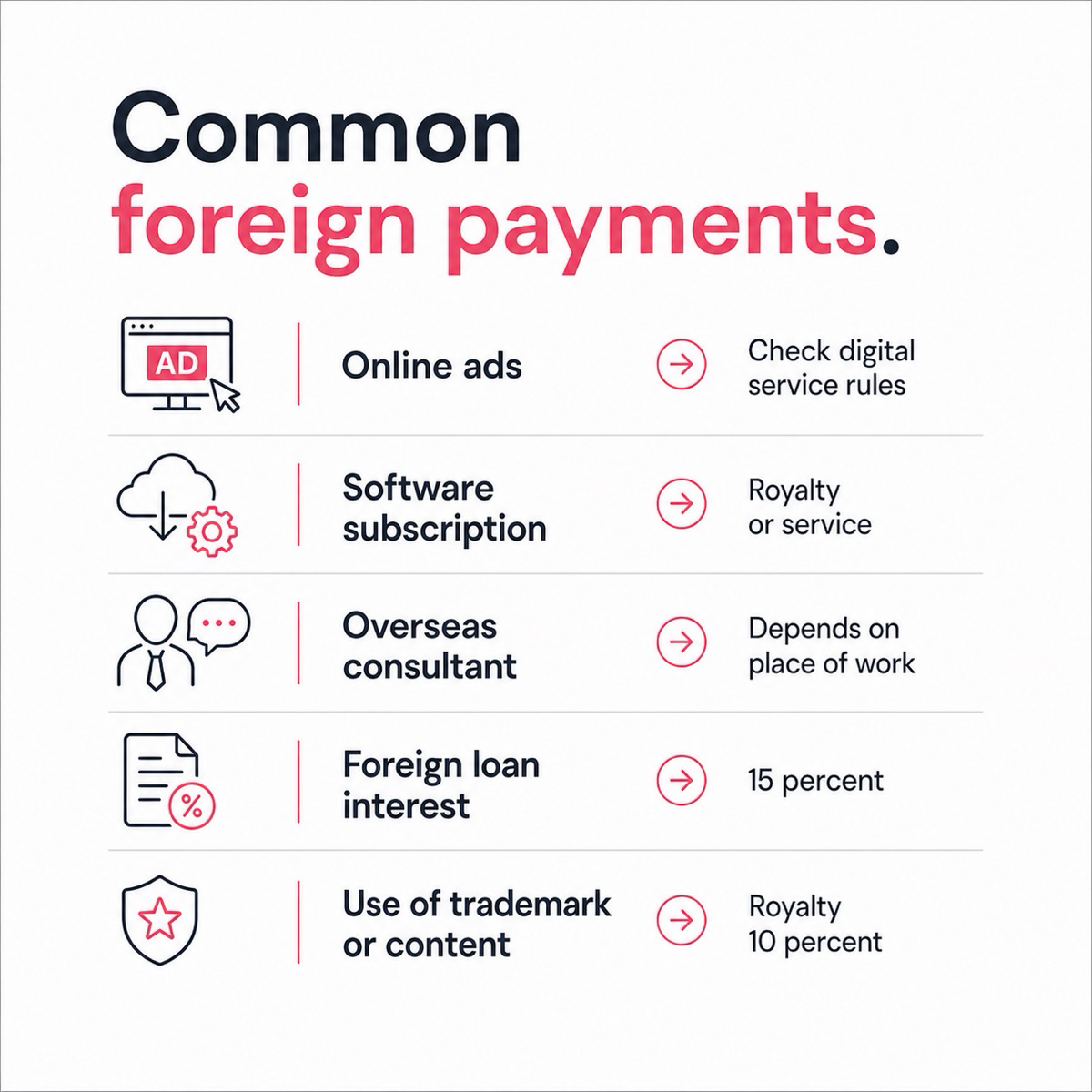
Modern payments raise these questions constantly. Online advertising with overseas platforms, software and SaaS subscriptions, and overseas marketing agencies all need to be characterised carefully, and imported digital services can also bring a separate service tax charge that is distinct from withholding tax. Treat each foreign payment on its facts rather than assuming a blanket answer.
The Real Cost of Getting It Wrong
The penalty is the smaller half of the problem. If you pay withholding tax late, a 10 percent increase is imposed on the unpaid amount. The bigger blow is that, until the tax and any increase are paid, the entire expense you paid the non-resident is disallowed in your tax computation. So a RM100,000 payment on which you failed to withhold does not just cost a penalty, it can be added back to your taxable income, increasing your tax bill by far more than the withholding tax would have been.
The good news is that the deduction is generally reinstated once you pay the outstanding withholding tax together with the increase. That is why discovering a missed obligation early, and regularising it promptly, is so important. Unremitted withholding tax is also one of the first things a buyer's tax due diligence will uncover, so it matters even more if you might sell the business. Many of these slips show up in the kinds of errors covered in our guide to common tax filing mistakes, and if foreign payments are a regular feature of your business it is a strong signal that you would benefit from a professional tax consultant reviewing your processes.
How to Pay Withholding Tax to LHDN
The mechanics are straightforward once you know the obligation. Identify the payment type and the correct rate, deduct the tax from the gross amount, and remit it to LHDN using the prescribed form for that category, generally within one month of paying or crediting the non-resident. Keep the contract, the invoice and proof of remittance, because you may need to show how you characterised the payment.
There are two practical reliefs worth knowing. First, where a treaty applies, you can withhold at the reduced treaty rate provided you hold a valid certificate of tax residence from the payee, so obtain it before you pay. Our guide to double tax agreements explains how to claim that reduced rate. Second, certain small, recurring payments may qualify for deferred remittance arrangements rather than monthly filing, which eases the administrative load. A short worked example shows the cash flow.
| Step | Amount |
|---|---|
| Royalty due to a non-resident | RM100,000 |
| Withholding tax at 10% | RM10,000 remitted to LHDN |
| Net paid to the vendor | RM90,000 |
Watch the contract wording. If you agree to pay the vendor RM100,000 net of tax, you must gross up, so the withholding tax is calculated on a higher base and the cost to you rises. Building the tax treatment into the contract from the start avoids that surprise.
If your business pays overseas suppliers regularly, or you are setting up cross-border intra-group flows as part of a business restructuring, a quick review of your withholding obligations is one of the highest-value compliance checks you can do. SSAM Group is a licensed tax agent whose tax advisory in Kuala Lumpur helps Malaysian businesses characterise foreign payments correctly, apply treaty rates, and remit on time so the expense deduction is protected. Speak to SSAM to review your foreign-payment processes before a missed deduction turns into a costly assessment.
Frequently Asked Questions
Do I need to pay withholding tax on payments to overseas suppliers?
It depends on the payment type and where any service is performed. Royalties, interest, contract payments and technical or service fees to non-residents are generally subject to withholding tax, while services physically performed outside Malaysia are often not. Because the responsibility sits with you as the payer, check each payment before you remit it.
Is there withholding tax on Facebook and Google ads in Malaysia?
Online advertising payments to overseas platforms need to be characterised carefully, and they can also attract service tax on imported digital services, which is separate from withholding tax. The treatment turns on the nature of what is supplied and current LHDN guidance, which changes often, so confirm the position for your specific arrangement rather than assuming.
Is a foreign software subscription subject to withholding tax?
It can be. A software payment may be a royalty, for the right to use the software, or a service fee, depending on what the contract grants. If it is a royalty it is taxable regardless of where the provider sits. Because the line is fine and consequential, review the contract terms and seek advice where the characterisation is unclear.
What is the deadline to pay withholding tax to LHDN?
Withholding tax must generally be remitted to LHDN within one month of paying or crediting the non-resident, using the prescribed form for that payment type. Missing the deadline triggers a 10 percent increase and disallowance of the related expense until the tax and increase are paid, so diarise the date as soon as you make the payment.
Can a double tax agreement reduce the withholding tax rate?
Yes. Where Malaysia has a tax treaty with the payee's country, the treaty can reduce the domestic rate, sometimes significantly. To apply the reduced rate you generally need a valid certificate of tax residence from the payee. Obtain it before you pay, because without it you would withhold at the full domestic rate.
Data Sources and References
- Lembaga Hasil Dalam Negeri (LHDN), Withholding Tax (rates, sections and forms CP37, CP37A, CP37D): https://www.hasil.gov.my
- PwC Worldwide Tax Summaries, Malaysia (corporate withholding taxes): https://taxsummaries.pwc.com/malaysia
The information in this article is provided for general informational purposes only and does not constitute tax, accounting, financial or legal advice. Tax laws change frequently and may not apply to your situation. Always consult a qualified professional before acting on any information here.