


Key Takeaways
- A double tax agreement is a treaty between two countries that decides who taxes cross-border income, so you are not taxed twice on the same money.
- Malaysia has agreements with more than 70 countries, which can reduce or remove the tax taken at source on dividends, interest, royalties and service fees.
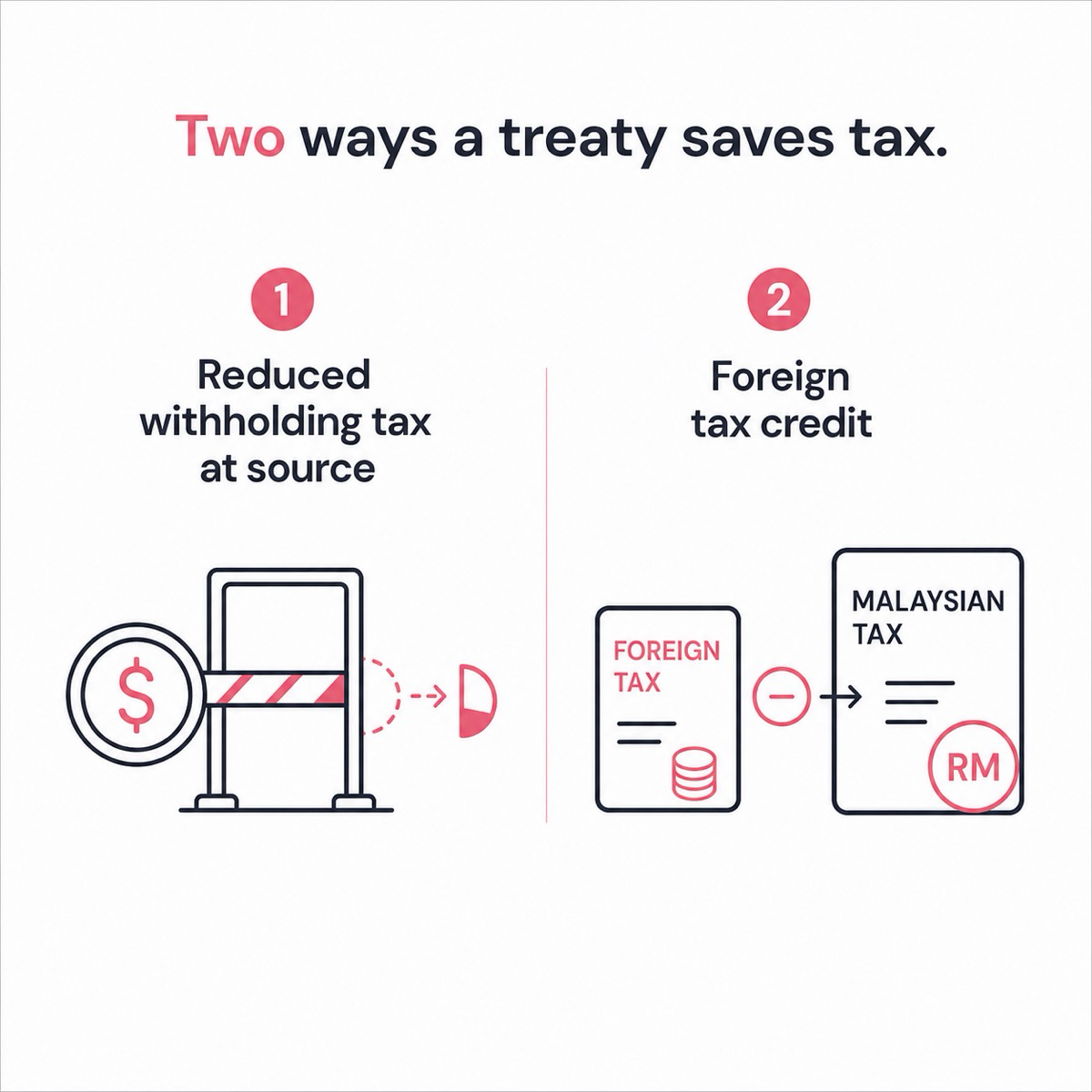
- DTAs help in two ways: a lower withholding tax rate at source, and a foreign tax credit against your Malaysian tax.
- To claim treaty benefits you usually need a Certificate of Residence, which you apply for through LHDN's e-Residence portal.
- Where there is no treaty, such as with the United States, relief is limited to a unilateral credit of half the foreign tax paid, so planning matters more.
A double tax agreement in Malaysia is a treaty designed to stop the same income being taxed twice, once in the country where it arises and again in Malaysia, so you can trade and invest across borders without paying tax twice over. If your business pays or receives money across borders, understanding these agreements can save real cash and avoid nasty surprises at filing time.
This guide explains what a double tax agreement does, the two mechanisms that actually save you money, and the practical steps to claim the benefit. It is written for SME owners and finance managers with foreign customers, suppliers or group companies. Treaty rates differ by country, so always check the position for the specific country involved before you rely on a number.
What Is a Double Tax Agreement?
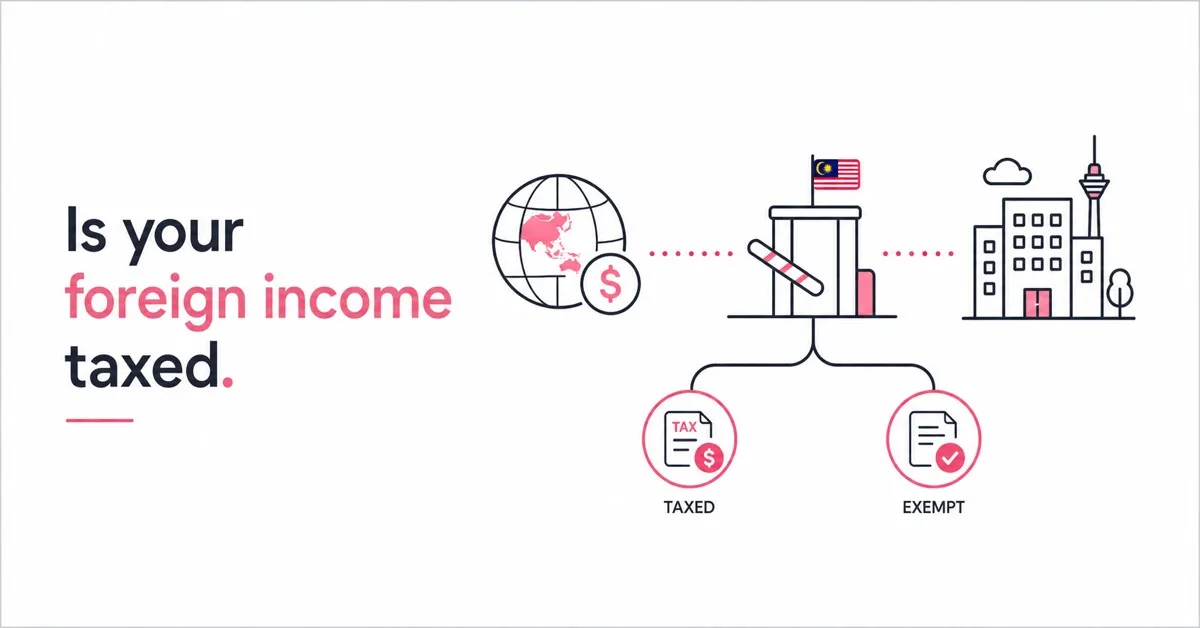
A double tax agreement, also called a double taxation agreement or DTA, is a treaty between two countries that allocates taxing rights over different types of income. Without one, income earned across a border can be taxed in both places. A dividend from a foreign subsidiary, interest on a cross-border loan, or a royalty paid to an overseas licensor could each be taxed at source and then again when it reaches Malaysia.
The treaty sets the rules. It decides which country gets to tax each type of income, caps the tax that can be taken at source, and provides a mechanism to relieve any remaining double tax. Malaysia has signed agreements with more than 70 countries, covering most of its major trading partners. The exact count changes as new treaties take effect, so confirm it for your country before relying on it.
How Do DTAs Stop You Paying Tax Twice?
Double tax agreements relieve double taxation in two ways. First, they reduce or remove the withholding tax taken at source on payments such as interest, royalties and service fees, so less is deducted before the money reaches you. Second, they give a foreign tax credit, which lets you offset tax already paid abroad against the Malaysian tax on the same income. Together these ensure the income is effectively taxed once.
Reduced Withholding Tax Rates Under DTAs
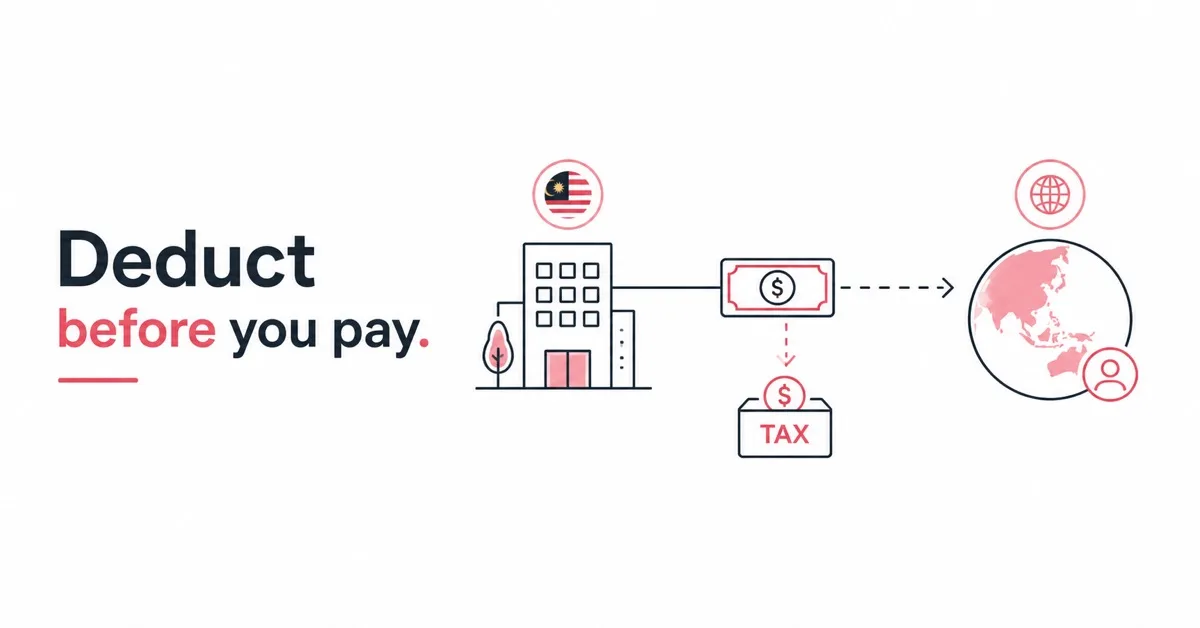
Withholding tax is tax deducted at source when certain payments are made to a non-resident. Our guide to withholding tax on foreign vendors covers the domestic rates and forms in detail. Malaysia applies domestic withholding tax rates to payments leaving the country, and a treaty can lower them. Where a DTA applies, the rate charged is the lower of the treaty rate and the domestic rate.
Dividends, Interest, Royalties, Technical Fees
The table below shows the domestic starting point. A treaty often reduces the interest, royalty and service-fee rates, and the exact figure depends on the specific agreement.
| Payment to a non-resident | Malaysian domestic rate | Effect of a DTA |
|---|---|---|
| Dividends from a Malaysian company | No withholding tax | Generally remains nil |
| Interest | 15% | Often reduced under the treaty |
| Royalties | 10% | Often reduced under the treaty |
| Technical or service fees | 10% | Often reduced, sometimes removed |
This is a general guide, not a country rate card. The reduced rate for your situation depends on the treaty with that specific country, so check LHDN's withholding tax rate table for the country you are dealing with before you apply a figure.
Claiming a Foreign Tax Credit
The second mechanism handles tax that has already been paid abroad. If you are a Malaysian resident and you have suffered foreign tax on income that Malaysia also taxes, you can claim a foreign tax credit so the same income is not taxed in full twice. Whether that income is taxable in Malaysia in the first place depends on the foreign-sourced income tax rules. The credit reduces your Malaysian tax bill by the amount already paid overseas, within limits.
Bilateral vs Unilateral Credit
The size of the credit depends on whether a treaty exists. Where Malaysia has a DTA with the other country, you get a bilateral credit equal to the lower of the foreign tax paid or the Malaysian tax on that income. Where there is no treaty, you only get a unilateral credit, which is limited to half the foreign tax paid.
A short example shows why this matters. Suppose you earn RM100,000 of foreign income, pay RM12,000 of tax abroad, and the Malaysian tax on that income would be RM10,000.
| Situation | Credit allowed | Result |
|---|---|---|
| Treaty country (bilateral) | Lower of RM12,000 or RM10,000, so RM10,000 | No further Malaysian tax on that income |
| No treaty (unilateral) | Half of RM12,000, so RM6,000 | RM4,000 of Malaysian tax still payable |
The presence of a treaty turns a partial credit into a near-complete one, which is exactly why treaty planning is worth the effort.
How to Claim DTA Benefits: Certificate of Residence
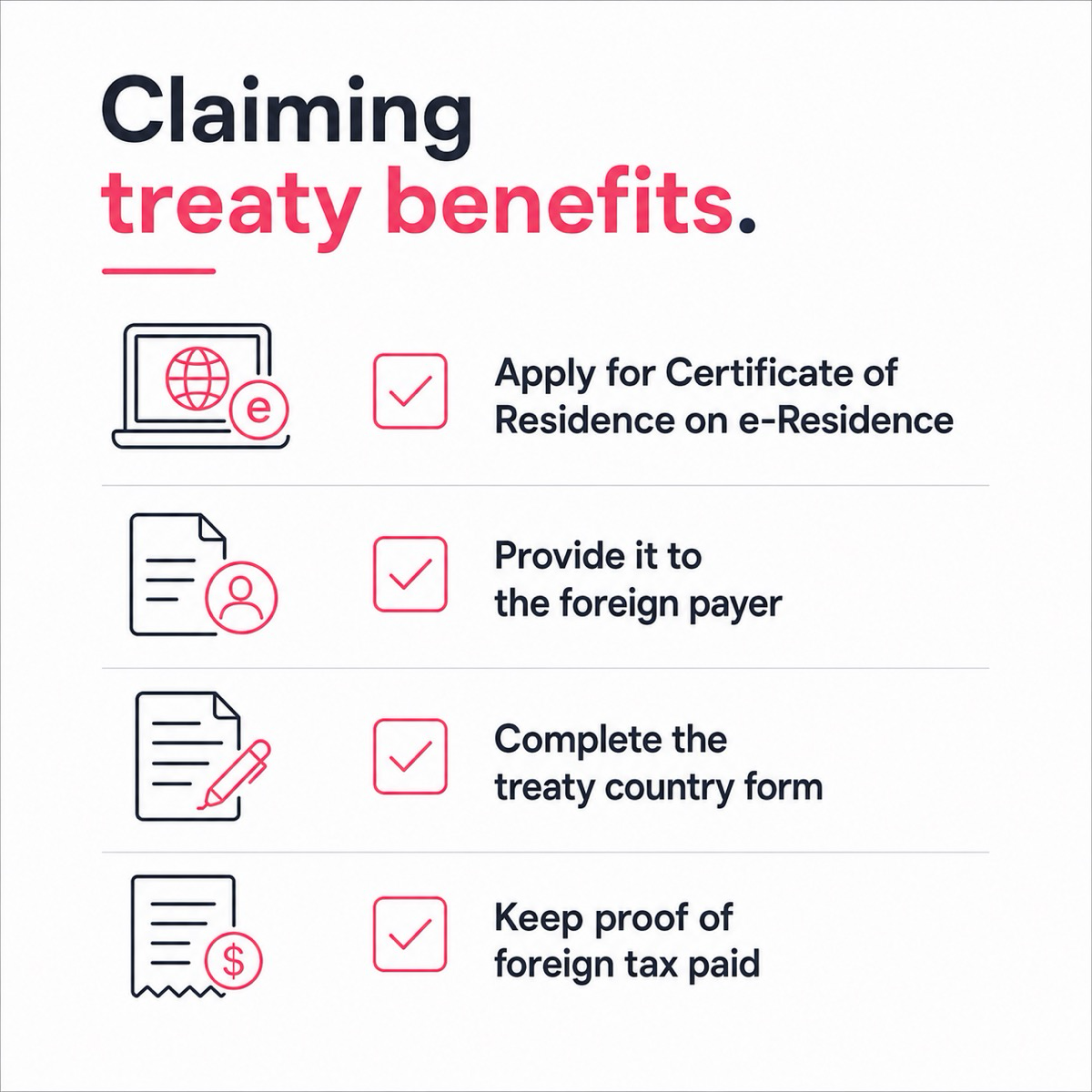
Treaty benefits are not automatic. To claim a reduced withholding rate abroad, or to prove your status for a foreign tax credit, you usually need a Certificate of Residence, often shortened to COR. This document confirms that you are a tax resident of Malaysia and therefore entitled to the treaty.
The practical steps are straightforward. Apply for the Certificate of Residence through LHDN's e-Residence portal, provide your identification and tax details, and the certificate is typically issued within about ten working days at no fee. You then give the certificate to the foreign payer or tax authority, often alongside the treaty country's own form, so they apply the reduced rate rather than the full domestic one. Keep proof of the foreign tax paid, because you will need it to support any foreign tax credit claim back home. If you are unsure how this fits your wider tax position, our overview of tax consultant services in Kuala Lumpur explains how this kind of support works.
What If There Is No Treaty?
Not every country has a comprehensive treaty with Malaysia. The most notable example is the United States, where there is no comprehensive double tax agreement. In that situation you cannot claim a reduced treaty withholding rate, and your relief in Malaysia is limited to the unilateral credit of half the foreign tax paid.
That does not mean you are stuck. You can still plan around it by structuring where income arises, considering whether an intermediate treaty jurisdiction genuinely fits your business, and timing income to use available credits. If a holding structure is involved, weigh the tax implications of business restructuring first. The key is to make decisions for real commercial reasons and to take advice before you commit, because the wrong structure can cost more than the double tax it was meant to solve. Working with an approved tax agent keeps these claims correct and defensible.
Get Your Treaty Claims Right
Double tax agreements are one of the few areas where the rules are designed to save you money, but only if you claim them properly. Confirm whether a treaty exists with the country involved, check the reduced withholding rate in the LHDN rate table, obtain your Certificate of Residence, and keep evidence of foreign tax paid so your credit claim holds up. Remember that foreign tax credit claims generally must be made within two years from the end of the relevant year of assessment.
If cross-border income is part of your business, this is worth getting right from the start, and if you are acquiring a company with foreign dealings it should form part of your tax due diligence. SSAM Group is a licensed tax agent whose tax advisory services in Kuala Lumpur include Certificate of Residence applications and treaty claims, and the team can explain how a specific agreement applies to your income. Speak to SSAM for help making the treaty work for you.
Frequently Asked Questions
How many countries have a DTA with Malaysia?
Malaysia has comprehensive double tax agreements with more than 70 countries, covering most major trading partners. The exact number changes as new treaties are signed and brought into force, so check the current list on the LHDN website for the specific country you are dealing with.
How do I get a Certificate of Residence?
Apply through LHDN's e-Residence portal with your identification and tax details. The Certificate of Residence is normally issued within about ten working days and there is no fee. You then provide it to the foreign payer or tax authority to claim the treaty's reduced rate or to support a foreign tax credit.
Does Malaysia have a tax treaty with the US?
No, there is no comprehensive double tax agreement between Malaysia and the United States. As a result you cannot claim a treaty-reduced withholding rate, and relief in Malaysia is limited to a unilateral foreign tax credit of half the foreign tax paid. Planning the structure of US income therefore matters more.
How long do I have to claim a foreign tax credit?
Foreign tax credit claims generally must be made within two years from the end of the year of assessment in which the income was charged. Keep your evidence of foreign tax paid, such as withholding statements or foreign assessments, so the claim can be supported if LHDN asks.
Is there withholding tax on dividends paid by a Malaysian company?
No. Malaysia does not impose withholding tax on dividends paid by Malaysian companies, so dividends generally leave the country without a withholding deduction. Other payments such as interest, royalties and service fees do attract withholding tax, which a treaty can reduce.
Data Sources and References
- Lembaga Hasil Dalam Negeri (LHDN), Double Taxation Agreements, withholding tax rates and e-Residence: https://www.hasil.gov.my
- PwC Worldwide Tax Summaries, Malaysia (foreign tax relief and tax treaties): https://taxsummaries.pwc.com/malaysia
The information in this article is provided for general informational purposes only and does not constitute tax, accounting, financial or legal advice. Tax laws change frequently and may not apply to your situation. Always consult a qualified professional before acting on any information here.