

Key Takeaways
- An approved tax agent in Malaysia is licensed under Section 153 of the Income Tax Act 1967 and approved by the Ministry of Finance through the MyCukai Portal.
- Only an approved tax agent can legally sign tax returns on your behalf, lodge formal objections, and represent your company in an LHDN audit or investigation.
- A general accountant or bookkeeper can keep your books and prepare figures, but cannot legally act as your tax representative before LHDN.
- You can verify any tax agent's approval status in minutes through the MyCukai Portal using their approval number.
- Most SMEs should move from accountant-only support to an approved tax agent once they hit audit letters, transfer pricing queries, refund claims, or Form CP204 revisions.
In Malaysia, only an approved tax agent licensed under Section 153 of the Income Tax Act 1967 can legally represent you before LHDN, and that single rule is the biggest reason growing SMEs eventually outgrow a general accountant. If you have ever wondered whether your current accountant can actually speak to LHDN on your behalf, lodge an objection, or defend your numbers in an audit, the honest answer is that most of them cannot. This guide walks you through what "approved" status really means, what an approved tax agent is allowed to do that an accountant is not, how to verify a tax agent in minutes, and the exact business triggers that tell you it is time to appoint one. For the wider picture of how this fits alongside the rest of our services, see our pillar guide on tax consultant services in Kuala Lumpur.
What is an approved tax agent in Malaysia?
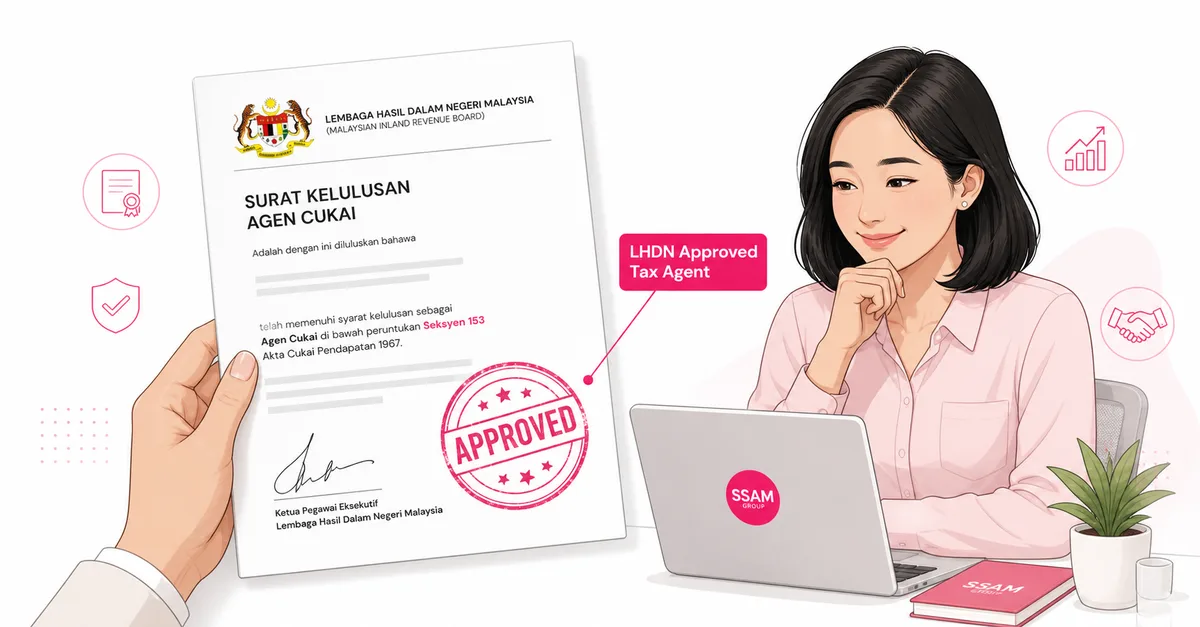
An approved tax agent in Malaysia is a professional licensed under Section 153 of the Income Tax Act 1967 and approved by the Ministry of Finance to act for taxpayers before LHDN. They can sign tax returns on your behalf, lodge formal objections, and represent you in audits and investigations. A general accountant without Section 153 approval cannot.
The license is not the same as being an accountant, a chartered secretary, or a CTIM member. Those qualifications may form part of the application, but the legal authority to act as a tax agent comes only from the MOF approval itself. Under Section 153, no one in Malaysia may hold themselves out as a tax agent, tax consultant, or tax adviser unless they are licensed. Applications are submitted through the MyCukai Portal and assessed against professional qualification, relevant experience, and a fit-and-proper test. Once approved, the agent receives a tax agent approval number that must appear on any letter of appointment, objection, or correspondence lodged with LHDN.
Why the Section 153 license matters
The license is the legal bright line between someone who prepares numbers and someone who can speak to LHDN for you. Without it, any representation before LHDN is at best informal, and at worst unlawful. For a business owner, that distinction shows up most painfully at the moment you least want surprises: an audit, an investigation, or a refund dispute.
Approved tax agent vs accountant: who does what
This is where most SME owners get caught out. The person who files your monthly accounts is usually not the person legally allowed to represent you in a tax matter. The table below shows the practical split of duties.
| Task | Bookkeeper | General accountant | Section 153 approved tax agent |
|---|---|---|---|
| Day-to-day bookkeeping and ledgers | Yes | Yes | Usually not their focus |
| Prepare draft tax computations | No | Yes | Yes |
| Sign and lodge Form C as your tax agent | No | No | Yes |
| Represent you in an LHDN audit or investigation | No | No | Yes |
| Lodge a formal objection or appeal | No | No | Yes |
| Handle transfer pricing documentation filings | No | Support role | Yes |
| Apply for rulings or refund claims on your behalf | No | No | Yes |
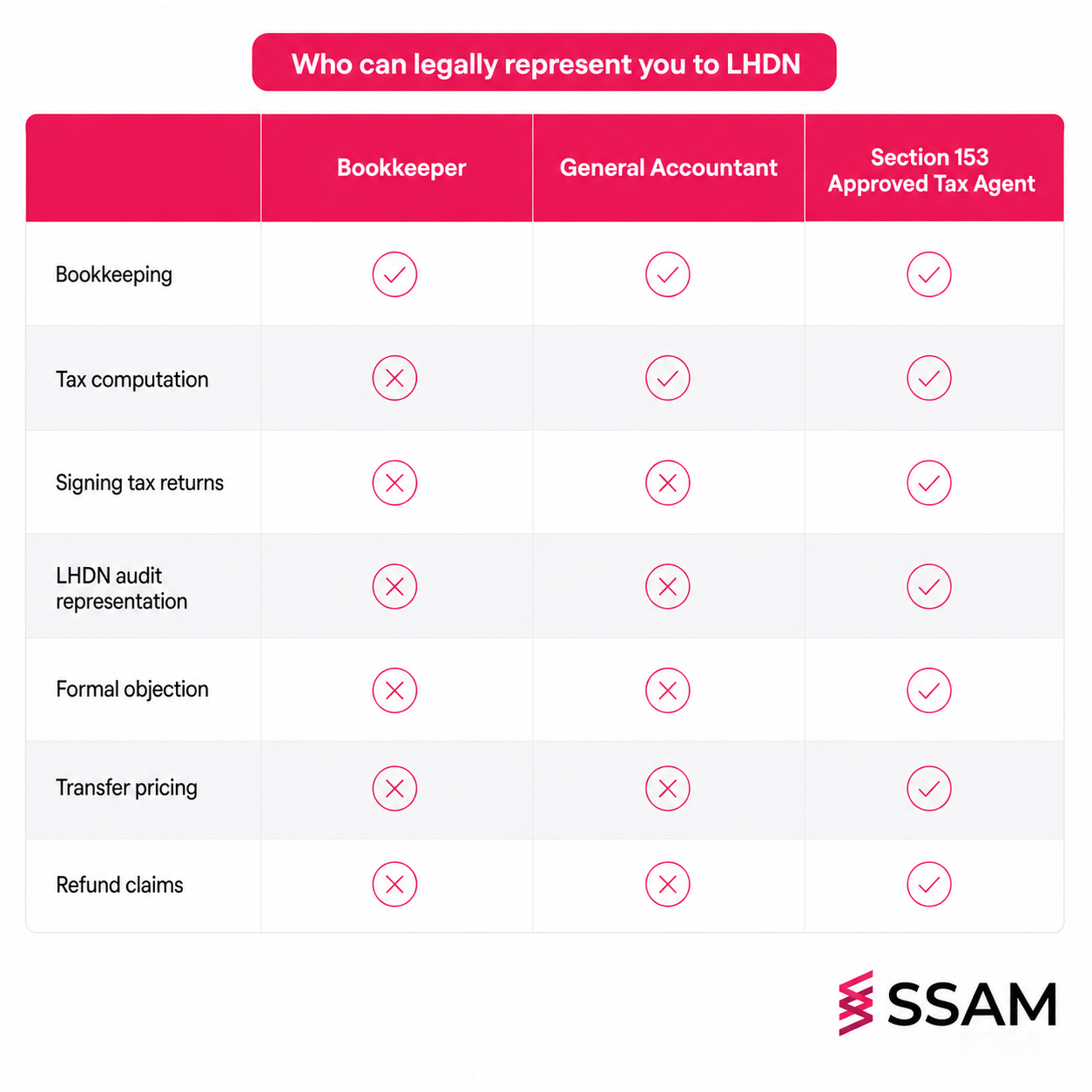
If you read across the table, the pattern is clear. An accountant keeps your finances organised. An approved tax agent is the one licensed to stand between you and LHDN.
Five things only an approved tax agent can do
For a Malaysian SME, five specific activities sit strictly inside Section 153 territory. If any of these apply to your business in the next twelve months, you need an approved tax agent, not just an accountant.
- Sign and submit your corporate tax return as agent of record. Form C can be prepared by an accountant, but the signature and tax agent approval number on the submission must come from an approved tax agent.
- Represent you in an LHDN tax audit. Once LHDN issues an audit letter, the officer expects to deal with an authorised tax agent. An accountant who is not Section 153 approved has no legal standing in that room.
- Handle a tax investigation. Investigation cases involve higher penalties, longer timelines, and formal interviews. Only an approved tax agent can act as your representative and lodge the required explanations.
- Lodge a formal objection, appeal, or private ruling request. Disagreeing with an assessment is not a letter your accountant can sign. It must be filed by an approved agent through the correct channel.
- Prepare and lodge transfer pricing documentation for IRBM review. Transfer pricing is a specialist subset of tax. Your accountant can gather the data, but the agent who signs off the documentation and deals with IRBM queries must be licensed.
The practical takeaway is simple: anything that puts your business in direct contact with LHDN beyond routine filing usually needs a licensed agent.
How to verify a Section 153 approved tax agent
You do not need to take anyone's word for it. Verifying approval status is one of the most useful habits an SME owner can build, especially before signing a letter of appointment or paying a deposit.
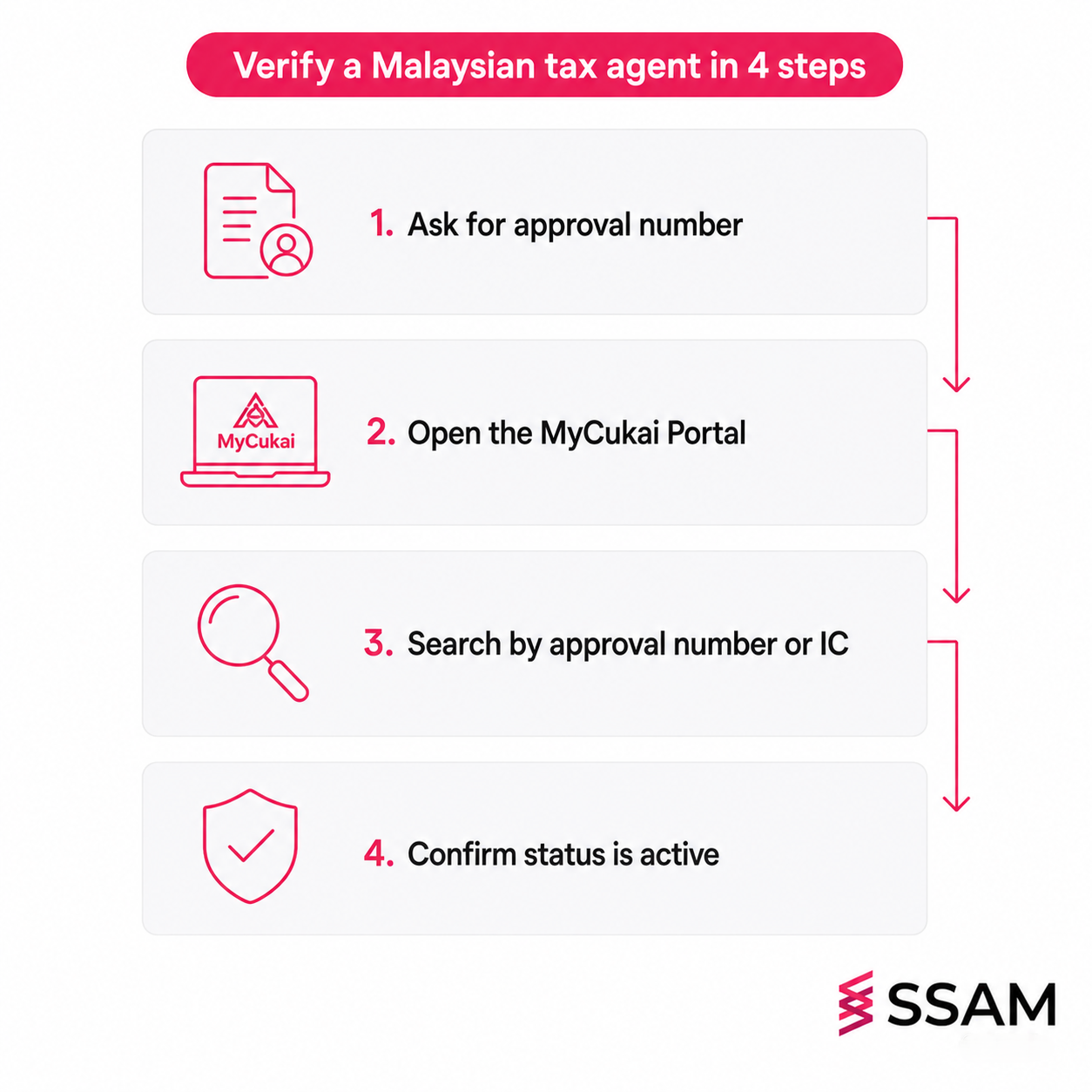
- Ask the agent for their full name as registered and their tax agent approval number.
- Open the MyCukai Portal on the Ministry of Finance website.
- Use the tax agent search function and enter either the approval number or the agent's name and identification number.
- Check that the approval is currently valid, not expired or suspended, and that the name on screen matches the person or firm you are appointing.
Two minutes on the portal is all it takes. If an agent is reluctant to share their approval number, treat that as your answer.
When does your SME need an approved tax agent?
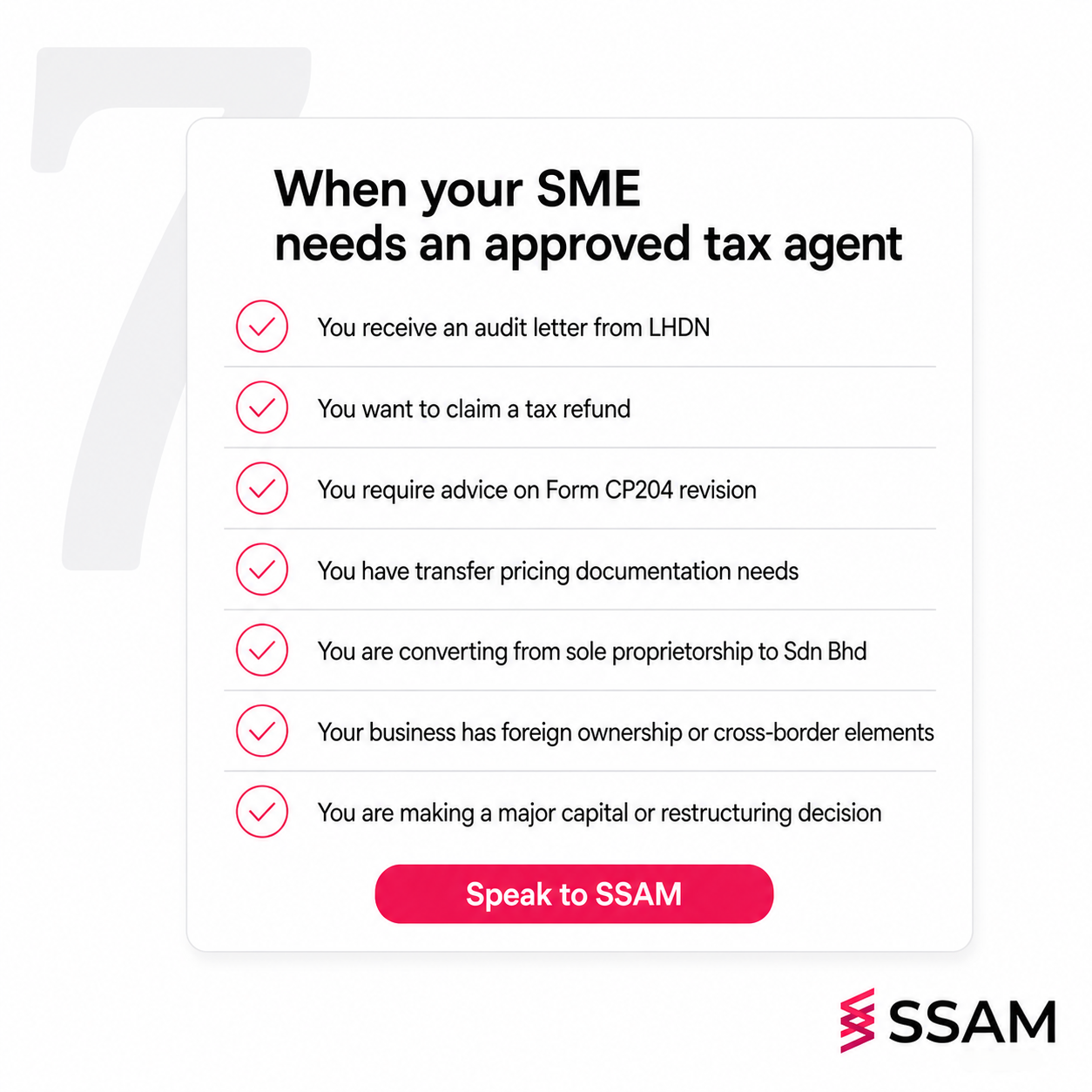
When your SME needs an approved tax agent
Below are the triggers that most often tip the balance.
- You received a letter from LHDN requesting information, clarification, or an audit visit.
- Your company is claiming a meaningful tax refund and needs the claim lodged and defended properly.
- You are revising Form CP204 and want the revised estimate to hold up under scrutiny.
- You are doing related-party transactions and need transfer pricing documentation prepared and signed off.
- You are converting a sole proprietorship to a Sdn. Bhd. and want your tax position handled cleanly during the transition. Our guide on the Sdn Bhd running cost in Malaysia explains the ongoing obligations that usually require licensed support.
- You are a foreign-owned Malaysian entity and need a local representative who can legally speak to IRBM on your behalf.
- You are planning a major capital decision, such as a vehicle purchase before year-end for capital allowance, and want the tax treatment confirmed before you commit.
For a broader view of the warning signs that your business has outgrown DIY tax, see when to hire a tax consultant in Malaysia.
What an LHDN audit looks like without a licensed agent
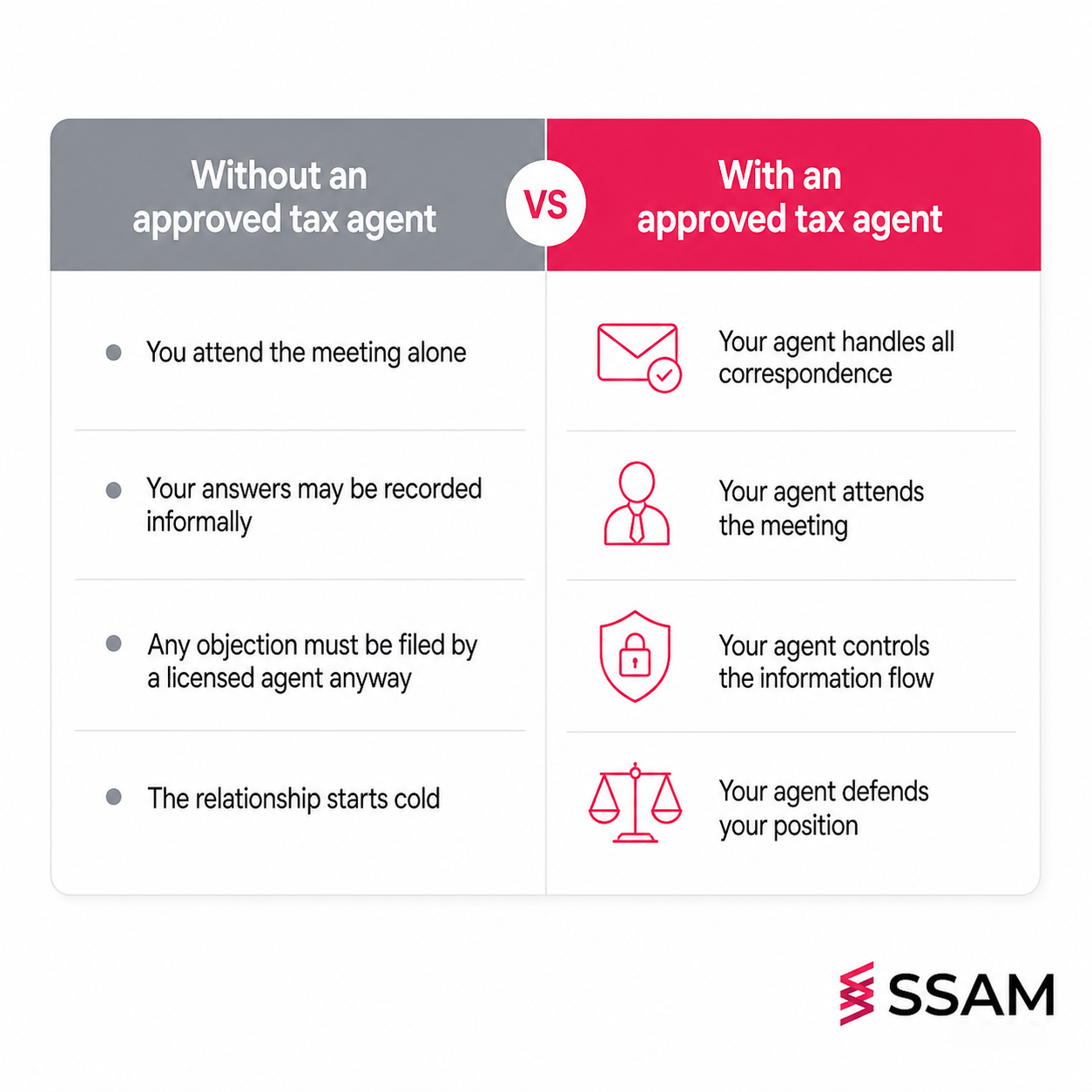
This is the part that quietly convinces most business owners. When an audit letter lands and you do not have a licensed agent, a few things tend to happen in sequence.
The LHDN officer schedules a meeting with your company. Your accountant cannot formally attend as your representative, so the owner or finance manager has to sit in directly. Questions move quickly from ledger entries to tax positions, intercompany charges, and supporting documentation. Answers given informally can still be recorded and relied on later. If you disagree with the officer's view, the objection must be lodged through an approved agent, which means finding one under pressure, briefing them cold, and trying to rebuild the timeline after the fact.
Engaging an approved tax agent before any of this happens changes the dynamic. The agent handles the correspondence, attends the meeting, controls the flow of information, and keeps the discussion on technical ground. You stay focused on running the business while someone with legal standing protects your position.
How to appoint an approved tax agent in Malaysia
Appointing an agent is straightforward once you know what to expect.
- Verify the license through the MyCukai Portal before anything else.
- Sign a letter of appointment that states the agent's approval number, the scope of work, and the tax years covered.
- Grant e-Filing access through LHDN's MyTax portal so the agent can file on your behalf.
- Hand over your prior-year records, management accounts, and any LHDN correspondence already received.
- Agree on a review cadence, usually a pre-filing review before Form C and a mid-year check before Form CP204 revision windows.
A good agent will walk you through each step and will not ask you to sign anything that skips verification.
How SSAM works as your approved tax agent
SSAM Group operates as a MOF licensed tax agent through TSE Taxation Services Sdn. Bhd., part of the SSAM Group 1-stop solution for compliance, accounting, and tax. For over 40 years we have worked with more than 1,000 loyal Malaysian businesses, with 99 percent client satisfaction based on our own feedback and results.
If you are unsure whether your current setup is enough, or if you have an LHDN letter already in hand, speak to SSAM. We will verify where you stand, walk you through the options, and take over the correspondence so you can keep running the business.
Approved tax agent: frequently asked questions
Is it compulsory to use an approved tax agent?
It is not compulsory by law for every company to appoint a tax agent for routine filing, but only an approved tax agent under Section 153 can legally sign returns as agent of record, represent you in an LHDN audit, and lodge formal objections. Most Sdn. Bhd. companies appoint one because the risk of handling audits or disputes without licensed representation is not worth the saving.
Difference between a tax agent and accountant
An accountant keeps your books, prepares financial statements, and can draft tax computations. An approved tax agent is licensed under Section 153 of the Income Tax Act 1967 and is the only person legally allowed to represent you before LHDN for returns, audits, investigations, and appeals. Many professionals hold both qualifications, but the two roles are legally distinct.
How do I check if a tax agent is approved
Use the MyCukai Portal on the Ministry of Finance website. Search by the agent's tax agent approval number or by name and identification number. The portal will show whether the approval is currently valid. If an agent cannot give you their approval number, do not appoint them.
Can my accountant represent me in an LHDN audit
No. Representation in an LHDN audit, investigation, or formal objection must be handled by an approved tax agent. An accountant who is not licensed under Section 153 can support behind the scenes, but cannot act as your representative or sign submissions to LHDN on your behalf.
How much does an approved tax agent cost
Fees vary by scope, complexity, and whether the engagement is a one-off filing or an ongoing retainer. For a straightforward Sdn. Bhd. with clean records, tax agent fees are usually modest. For audit defence, transfer pricing, or investigation work, fees reflect the specialist nature of the work. Get a written quote that lists what is covered, and always verify the approval number before you pay a deposit.
Verify your tax agent this week
If you only act on one thing from this guide, verify your current tax adviser on the MyCukai Portal this week. If they are not Section 153 approved, your business is exposed the moment LHDN sends a letter. Get advice from a licensed team before that letter arrives, not after.
Speak to SSAM for a short review of where you stand, or WhatsApp the team on +6011-6529 9879.
The information in this article is provided for general informational purposes only and does not constitute tax, accounting, financial or legal advice. Tax laws change frequently and may not apply to your situation. Always consult a qualified professional before acting on any information here.