

Key Takeaways
- Tax due diligence is the review that stops you inheriting someone else's tax problems when you buy a business in Malaysia.
- A share purchase generally inherits the target's historical tax liabilities, while an asset purchase generally does not, although it can trigger stamp duty and SST.
- The review should cover income tax filings, withholding tax, SST, employment taxes, transfer pricing and any incentives that could lapse on a change of control.
- A substantial change of more than 50 percent in shareholders can forfeit the target's unabsorbed losses and capital allowances, so confirm what survives the deal.
- Findings should feed directly into the price, the warranties and the indemnities in the sale agreement.
Tax due diligence in Malaysia is the process of checking a target company's tax affairs before you buy a business, so you know exactly what you are taking on. It is the difference between buying a clean company and unknowingly buying a tax bill that surfaces a year later. If you are acquiring shares or a business, this review is your main protection against hidden liabilities, and this guide explains what it covers and how to use the findings.
Written for buyers and for founders preparing to sell, it sets out a practical, Malaysia-specific checklist, explains how a share deal differs from an asset deal, and shows how the results shape the deal itself. Tax due diligence sits alongside legal and financial reviews, and the figures and rules below should be confirmed with your adviser for the specific transaction.
What Is Tax Due Diligence?
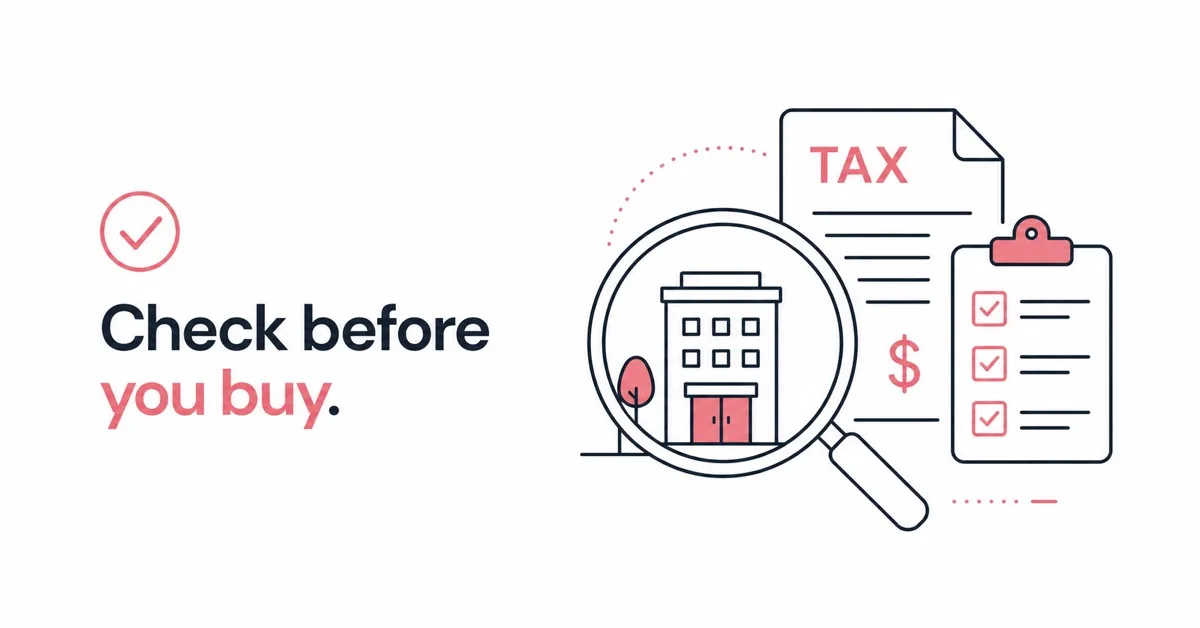
Tax due diligence is a structured review of a target's tax position, carried out before an acquisition to identify exposures, confirm compliance, and quantify risk. It examines whether returns were filed and paid on time, whether the right amounts of tax were accounted for, and whether any positions taken could be challenged by LHDN. The aim is not just to find problems but to put a number on them so they can be priced into the deal.
It is usually performed by an external tax adviser working from a data room of the target's records, supported by management questions. The output is a tax due diligence report that lists findings, estimates potential liabilities, and recommends how to deal with each one, whether through a price reduction, a specific indemnity, or a condition to fix the issue before completion.
Why Tax Due Diligence Matters When You Buy
It matters because in a share purchase you buy the company with its entire history attached, including unpaid tax, under-declared income and unremitted withholding tax. Those liabilities become yours even though they arose before you owned it. Tax due diligence finds these exposures before completion, so you can adjust the price, demand an indemnity, or walk away rather than inherit a problem.
What a Tax Due Diligence Review Covers
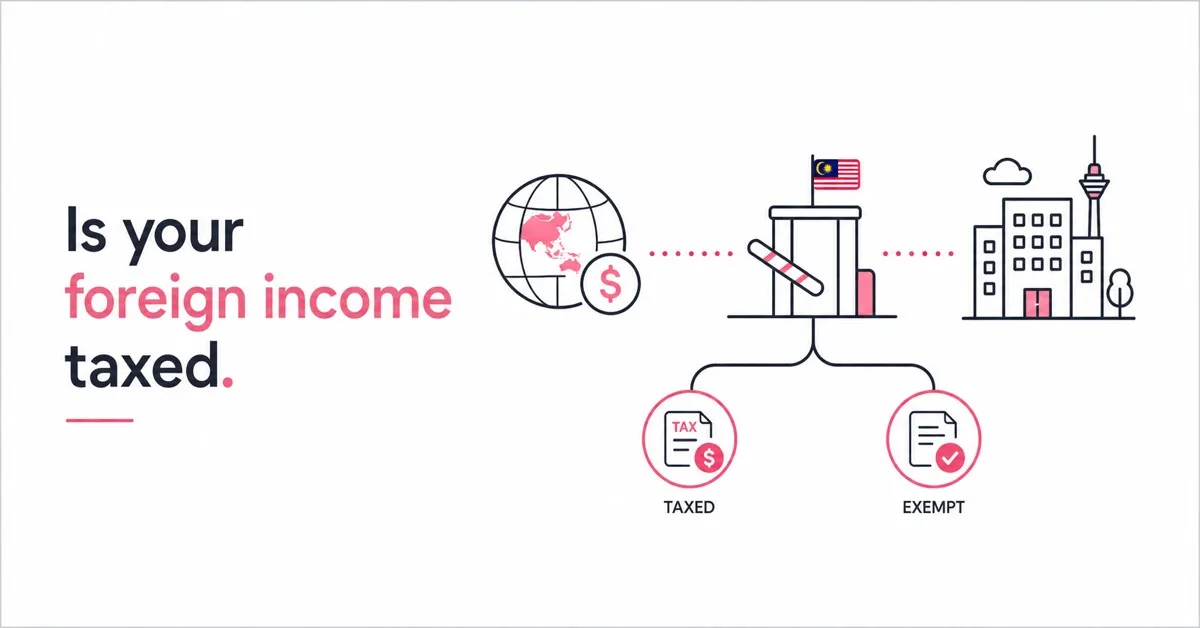
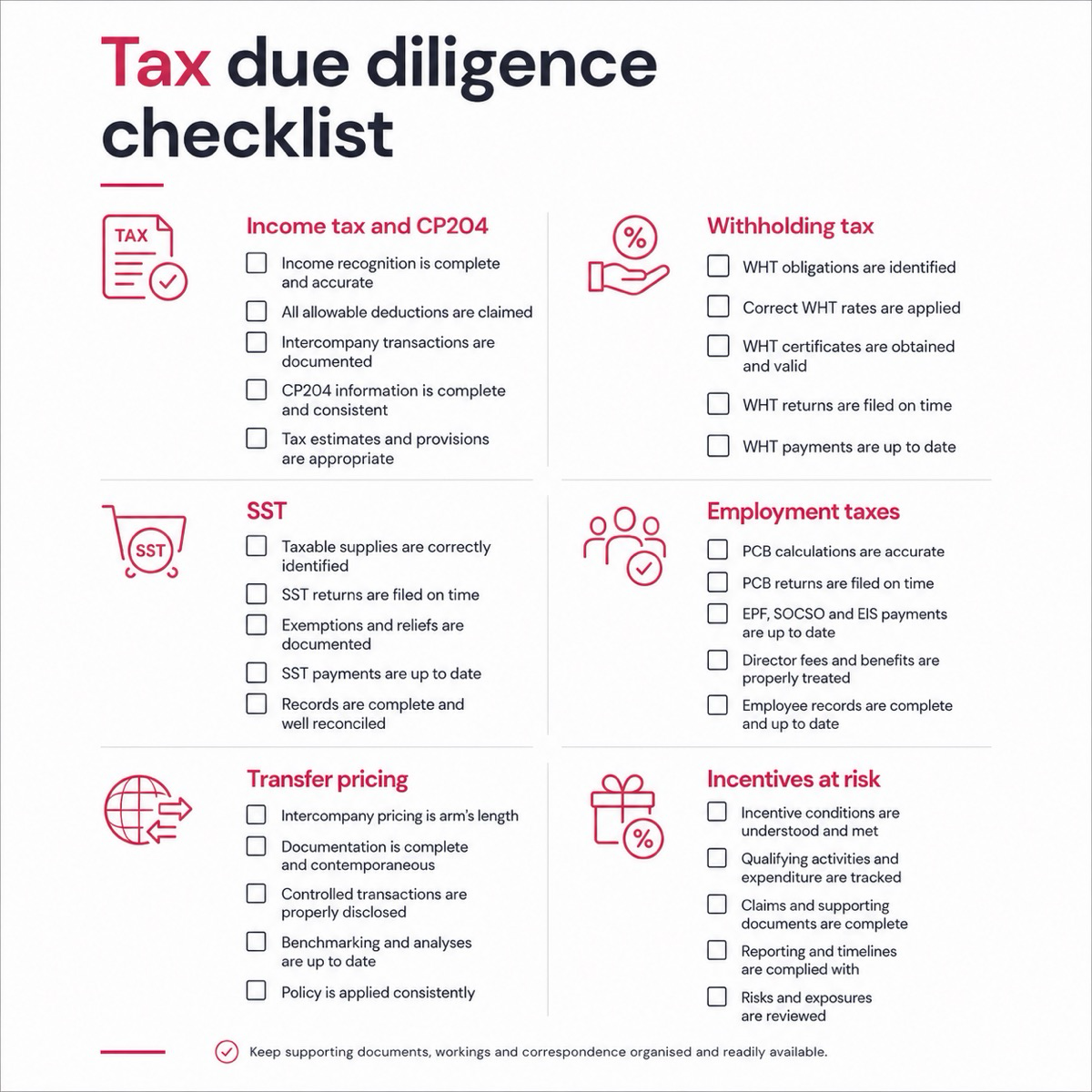
A proper Malaysian review goes well beyond checking that returns were filed. It works through each tax the target is exposed to and tests both compliance and the positions taken. The headline areas are income tax, indirect tax, employment taxes, cross-border payments, transfer pricing, and any incentives that depend on continuity of ownership. If the target earns income abroad, its foreign-sourced income tax position belongs in the review too.
Income Tax and Filing History
Start with corporate income tax. Check that annual returns and tax computations were filed on time, that CP204 tax estimates were submitted and revised appropriately, and that any assessments, audits or LHDN correspondence are resolved. Look for repeated late filings, frequent amendments, and unpaid balances, because these signal both cash exposure and a weak compliance culture. Review any real property gains tax and capital gains tax positions on past disposals as well.
Withholding Tax and SST Compliance
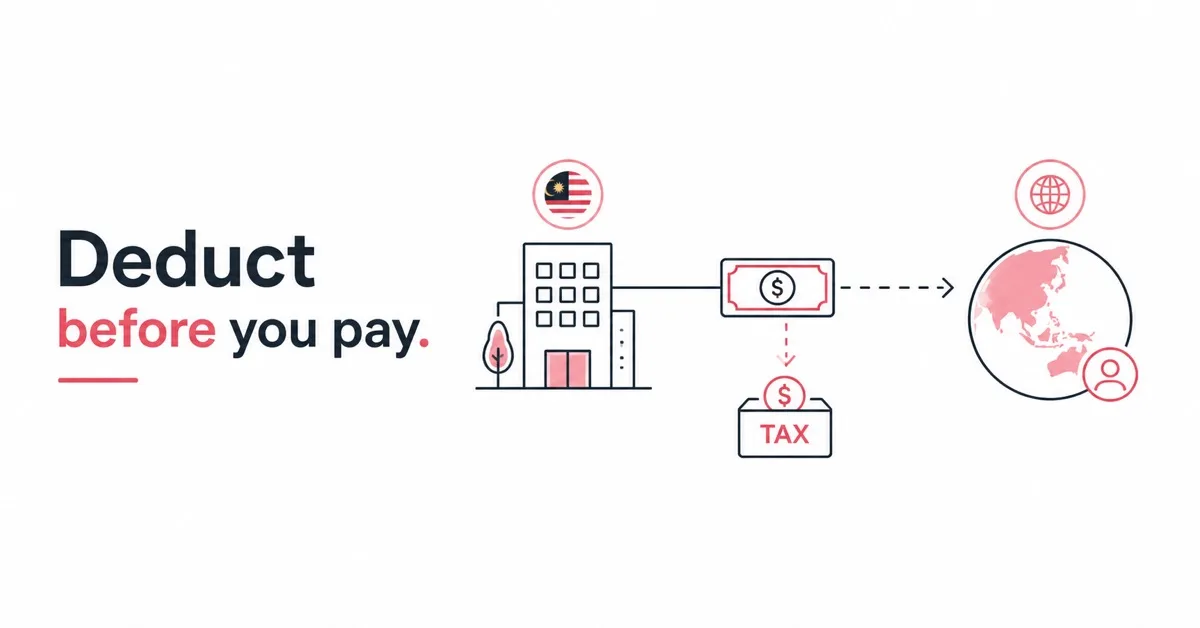
Withholding tax on payments to non-residents is one of the most common findings, because businesses often miss it on software, royalties, interest and service fees, as our guide to withholding tax on foreign vendors explains. Unremitted withholding tax brings the tax itself plus penalties, and the related expense can be disallowed. Where the target relied on treaty relief to reduce those rates, check that the double tax agreements claimed are supported by valid residence certificates. On the indirect side, confirm the target was correctly registered for sales and service tax, charged it where required, and filed and paid on time.
Employment Taxes (PCB, EPF, SOCSO)
Employment-related obligations are easy to overlook and add up quickly. Check that monthly tax deductions, known as PCB, were correctly calculated and remitted, and that employer contributions to EPF and SOCSO were paid for all staff, including directors where required. Misclassifying employees as contractors is a frequent source of exposure that a buyer can inherit.
Share Deal vs Asset Deal: Tax Impact
The structure of the deal changes who carries the historical risk. In a share deal you buy the legal entity, so its past tax liabilities travel with it. In an asset deal you buy selected assets and trade, leaving the historical tax exposure behind with the seller, though the purchase can attract stamp duty and SST and does not always preserve the target's tax attributes.
| Factor | Share deal | Asset deal |
|---|---|---|
| Historical tax liabilities | Inherited by the buyer | Generally stay with the seller |
| Unabsorbed losses and allowances | May survive, but at risk on a substantial ownership change | Do not transfer to the buyer |
| Stamp duty | On the share transfer | On the assets transferred, which can be higher |
| SST | Generally not triggered by the share transfer | May apply to certain assets |
This is why buyers often prefer asset deals for risk reasons while sellers usually prefer share deals, and why the tax findings feed directly into the negotiation over structure. The way you structure the deal also has its own consequences, which we cover in our guide to the tax implications of business restructuring.
Tax Attributes at Risk: Losses and Allowances
A target's accumulated tax losses and unabsorbed capital allowances can be valuable, but they are not guaranteed to survive the deal. As a general rule, unabsorbed business losses can be carried forward for up to ten years, while unabsorbed capital allowances can be carried forward indefinitely. The catch is the substantial change in shareholders rule.
Where there is a substantial change of more than 50 percent in the shareholders of a company, its unabsorbed losses and capital allowances may not be carried forward, subject to the concession that can apply to companies that remain in the same active business. For a buyer counting on those attributes to shelter future profits, this is critical. Confirm whether the losses and allowances will actually survive the change of control before you attribute any value to them, because assuming they carry over when they do not can change the economics of the deal.
Red Flags and How to Protect the Deal
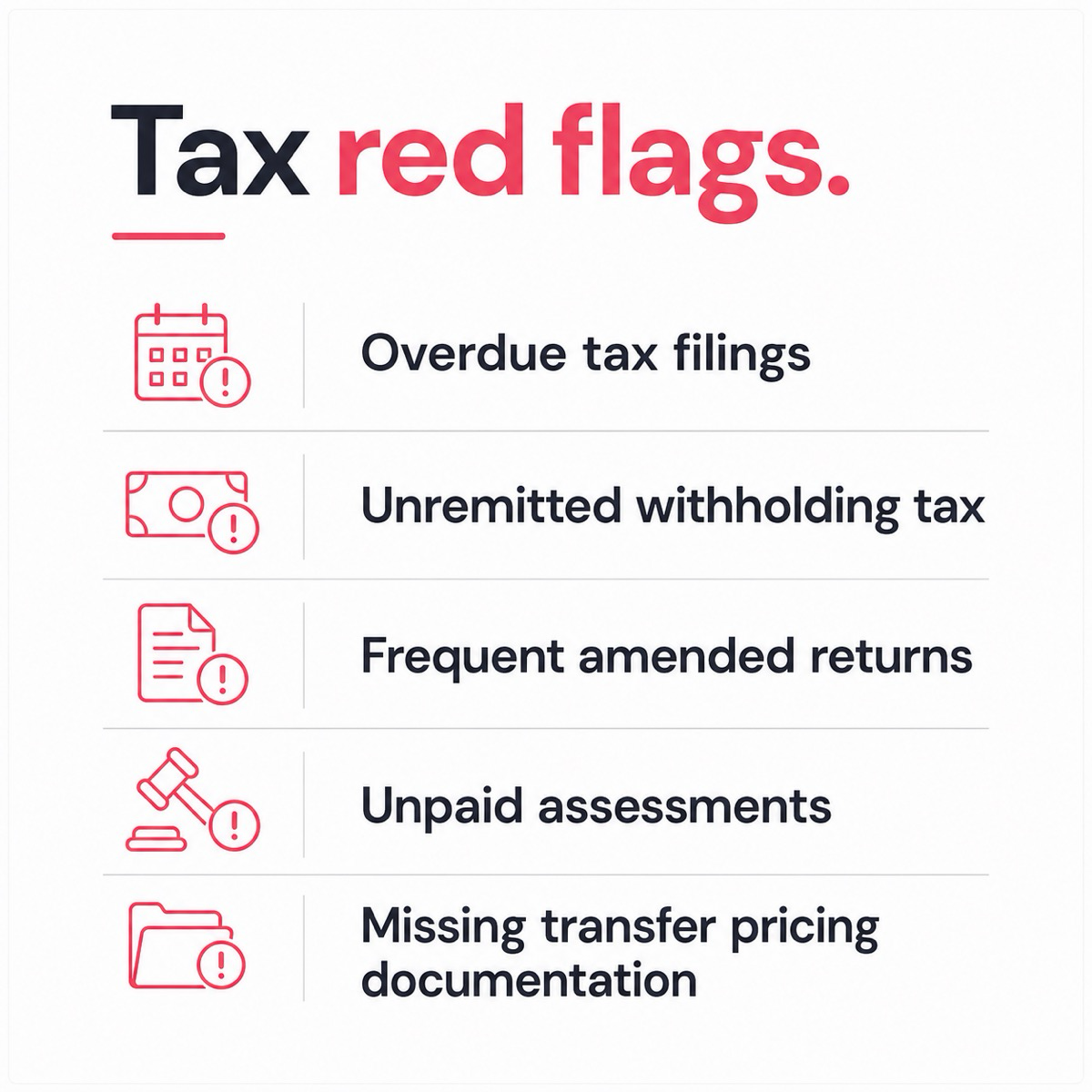
Some findings should make any buyer pause. Overdue tax filings, unremitted withholding tax, frequent amended returns, unpaid or disputed assessments, missing transfer pricing documentation, and incentives or pioneer status that could lapse on a change of control are all signals that the target carries real exposure. None of these necessarily kills a deal, but each needs to be quantified and addressed.
The findings then protect you through the deal mechanics. A quantified exposure can be taken off the price, covered by a specific tax indemnity from the seller, or made a condition that the seller fixes before completion. General tax warranties in the sale agreement give a further layer of protection, and a portion of the price can be held in escrow against tax risks that may crystallise later. The point of the review is to turn unknown risk into priced, allocated risk. If your business is approaching a transaction like this, our note on the signs your business needs a professional tax consultant is a useful gut check, and an approved tax agent can run the review itself.
Get the Review Done Before You Sign
Tax due diligence is one of the highest-return steps in any acquisition, because the cost of the review is small next to the liabilities it can uncover. Decide the deal structure with the tax position in mind, work through a Malaysia-specific checklist rather than a generic one, confirm which tax attributes survive the change of control, and translate every finding into a price adjustment, an indemnity or a condition.
If you are buying or selling a business, this is exactly the kind of work to hand to an experienced adviser. SSAM Group's tax advisory in Kuala Lumpur covers M&A advisory and tax due diligence for Malaysian transactions, helping buyers understand what they are taking on and helping sellers get deal-ready. Speak to SSAM before you sign, so the tax risks are known and managed rather than discovered later.
Frequently Asked Questions
What does tax due diligence cover in Malaysia?
It covers corporate income tax and CP204 filings, withholding tax on payments to non-residents, sales and service tax, employment taxes such as PCB, EPF and SOCSO, transfer pricing documentation, real property gains tax and capital gains exposure, and any incentives or pioneer status that could lapse on a change of control.
Who carries out tax due diligence?
Tax due diligence is usually carried out by an external tax adviser or accounting firm engaged by the buyer, working from a data room of the target's records and management responses. The adviser produces a report quantifying exposures and recommending price adjustments, indemnities or conditions, which the buyer's legal team then reflects in the sale agreement.
Does buying shares mean inheriting the company's tax liabilities?
Generally yes. In a share purchase you acquire the legal entity together with its history, so past tax liabilities remain with the company and effectively become your problem. An asset purchase usually leaves historical tax exposure with the seller, which is one reason buyers often prefer asset deals on risk grounds.
Can I lose the target company's tax losses after acquisition?
Yes. Where there is a substantial change of more than 50 percent in the shareholders, the company's unabsorbed losses and capital allowances may not be carried forward, subject to a concession for companies remaining in the same active business. Confirm whether these attributes survive before you place any value on them.
How long does tax due diligence take?
It depends on the size and complexity of the target and how organised its records are, but a focused review for an SME acquisition often takes a few weeks from receiving a complete data room. Incomplete records, unresolved audits or cross-border issues extend the timeline, which is another reason to start early.
Data Sources and References
- KPMG, Taxation of cross-border mergers and acquisitions, Malaysia: https://taxsummaries.pwc.com/malaysia
- Lembaga Hasil Dalam Negeri (LHDN), guidance on carry-forward of losses and capital allowances: https://www.hasil.gov.my
The information in this article is provided for general informational purposes only and does not constitute tax, accounting, financial or legal advice. Tax laws change frequently and may not apply to your situation. Always consult a qualified professional before acting on any information here.