

Key Takeaways
- Foreign-sourced income received in Malaysia by a resident has been taxable since 1 January 2022, unless a specific exemption applies. The old blanket exemption is gone.
- Resident individuals enjoy an exemption on most foreign-sourced income that runs until 31 December 2036, with one main carve-out for partnership business income.
- Companies and LLPs can exempt foreign dividends through one of two routes: a participation exemption or meeting economic substance requirements.
- Remote workers and freelancers based in Malaysia need to look at residence and remittance carefully, because their overseas earnings can fall inside the rules.
- The rules have changed repeatedly. Budget 2026 extended the exemption on foreign capital asset gains, so always check the current dates before you act.
Foreign-sourced income tax in Malaysia changed fundamentally on 1 January 2022, when the long-standing exemption on income earned abroad and brought into the country was removed for residents. If you run a company with overseas operations, receive foreign dividends, or work remotely from Malaysia for clients abroad, the rules now decide whether that money is taxed when it lands here. Years of amendments, exemption orders and extended deadlines have left a lot of confusion, so this guide sets out the current position clearly.
This is a long read because foreign-sourced income, often shortened to FSI, affects three very different groups in different ways: companies and LLPs, resident individuals, and remote workers or freelancers. We will take each in turn, explain the exemptions that still apply, and finish with the practical compliance steps. Because the rules have moved so often, confirm the latest dates and conditions for your own situation before you rely on them.
What Is Foreign-Sourced Income?
Foreign-sourced income is income that arises outside Malaysia. It covers foreign business profits, dividends from overseas companies, interest from foreign accounts, rental from property abroad, employment income earned overseas, and gains on foreign assets. The common thread is that the income has its source in another country rather than in Malaysia.
Malaysia operates a territorial tax system, which historically meant only Malaysian-sourced income was taxed, while foreign income was taxed only on a remittance basis or not at all. The 2022 change kept the territorial framework but switched on tax for foreign income that is received in Malaysia by a resident. The trigger word is received. Income that stays offshore is generally outside the charge, while income remitted into Malaysia can be taxable unless an exemption covers it.
Is Foreign Income Taxable in Malaysia?
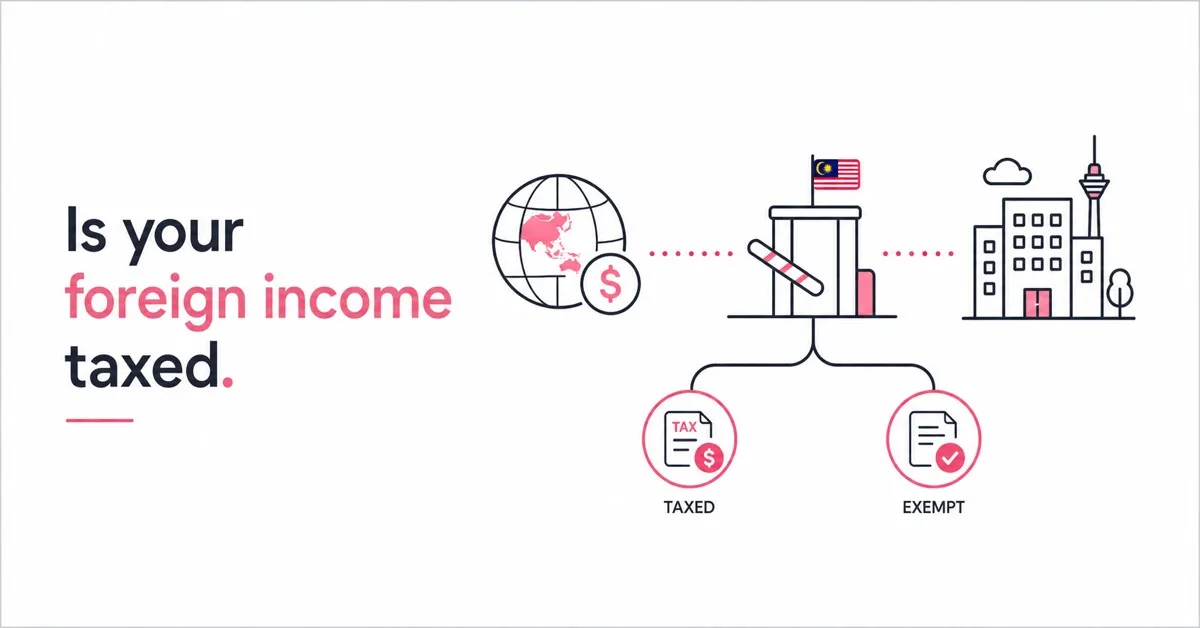
Yes, in many cases. Since 1 January 2022, foreign-sourced income received in Malaysia by a resident is taxable unless a specific exemption applies. Several broad exemptions remain, including one for most foreign income of resident individuals and one for qualifying foreign dividends received by companies. Income that is never remitted into Malaysia generally stays outside the charge.
What Changed in 2022 and Why
Before 2022, residents could bring most foreign income into Malaysia free of tax. From 1 January 2022 that blanket exemption was withdrawn, and foreign-sourced income received in Malaysia became taxable in principle. The change did not come out of nowhere. It followed international pressure to align with global standards on harmful tax practices and to move Malaysia off the European Union watchlist for preferential regimes.
To soften the impact and keep Malaysia competitive, the government introduced a set of exemptions and transitional measures rather than taxing everything at once. That is why the current picture looks complicated: the headline rule is that FSI is taxable, but layered on top are time-limited exemptions for individuals, conditional exemptions for company dividends, and special treatment for capital gains. Understanding which exemption applies to you is the whole game.

FSI Rules for Companies and LLPs
For companies, LLPs and other qualifying persons, the most important category is foreign dividend income. Many Malaysian groups hold overseas subsidiaries or investments, and the dividends they receive can qualify for exemption if specific conditions are met. If you are setting up or reshaping such a holding structure, read this alongside the tax implications of business restructuring. Other classes of foreign business income for companies are generally within the tax charge when received in Malaysia, so the dividend exemption is the area that needs the closest attention.
Foreign Dividend Exemption Conditions
The foreign dividend exemption is not automatic. It applies where the qualifying conditions are satisfied, and the recipient must keep documentation to support the claim. The exemption is also subject to the conditions set out in the relevant exemption order and LHDN guidelines, so the paperwork matters as much as the underlying facts. Labuan entities do not qualify under these provisions, and the exemption is aimed at genuine commercial holdings rather than artificial arrangements.
Participation Exemption vs Economic Substance
There are two alternative routes to exempting a foreign dividend, and a taxpayer can rely on whichever one fits.
| Route | Core test | Best suited to |
|---|---|---|
| Participation exemption | The dividend has been subject to tax in the country of origin and that country's headline tax rate is at least 15 percent | Dividends from subsidiaries in normal-rate jurisdictions |
| Economic substance | The recipient has adequate qualified employees and adequate operating expenditure in Malaysia to carry out its specified economic activities | Genuine holding or operating companies based in Malaysia |
A short worked example shows the choice. A Malaysian holding company receives a dividend from a subsidiary in a country with a headline corporate rate above 15 percent, where the profits were taxed. That dividend can qualify under the participation exemption without testing substance. If instead the dividend came from a low-tax jurisdiction below the 15 percent threshold, the participation route fails, and the company would need to rely on the economic substance route, demonstrating real people and real spending in Malaysia. Confirm the precise conditions and any de minimis rules before relying on either route.
FSI Rules for Resident Individuals
Resident individuals get the most generous treatment. Foreign-sourced income received in Malaysia by a resident individual is exempt for the period from 1 January 2022 to 31 December 2036. This covers the usual classes such as foreign employment income, foreign dividends, interest and rental, which is why most ordinary individuals bringing money home are not currently taxed on it.
There is a key carve-out. The exemption does not extend to foreign income received by a resident individual that arises from a partnership business in Malaysia. So a salaried worker, an investor with overseas holdings, or someone receiving an overseas pension is generally covered, while a partner channelling foreign partnership income through Malaysia should take advice. The exemption is also conditional in the sense that the income should have been subject to tax in the country of origin, so keep evidence of the foreign position.
FSI Rules for Remote Workers and Freelancers
This is the group most guides ignore, even though it is growing fast. If you live in Malaysia and work remotely for overseas clients or an overseas employer, the first question is your tax residence. If you are tax resident in Malaysia, your foreign employment or freelance income generally falls under the FSI rules when it is received here.
The good news is that the resident individual exemption to 2036 currently covers most of this income, so many Malaysia-based remote workers are not taxed on overseas earnings they bring in, provided they are genuinely foreign-sourced and the conditions are met. The points to watch are whether the work is truly foreign-sourced rather than Malaysian-sourced because you performed it from Malaysia, whether you are actually resident, and whether your structure is a partnership that falls outside the exemption. Because residence and source can be finely balanced for remote work, this is an area where a short advice session pays for itself. Our guide to tax consultant services in Kuala Lumpur explains how that support works.

Economic Substance Requirements Explained
Economic substance is the test that stops the dividend exemption being used by letterbox companies. To meet it, the Malaysian recipient must show that it has an adequate number of qualified employees and incurs adequate operating expenditure in Malaysia to carry out the specified economic activities relevant to its income. In plain terms, there must be real people doing real work and real money being spent here, in proportion to the income claimed.
There is no single magic headcount or spending figure, because what counts as adequate depends on the nature and scale of the activity. A pure holding company that simply holds shares and receives dividends is judged differently from an active operating company. The practical takeaway is to document your Malaysian employees, your local costs, and the decisions genuinely made in Malaysia, so that if LHDN asks, you can show the substance was real. Outsourcing some functions can be acceptable if it is properly managed and controlled from Malaysia, but this needs care.
How Double Tax Relief Works on FSI
Where foreign income is taxable in Malaysia and has also been taxed abroad, foreign tax credit relief prevents the same income being taxed twice over. If Malaysia has a treaty with the source country, you can claim a bilateral credit equal to the lower of the foreign tax paid or the Malaysian tax on that income. Where there is no treaty, a unilateral credit is available, limited to half the foreign tax paid.
This interacts closely with the exemptions above. If your foreign income is exempt, there is no Malaysian tax to credit against, so the relief is only relevant when the income is taxable. Keeping evidence of foreign tax paid is essential either way, because it supports both an exemption that depends on origin-country taxation and any credit claim. Our guide to double tax agreements covers the credit mechanics and the Certificate of Residence in full.
Budget 2026 Updates and Extended Deadlines
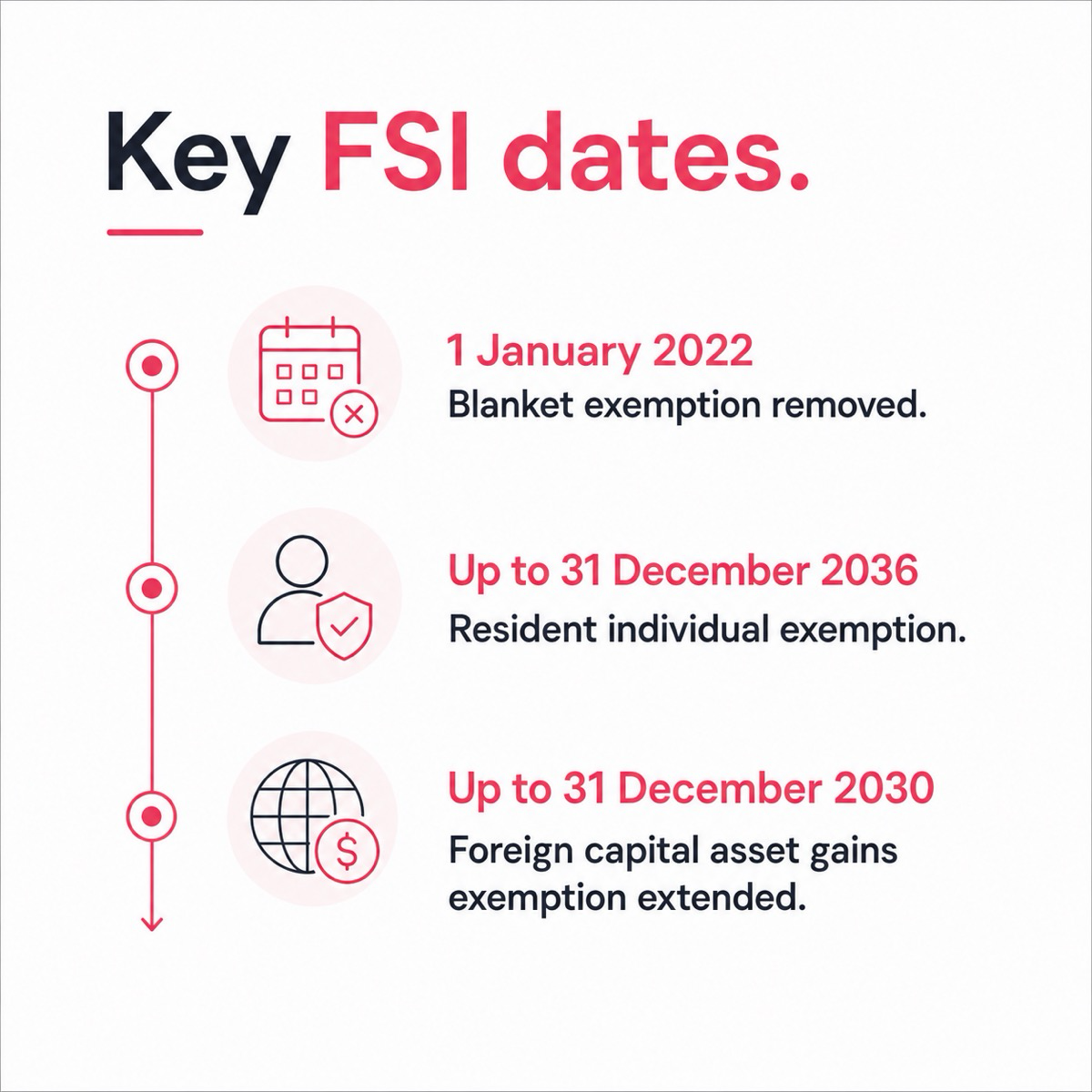
The FSI rules have been a moving target, and the deadlines are the part most online guides get wrong. Two dates matter most right now. The resident individual exemption runs to 31 December 2036, far beyond the 2026 date that many older pages still quote. Separately, the exemption on gains from the disposal of foreign capital assets, originally set to expire on 31 December 2026, was extended in Budget 2026 to 31 December 2030.
The practical message is to distrust any source that says the exemptions simply end in 2026. They have repeatedly been extended, and the scope differs for individuals, company dividends, and capital gains. Before you make a decision such as repatriating a large sum or restructuring a holding, confirm the current expiry date and conditions for that specific category, because an out-of-date assumption here can be expensive.
How to Stay Compliant
Staying compliant with the FSI rules is mostly about records and judgement. Start by identifying which category you fall into, because the answer differs for a company, a resident individual and a remote worker. Then track what you actually receive in Malaysia, since the charge bites on income received here, and keep evidence of any foreign tax already paid.
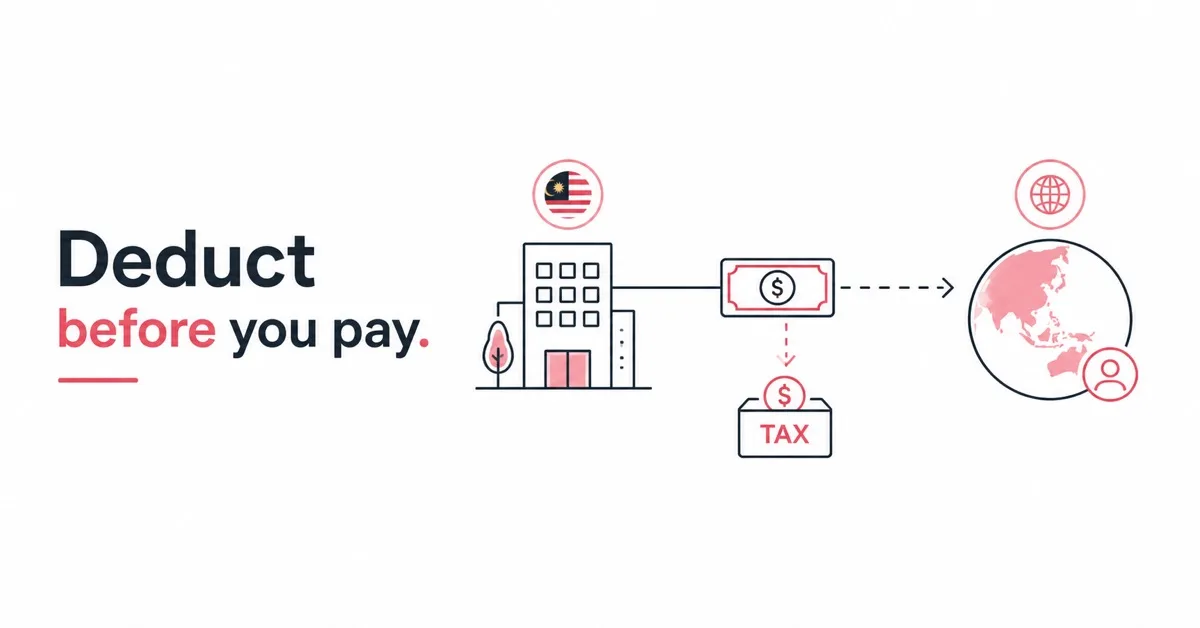
A simple compliance checklist helps. Keep records of the source and nature of each foreign receipt, the date it was remitted into Malaysia, the foreign tax paid with supporting statements, and the basis for any exemption you are claiming, whether that is the individual exemption, the participation exemption or economic substance. Declare taxable remittances correctly in your return, and do not assume that income kept offshore today will never be relevant, because plans change. When the amounts are significant, or your situation spans company and personal income, get advice before you remit. If your business also pays overseas suppliers, the separate rules on withholding tax on foreign vendors apply to those outbound payments. Working with an approved tax agent gives you a defensible position if LHDN reviews the claim.
If you are unsure where you stand, SSAM Group's tax advisory in Kuala Lumpur helps Malaysian businesses and individuals assess their foreign-sourced income exposure, test economic substance, and structure remittances correctly. When foreign income features in a deal, it should also feed into the buyer's tax due diligence. Speak to SSAM before you bring significant foreign income into Malaysia, and you can act with confidence rather than guesswork.
Frequently Asked Questions
Is foreign income taxable in Malaysia?
Since 1 January 2022, foreign-sourced income received in Malaysia by a resident is taxable unless an exemption applies. Broad exemptions remain, including one for most foreign income of resident individuals to 2036 and one for qualifying foreign dividends received by companies. Income kept offshore and never remitted generally stays outside the charge.
Is my overseas salary taxable if I work remotely from Malaysia?
If you are tax resident in Malaysia, overseas employment income is within the FSI rules when received here, but the resident individual exemption to 31 December 2036 currently covers most of it. Watch whether the income is genuinely foreign-sourced rather than earned in Malaysia, and take advice if your arrangement is a partnership.
Are foreign dividends taxed in Malaysia?
Foreign dividends received by a company can be exempt if they meet either the participation exemption, where the dividend was taxed in a country with a headline rate of at least 15 percent, or the economic substance requirements. For resident individuals, foreign dividends are generally covered by the exemption running to 2036.
What are the economic substance requirements?
Economic substance means the Malaysian recipient has an adequate number of qualified employees and incurs adequate operating expenditure in Malaysia to carry out its specified economic activities. There is no fixed headcount, since adequacy depends on the scale and nature of the activity, so document your local people, spending and decision-making.
Does the exemption still apply after 2026?
Yes, for several categories. The resident individual exemption runs to 31 December 2036, and Budget 2026 extended the exemption on gains from disposal of foreign capital assets to 31 December 2030. Always confirm the current date for your specific category, because the rules have been extended more than once.
How do I avoid being taxed twice on foreign income?
Where foreign income is taxable in Malaysia and was also taxed abroad, claim foreign tax credit relief. With a treaty you get a bilateral credit of the lower of the foreign or Malaysian tax, and without one a unilateral credit of half the foreign tax. Keep evidence of the foreign tax paid to support the claim.
Data Sources and References
- Lembaga Hasil Dalam Negeri (LHDN), guidelines on the tax treatment of income received from outside Malaysia: https://www.hasil.gov.my
- PwC Worldwide Tax Summaries, Malaysia (corporate and individual income determination): https://taxsummaries.pwc.com/malaysia
The information in this article is provided for general informational purposes only and does not constitute tax, accounting, financial or legal advice. Tax laws change frequently and may not apply to your situation. Always consult a qualified professional before acting on any information here.