

Key Takeaways
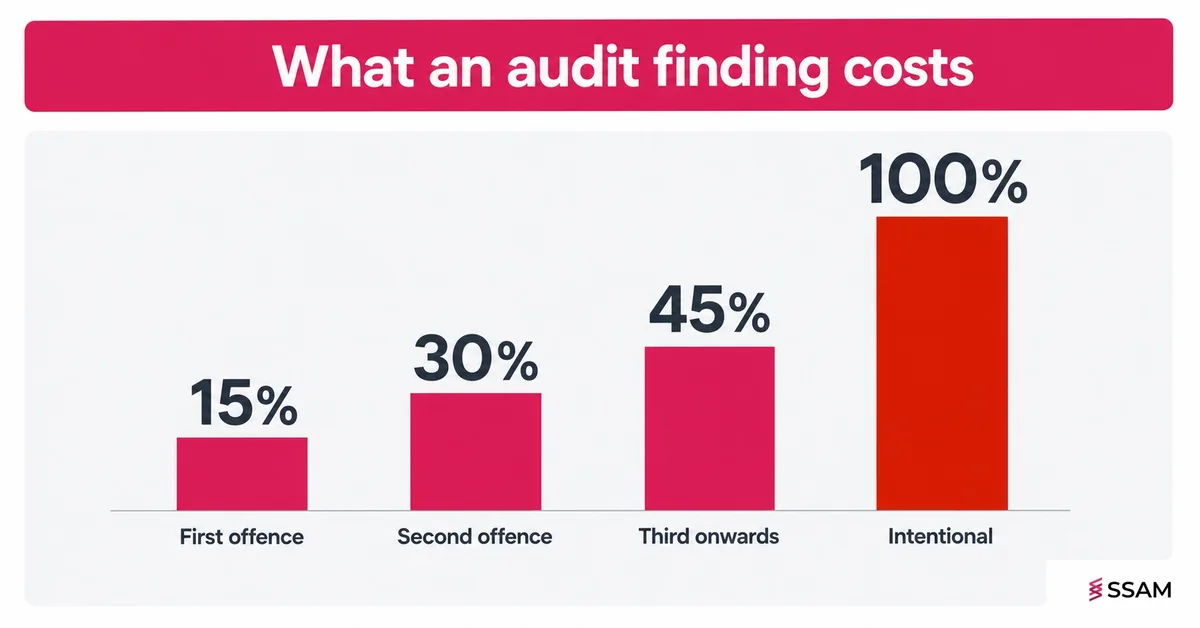
- Audit penalties under subsection 113(2) run at 15% of undercharged tax for a first offence, 30% for a second and 45% from the third onwards.
- Intentionally incorrect returns attract the full 100% penalty, and technical adjustments attract 0%.
- Voluntary disclosure before an audit cuts the rate to 15%, or 10% within six months of your filing deadline.
- Filing an appeal does not pause payment. Settle first, argue after.
- Unpaid bills grow through late-payment increases and can lead to travel restrictions and garnishee action.
The first question after any audit finding is the same: how much is the LHDN tax audit penalty going to cost? The honest answer is that the law allows up to 100% of the tax undercharged, but the published framework applies far lower rates in most cases, and several legitimate levers reduce the bill further. This guide sets out the exact rates, the related fines and the reduction playbook. If a finding has already arrived, our tax audit services in Kuala Lumpur include negotiating that number down.
How Much Is an LHDN Tax Audit Penalty?
An LHDN tax audit penalty under subsection 113(2) of the Income Tax Act 1967 is 15% of the undercharged tax for a first offence, 30% for a second and 45% for the third and subsequent offences. Intentionally incorrect returns attract 100%, while genuine technical adjustments attract no penalty at all.
Those tiers come from the Tax Audit Framework on Income Tax and Employer, effective 15 March 2025, and they sit on top of the undercharged tax itself, which you must also pay. How the audit reaches its findings is explained in our complete guide to a tax audit in Malaysia.
The Legal Basis: Section 113(2) Explained
Section 113(2) empowers LHDN to impose a penalty equal to the amount of tax undercharged, meaning 100%. The framework then applies concessionary rates based on your offence history, reserving the full rate for intentional cases. Two features matter in practice:
- Offence counting. Your rate depends on your record of previous 113(2) penalties, so a clean history keeps you at 15%.
- Technical adjustments. Where the issue is a genuinely arguable technical position rather than an error, the framework applies 0%. How a finding is classified is therefore worth arguing, with professional support.
The Director General also holds discretion under subsection 124(3) to reduce or eliminate penalties, which is where cooperation and complete records pay off.
Fines for Related Tax Offences
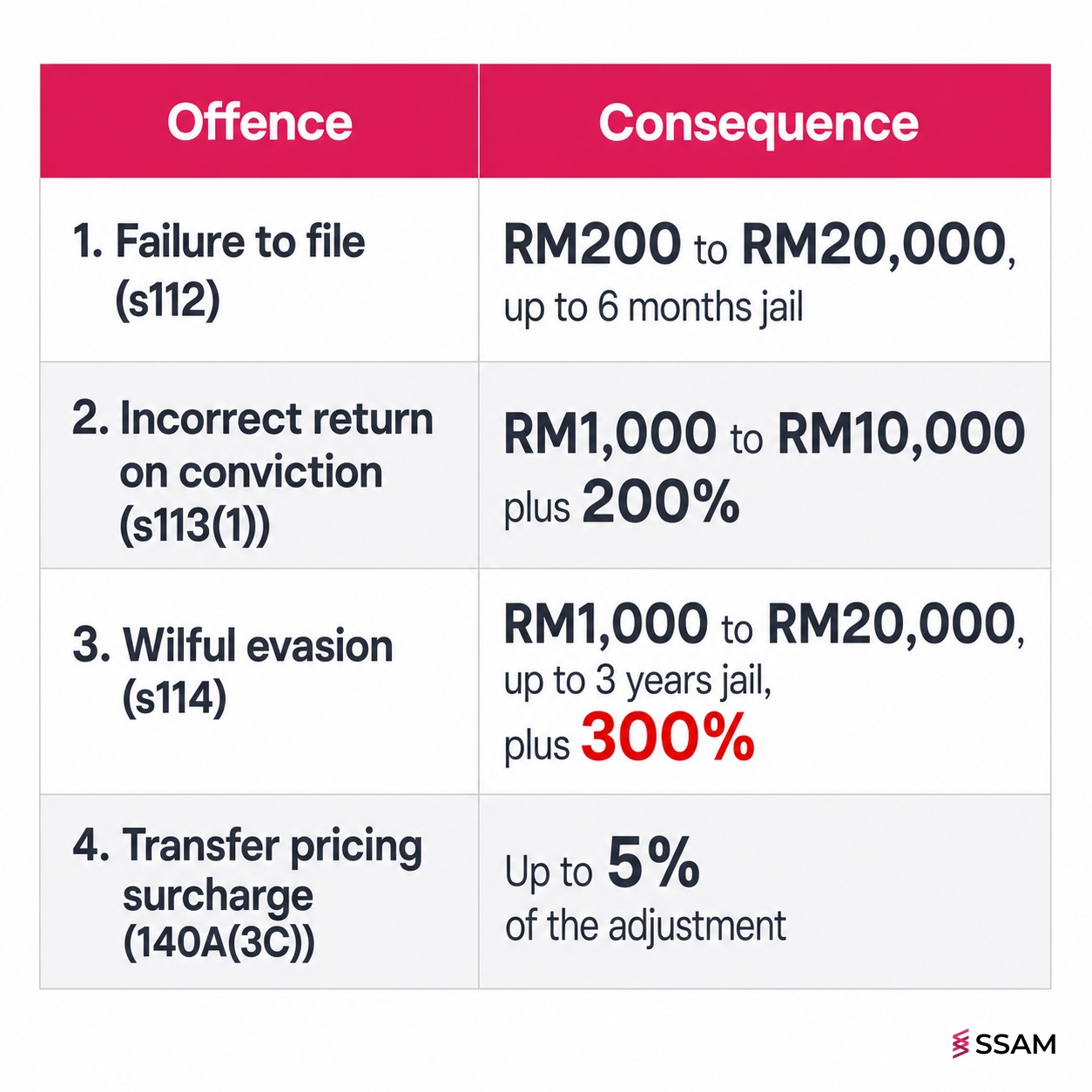
The 113(2) penalty is not the only number on the board. Related offences carry their own statutory fines:
| Offence | Provision | Consequence |
|---|---|---|
| Failure to file a return without reasonable excuse | Section 112(1) | Fine of RM200 to RM20,000, imprisonment up to 6 months, or both |
| Incorrect return on conviction | Section 113(1) | Fine of RM1,000 to RM10,000 plus 200% of tax undercharged |
| Wilful evasion on conviction | Section 114(1) | Fine of RM1,000 to RM20,000, imprisonment up to 3 years, or both, plus 300% of tax undercharged |
| Transfer pricing adjustment surcharge | Subsection 140A(3C) | Up to 5% of the adjustment, even with no extra tax payable |
Wilful evasion cases sit in investigation territory rather than routine audits, a distinction explained in our comparison of a tax audit vs tax investigation. Related party adjustments and the 5% surcharge are covered in our complete guide to transfer pricing in Malaysia.
Five Legitimate Ways to Reduce the Penalty
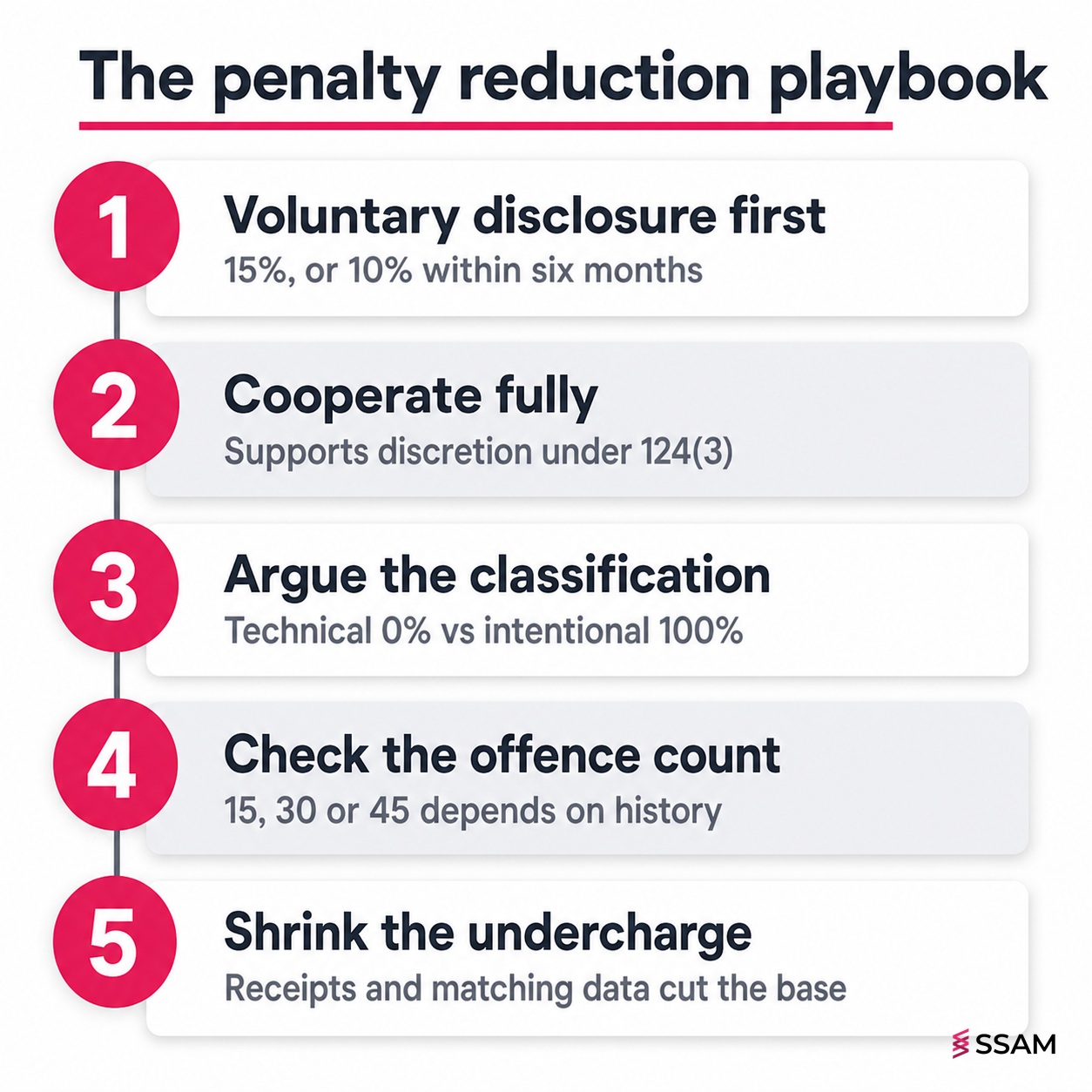
- Disclose before the audit starts. A voluntary disclosure to LHDN caps the penalty at 15%, and at 10% when made within six months of your return filing deadline. This is the single biggest lever.
- Cooperate fully during the audit. Complete, punctual submissions and honest answers support the exercise of DGIR discretion under subsection 124(3).
- Argue the classification. The gap between a technical adjustment at 0%, a first offence at 15% and an intentional finding at 100% is enormous. Well-documented positions and professional representation influence where a finding lands, and offence classifications have been successfully argued down in practice.
- Check the offence count. Confirm that LHDN's record of your previous offences is accurate before accepting a 30% or 45% rate.
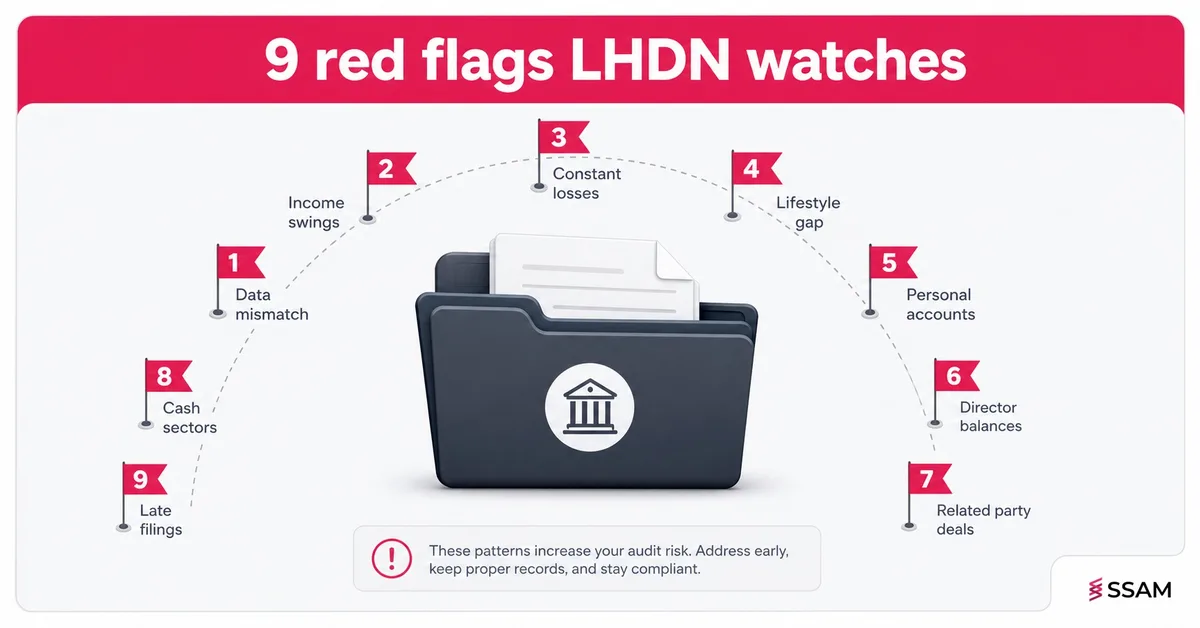
- Keep the evidence that supports your numbers. Every deduction backed by a receipt and every income figure matching third-party data shrinks the undercharge, which shrinks the base the percentage applies to. The warning signs that create findings in the first place are listed in our guide to LHDN tax audit triggers.
Pay First, Appeal Later
A costly misunderstanding deserves its own section. Filing an appeal does not pause payment. The assessment stands and the amount remains due and collectible while your appeal is heard. Owners who assume the dispute freezes the bill accumulate late-payment increases on top of the penalty they are disputing.
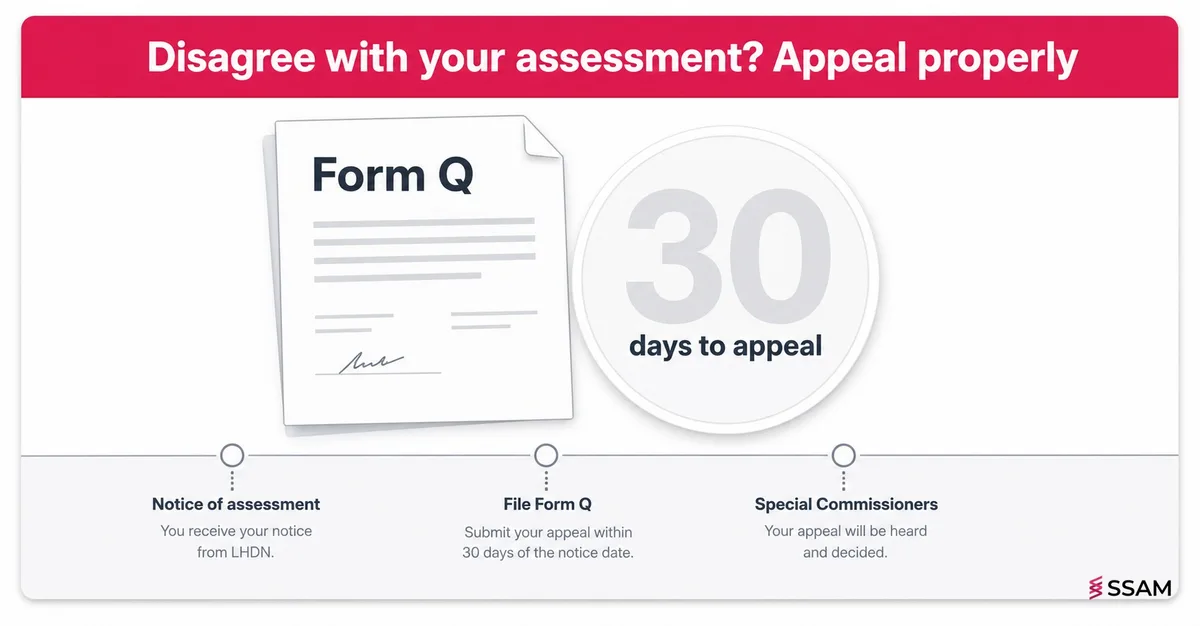
The correct sequence is to settle or arrange payment, then pursue the dispute through the formal route in our step-by-step guide on how to appeal an LHDN tax assessment.
What Happens If You Cannot Pay
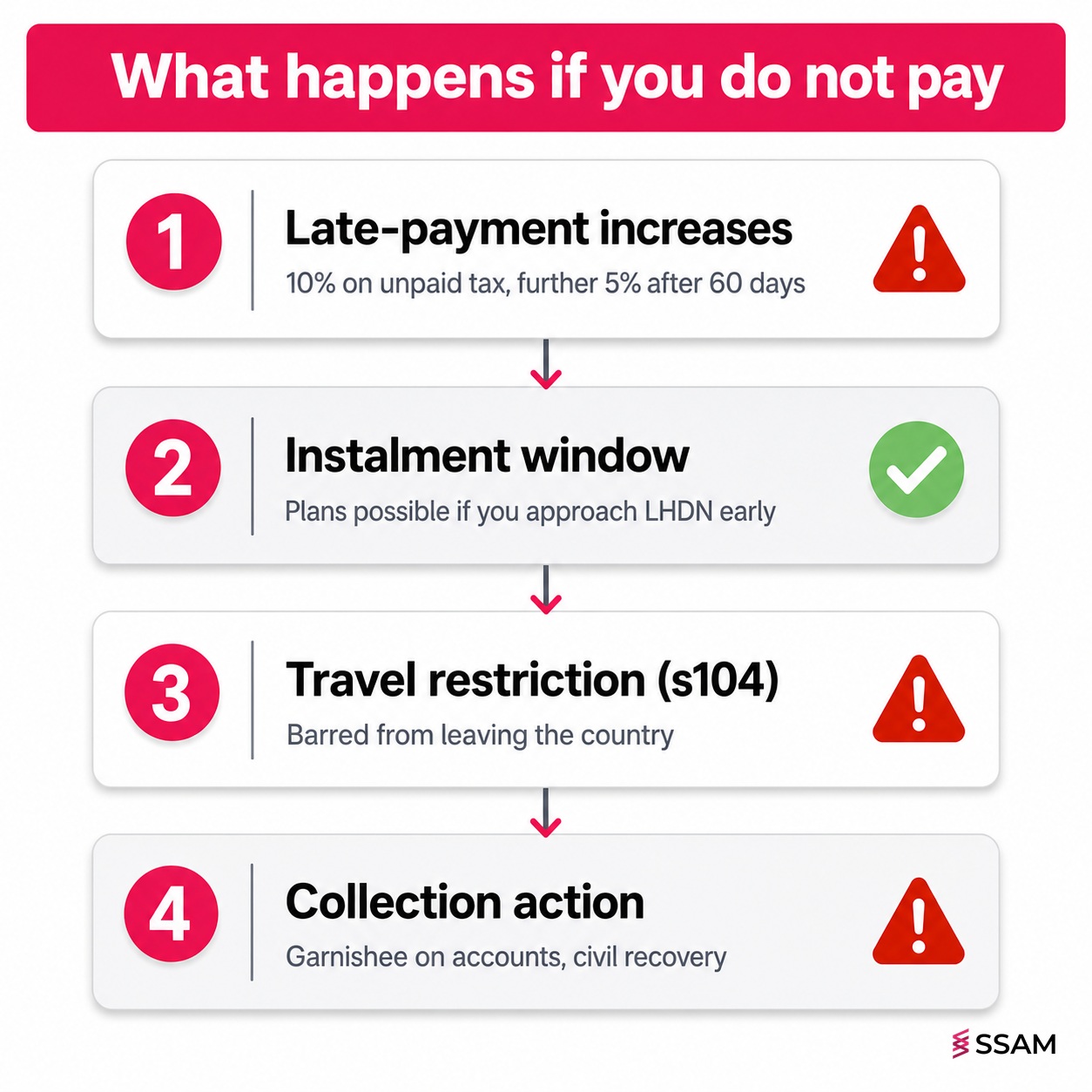
Ignoring the bill makes it grow, then makes it personal:
- Late-payment increases. Unpaid tax attracts a 10% increase, with a further 5% applying after 60 days of continued non-payment.
- Instalment arrangements. LHDN does entertain structured payment plans when approached early with a realistic proposal. Silence is what closes that door.
- Travel restriction. Section 104 allows LHDN to bar taxpayers with unpaid liabilities from leaving the country, and travellers discover this at the airport. Check your status before booking flights if you have arrears.
- Collection action. Persistent arrears can lead to garnishee action on bank accounts and civil proceedings to recover the debt.
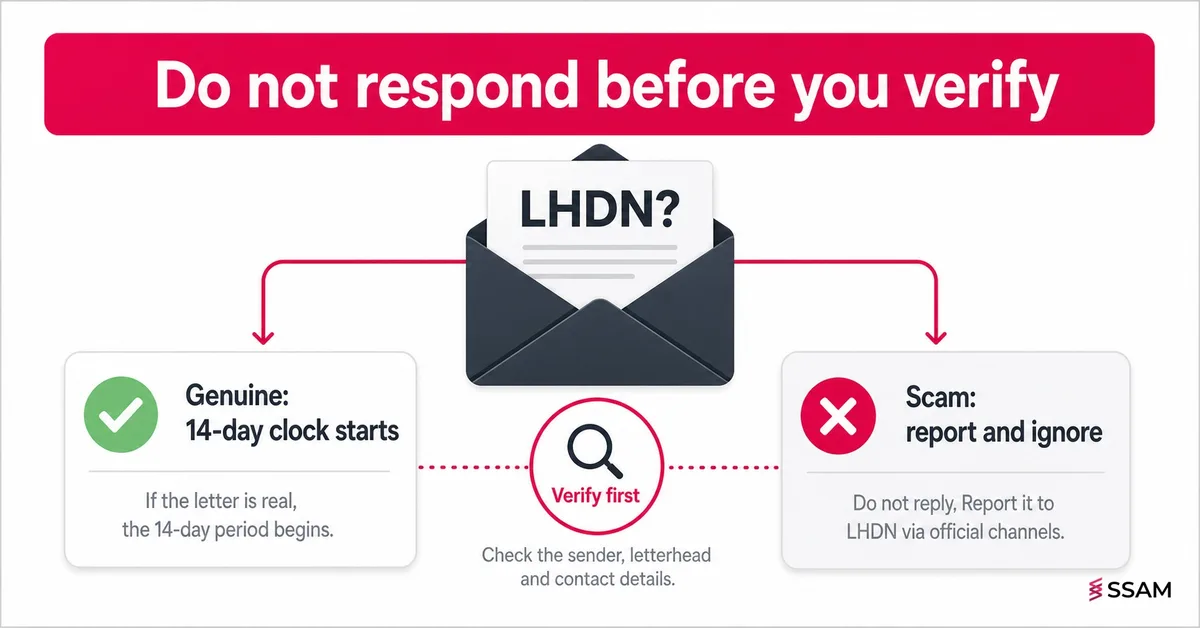
None of these steps arrive without warning, which is why the letters should never sit unopened, and why late filing carries its own separate costs covered in our guide to LHDN penalties for late tax filing.
The Paper Salary Trap
One audit pattern inflates penalties faster than most owners expect. Payroll expenses claimed without payslips, EPF and SOCSO contributions or proof of actual work get reclassified as fake expenses. The disallowed deduction increases the undercharged tax, and the penalty percentage then applies to that bigger base. A RM60,000 paper salary at the 45% tier costs far more than the tax it once saved.
The fix is boring and effective: real employment documentation for every person on the payroll, including family members who genuinely work in the business.
Frequently Asked Questions About Audit Penalties
What is the penalty rate for a first tax audit offence?
15% of the tax undercharged under the current framework, on top of the tax itself. The rate rises to 30% for a second offence and 45% from the third onwards.
Can LHDN really charge 100%?
Yes, where the incorrect return is intentional. Section 113(2) allows a penalty equal to the full amount of tax undercharged, and the framework reserves that rate for deliberate cases.
Does an appeal stop me from having to pay?
No. Tax and penalties remain due while the appeal runs. Pay or arrange instalments first, then dispute through Form Q.
Can audit penalties be negotiated?
The published tiers apply, but the Director General can reduce or eliminate penalties under subsection 124(3), and how a finding is classified can be argued with evidence. Cooperation and complete records strengthen both routes.
What if I find my own mistake before LHDN does?
Disclose it voluntarily. Pre-audit disclosure caps the penalty at 15%, or 10% within six months of your filing deadline, which is always cheaper than an audit finding.
Data Sources / References
- LHDN, Tax Audit Framework on Income Tax and Employer (15 March 2025): https://www.hasil.gov.my/media/wgpombsp/20250315_tax-audit-framework-on-income-tax-and-employer.pdf
- LHDN, Offences, Fines and Penalties: https://www.hasil.gov.my/en/legislation/offences-fines-and-penalties/
- EY, Updated tax audit frameworks: https://www.ey.com/en_my/technical/tax-alerts/updated-tax-audit-frameworks
The information in this article is provided for general informational purposes only and does not constitute tax, accounting, financial or legal advice. Tax laws change frequently and may not apply to your situation. Always consult a qualified professional before acting on any information here.