

Key Takeaways
- The core LHDN penalty for late tax filing comes from Section 112(1) of the Income Tax Act 1967, a fine of RM200 to RM20,000, imprisonment up to 6 months, or both.
- Late payment of tax is a separate issue under Section 103. It adds a 10% surcharge on the unpaid amount, plus another 5% if the balance is still outstanding after 60 days.
- Underestimating your CP204 tax instalment is a third penalty under Section 107B and 107C, with its own 10% rule.
- You can appeal. Form Q, Form N and a Section 131 application for relief each cover different scenarios, but you must still pay the tax and penalty first.
- Repeat non-filing and under-reporting escalate sharply, reaching up to 300% of tax undercharged plus possible prosecution.
An LHDN penalty for a late tax filing in Malaysia rarely lands as one charge. Miss the deadline by a single day and you can trigger a Section 112 fine, a 10% surcharge on the unpaid tax, and an extra 5% after 60 days if you still have not paid. Underestimate your CP204 tax estimate for the year, and there is a fourth charge waiting on top.
This guide separates the three things that most Malaysian SME owners confuse. Late filing is one issue. Late payment is a second. Underestimating your tax instalments is a third. Each sits in its own section of the Income Tax Act 1967 and each is calculated differently. You will see how LHDN works out the numbers, what realistic appeal routes are available, and what to put in place so the next year does not repeat the same cycle. If you carry Sdn Bhd director tax obligations for the first time, start here before the next deadline arrives.
What is the LHDN penalty for late tax filing?
The LHDN penalty for late tax filing in Malaysia is a fine of RM200 to RM20,000, imprisonment up to 6 months, or both under Section 112(1) of the Income Tax Act 1967. Unpaid tax also attracts a 10% surcharge under Section 103, plus an additional 5% if still unpaid after 60 days.
Which LHDN penalties apply to which offence
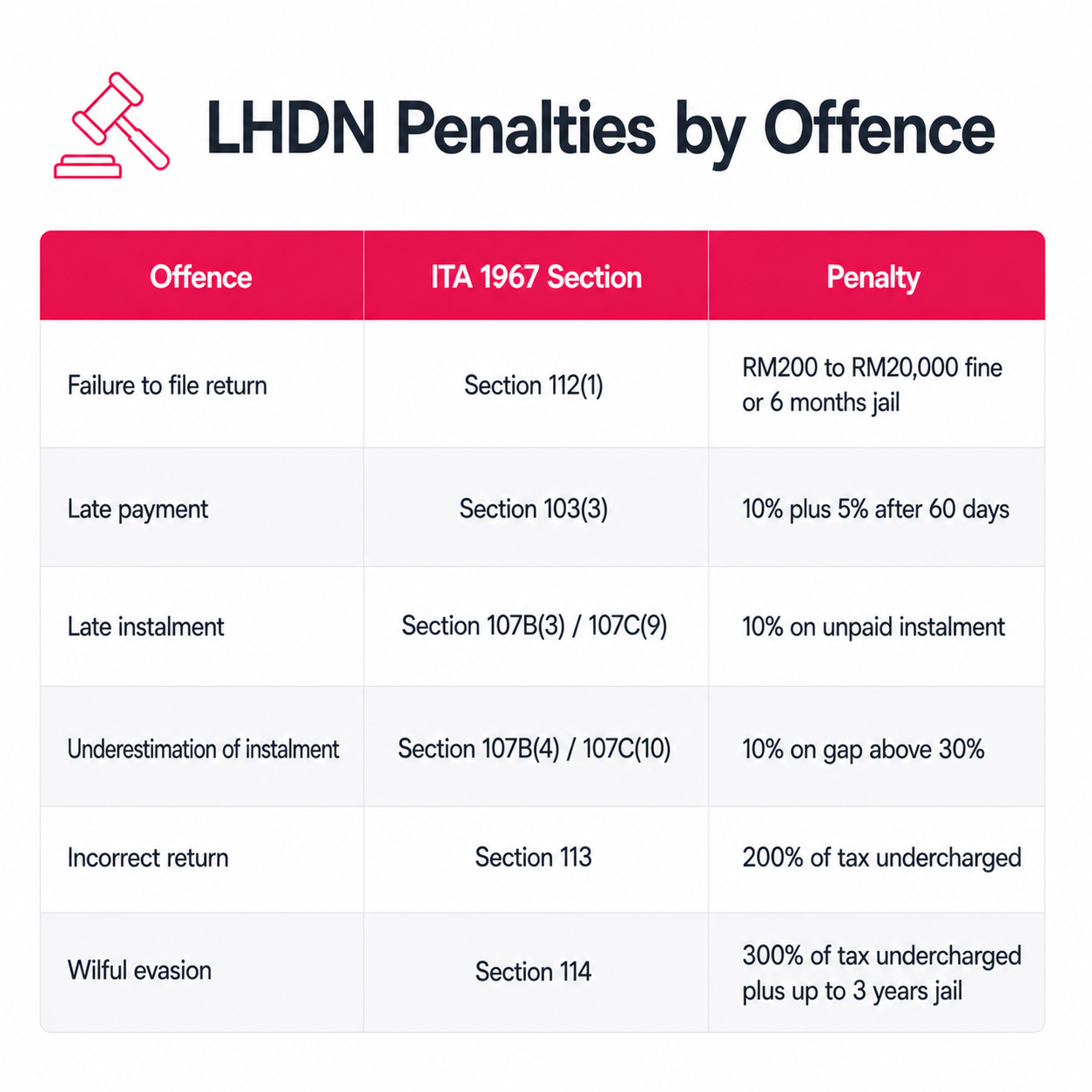
Most business owners lump every LHDN penalty under one label. It helps to separate them by the section of the Income Tax Act 1967 that applies. The fine for not filing a return is different from the surcharge on unpaid tax, and both are different from the penalty for underestimating your tax instalments. The table below shows how LHDN treats each offence.
| Offence | ITA 1967 section | Penalty |
|---|---|---|
| Failure to furnish a tax return | Section 112(1) | Fine of RM200 to RM20,000, imprisonment up to 6 months, or both |
| Late payment of tax | Section 103(3) | 10% increase on the tax due, plus 5% on the balance if unpaid after 60 days |
| Late instalment payment (CP204) | Section 107B(3) / 107C(9) | 10% on the unpaid instalment |
| Underestimation of tax instalment | Section 107B(4) / 107C(10) | 10% on the difference above the 30% threshold |
| Incorrect return or incorrect information | Section 113(1)(a) and (b) | RM1,000 to RM10,000 and 200% of tax undercharged |
| Wilful tax evasion | Section 114(1) | RM1,000 to RM20,000 or imprisonment up to 3 years, and 300% of tax undercharged |
The most common stacking pattern is a missed Form C filing combined with unpaid tax. Section 112 handles the first. Section 103 handles the second. If your CP204 estimate for the year was also off, add a Section 107B or 107C charge. For a closer look at how to set a safer estimate and avoid that third layer, read the CP204 tax estimate guide.
How LHDN calculates your late filing penalty
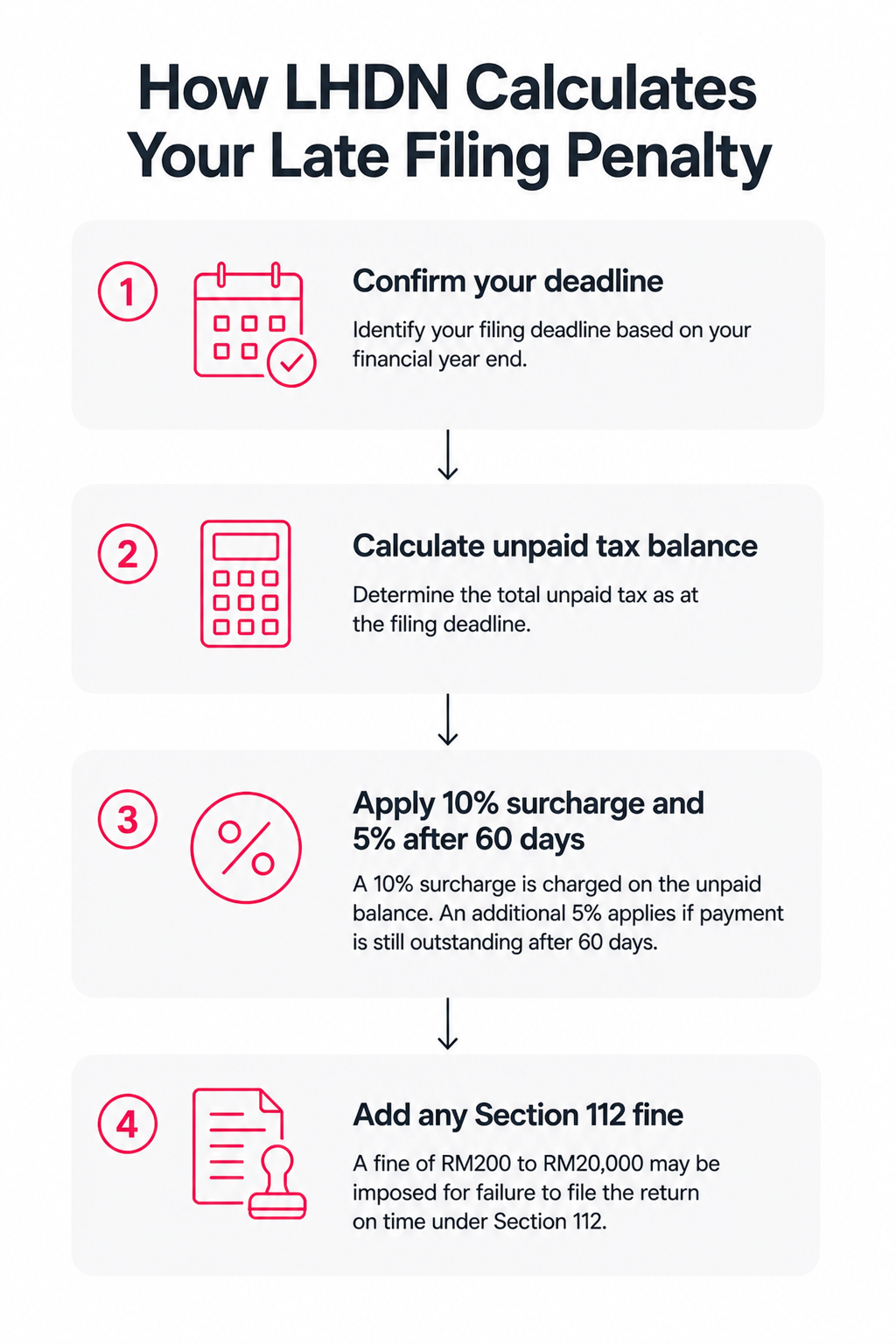
There are four steps that decide how much you owe. Walk through them in order before you panic or before you pay.
Step 1. Confirm the deadline you missed
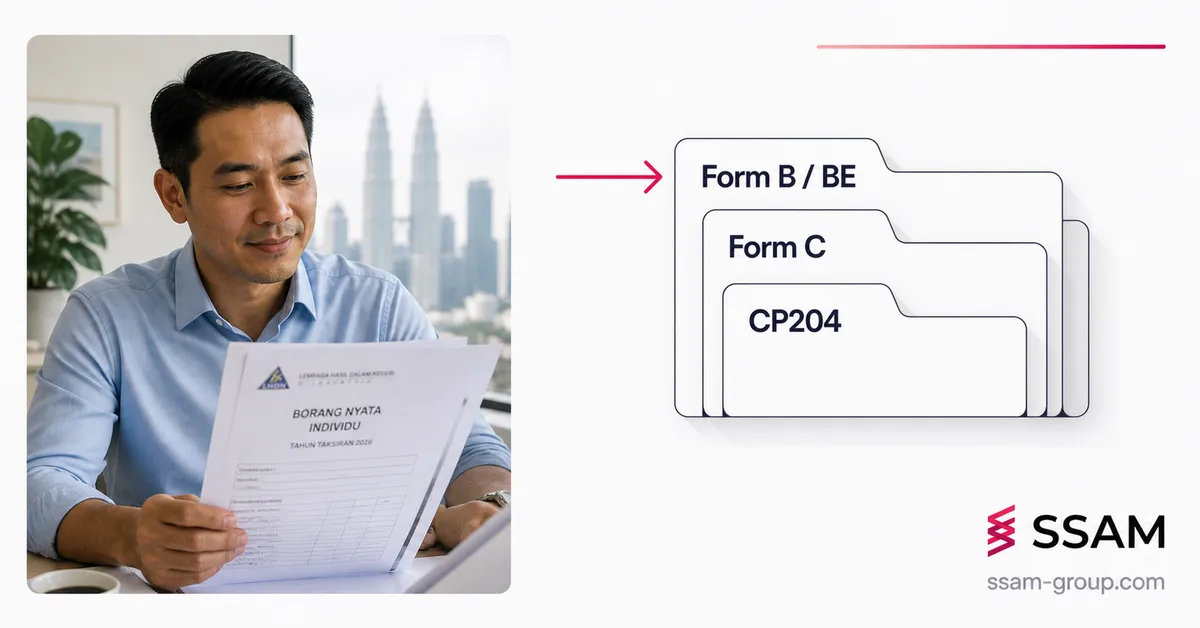
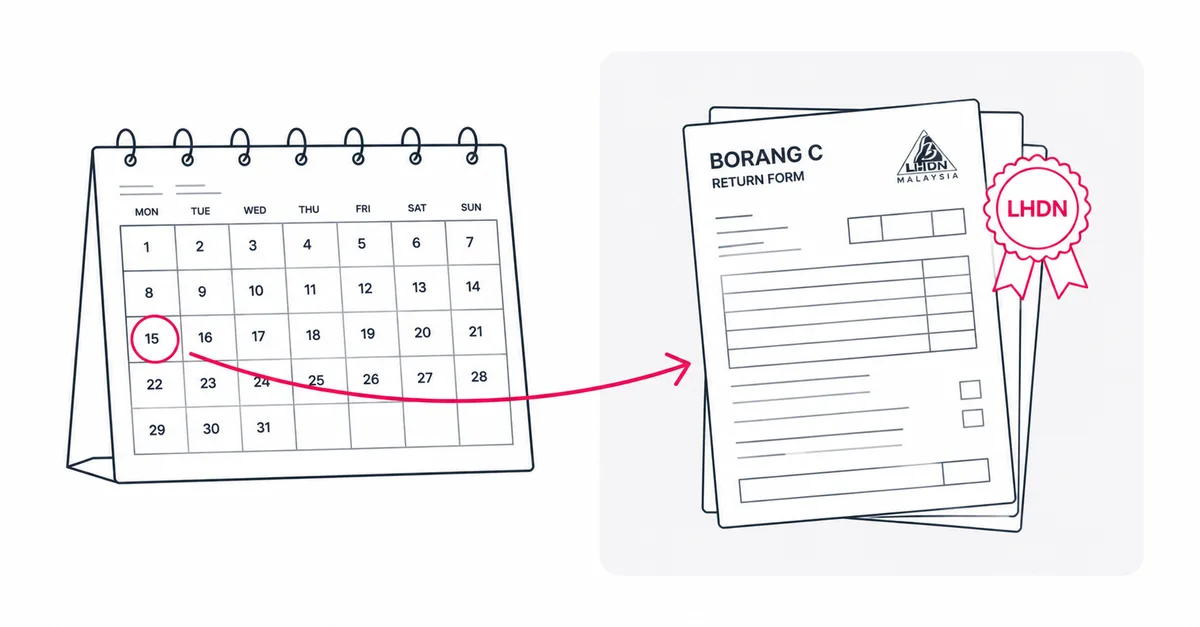
Your deadline depends on the entity type, not on a single national date. For individuals without business income, the filing deadline is 15 May. Individuals with business income have until 15 July. A Sdn Bhd files Form C within 8 months after its financial year-end. Employers file Form E by 30 April. Partnerships file Form P. LLPs file Form PT. Missing the right form is the same as missing the return, so confirm which forms apply to your setup in the Form B, Form C and Form E breakdown.
Step 2. Calculate the tax payable balance
The penalty only bites if there is unpaid tax. For a company, your balance is the final tax liability for the year of assessment less the CP204 instalments already paid. For an individual, it is the computed tax less monthly PCB and any tax already remitted. If the final figure is zero or in refund territory, Section 103 has nothing to grip, though Section 112 can still apply to a missing return.
Step 3. Apply the 10% surcharge and 5% add-on
Once Section 103 applies, LHDN adds 10% on the unpaid tax from the day after the payment deadline. If the amount plus surcharge is still outstanding 60 days later, an additional 5% is charged on the outstanding balance. These are separate levies. They accumulate rather than replace each other.
Step 4. Add any Section 112 fine issued
If LHDN issues a compound for failure to furnish a return, the Section 112 fine sits separately from the surcharge. For the full list of filing windows across different entity types, see the Malaysia tax filing deadlines 2026 list.
Worked example: late filing for a Sdn Bhd
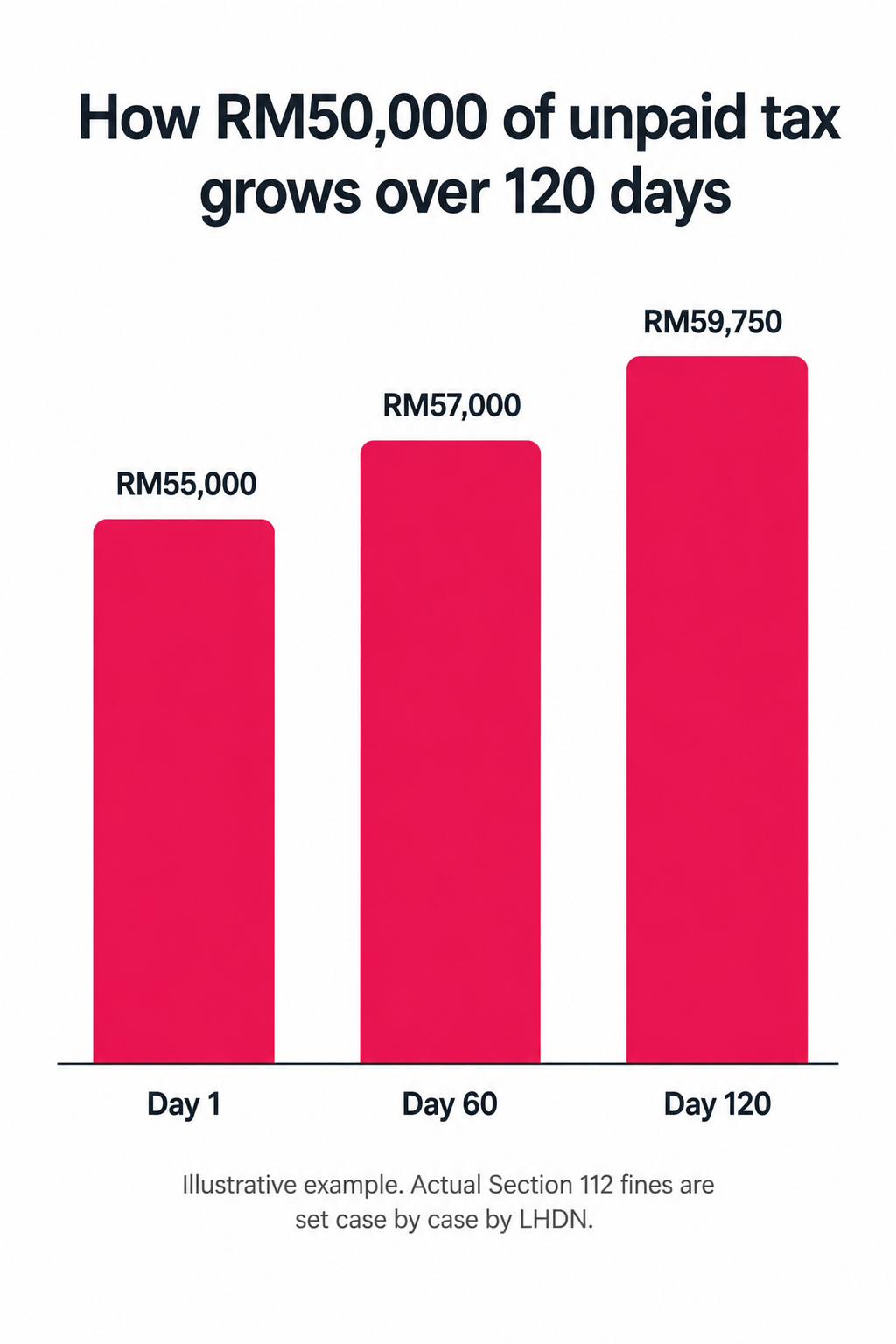
A short example shows how fast the numbers move. Assume your Sdn Bhd has a final tax liability of RM50,000 for the year of assessment, and assume that the full RM50,000 is unpaid on the payment deadline. The table below shows how the position changes from day 1 to day 120.
| Position | Day 1 (just missed) | Day 60 | Day 120 |
|---|---|---|---|
| Tax payable | RM50,000 | RM50,000 | RM50,000 |
| Section 103 10% surcharge | RM5,000 | RM5,000 | RM5,000 |
| Additional 5% after 60 days | RM0 | RM0 | RM2,750 |
| Section 112 fine (illustrative) | RM0 | RM2,000 | RM2,000 |
| Total payable | RM55,000 | RM57,000 | RM59,750 |
A few things to notice. The 10% kicks in immediately after the payment deadline. The 5% at day 60 is charged on the outstanding balance, which is the original RM50,000 plus the RM5,000 surcharge, giving RM2,750. The Section 112 fine is discretionary within RM200 to RM20,000, so the RM2,000 shown above is only illustrative. Even without an aggressive fine, the cost of delay stacks up quickly.
How to appeal an LHDN late filing penalty
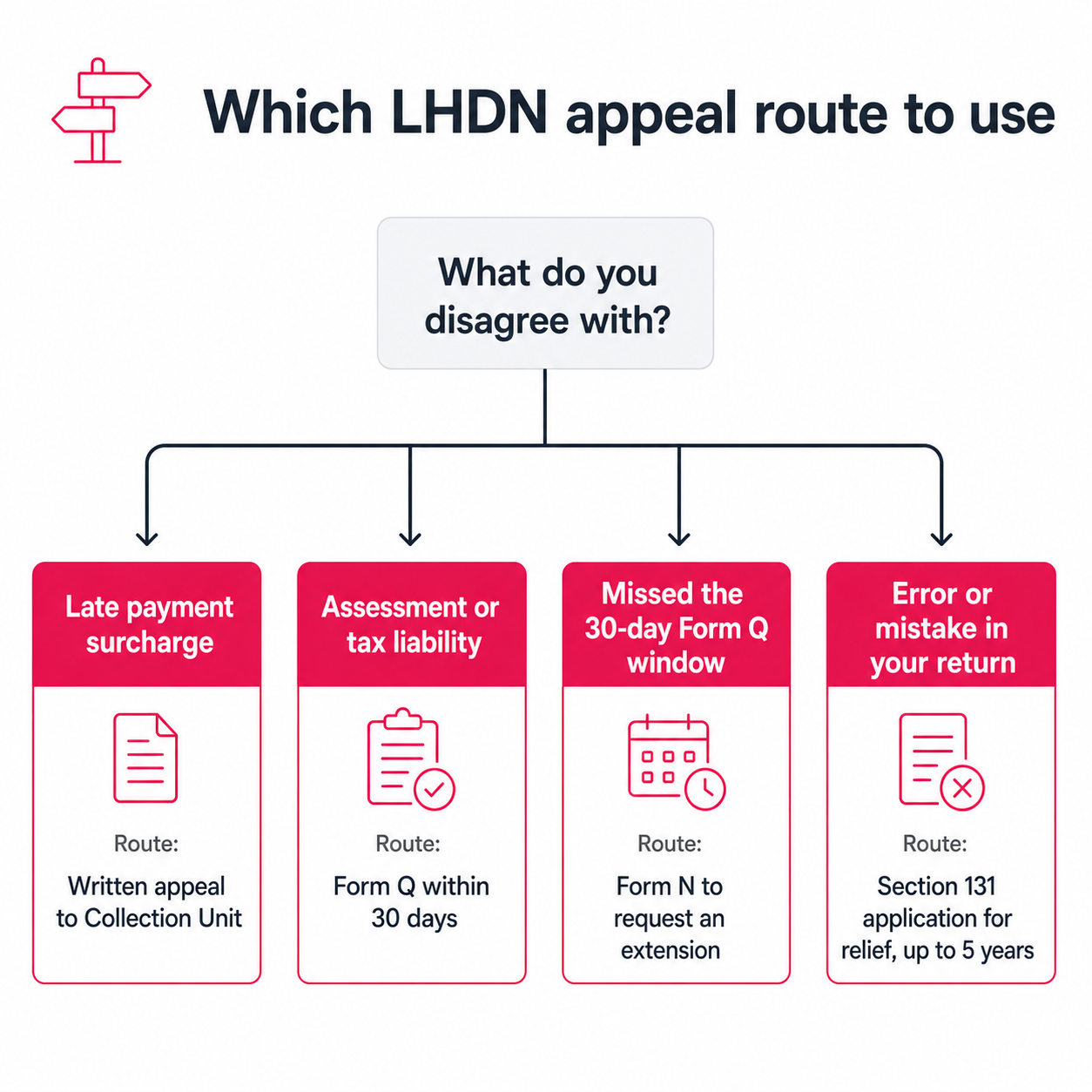
Appeals are real. LHDN does accept them, and penalties are sometimes reduced or waived where there is a reasonable excuse. What you need is the right form for the right scenario. One hard rule to remember upfront is that you must still pay the tax and penalty first. If the appeal succeeds, LHDN refunds the excess.
Written appeal to the Collection Unit
For a Section 103 late payment surcharge, a written appeal to the branch Collection Unit is usually the first step. State the reasonable excuse, the relevant facts, and attach supporting documents such as medical records, bank delays or evidence of disaster. Keep it factual and short.
Form Q appeal under Section 99 of the ITA 1967
If you disagree with the assessment itself, Form Q is the formal route. The deadline is 30 days from the date of the notice of assessment. The appeal goes to the Special Commissioners of Income Tax via LHDN. This is the standard appeal for disputed tax liability.
Form N for a late Form Q appeal
If the 30-day window under Section 99 has already passed, you need Form N. This is an application to extend the period for appeal. You must show why the delay happened, and the Director General has discretion to approve.
Application for relief under Section 131 of the ITA
Section 131 covers situations where the return was correct in your own understanding but an error or mistake caused an overpayment. The window is up to 5 years after the end of the year of assessment. Public Ruling No. 7/2020 sets out the fuller guidance on when each route applies.
How repeat offences and under-reporting escalate penalties
The first fine is not where the pain ends. Repeated non-filing, or filing a return that understates income, moves you into much heavier territory under the Income Tax Act 1967.
Under Section 113, an incorrect return or incorrect information attracts a fine of RM1,000 to RM10,000 plus 200% of the tax undercharged. Section 114 covers wilful evasion, with fines of RM1,000 to RM20,000, imprisonment up to 3 years, or both, and 300% of the tax undercharged. At this level, LHDN can commence a tax audit or criminal prosecution, and investigators have broad powers to request business records going back up to 7 years.
The takeaway is not fear. It is sequence. A one-time late filing should not turn into a habit, because the penalty structure for repeat behaviour is designed to make evasion more expensive than compliance by a wide margin.
Practical steps to avoid LHDN late filing penalties
A short preventative checklist stops most late filing problems before they start. Run it at the start of each year, and again 30 days before every filing deadline. For a deeper walkthrough of what goes wrong in practice, read the common tax filing mistakes post.
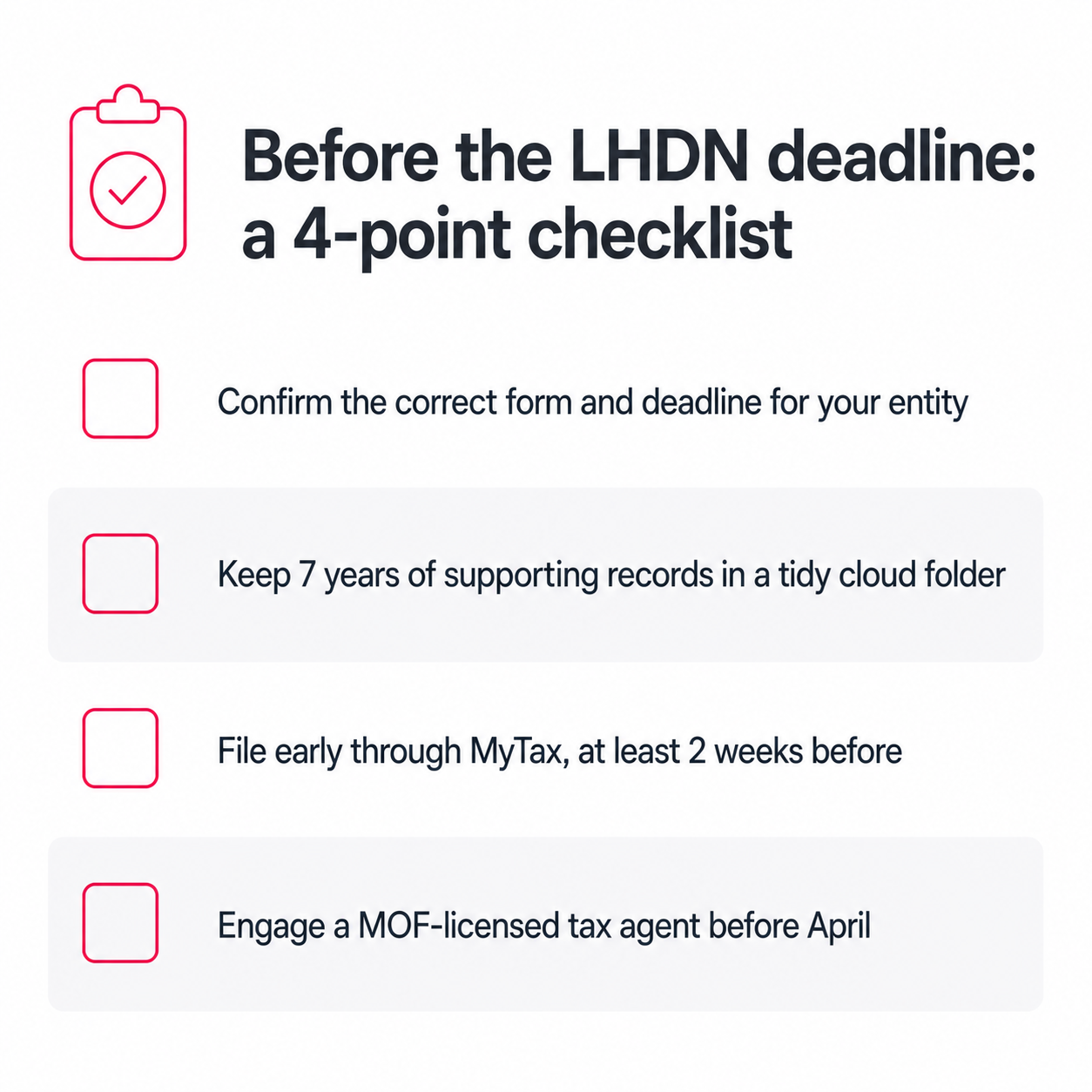
Mark the right deadline for your entity
Put the correct deadline for each form in your calendar with at least one reminder 30 days out. Sdn Bhd owners must track both Form C and Form E. If you have business income in your personal name, track Form B at 15 July as well.
Keep 7 years of supporting records
LHDN can request business records going back 7 years. Keep invoices, bank statements, payroll and contracts in an organised cloud folder from day one. Good records shorten the time needed to file and reduce the likelihood of incorrect-return penalties.
File early through MyTax e-Filing
MyTax is free and available around the clock. Filing two weeks early leaves time to correct data mismatches before the deadline bites. Last-minute server slowdowns on deadline day are not a reasonable excuse.
Engage a MOF-licensed tax agent before the last month
Engaging a licensed tax agent early means you have someone verifying the numbers and deadlines with you, not scrambling after the fact. The relationship works best when set up before the busy April to July filing season, not during it.
When to engage a tax agent for late filing
A licensed tax agent becomes worth the cost in two very specific moments. The first is when the deadline is close and your books are not ready. The second is when LHDN has already issued a penalty and you need to draft an appeal that holds up.
SSAM Group operates as a MOF-licensed tax agent through TSE Taxation Services Sdn Bhd, with 40 years of experience serving Malaysian businesses and 1,000+ loyal clients. The team handles Form C, Form E and Form B filings, CP204 estimates, LHDN correspondence, penalty appeals and routine tax compliance. If you are already past a deadline, we can help you stage the filing, pay the balance, and prepare the right appeal route with supporting documents.
Speak to SSAM if you are unsure which route applies, or if you would like a quick review of an LHDN letter you have just received. WhatsApp or call the team and ask for tax support. Most owners feel calmer after a short conversation about next steps, not a sales pitch.
Frequently asked questions
What happens if I file my tax one day late in Malaysia?
Even one day late can trigger the 10% surcharge under Section 103 on any unpaid tax, and LHDN may compound a fine under Section 112 for the late return. The minimum Section 112 fine is RM200, but the surcharge on unpaid tax is usually the larger cost for a business. File as soon as possible and pay the full balance to stop the 60-day add-on from applying.
Can I appeal an LHDN penalty for late tax filing?
Yes. You can send a written appeal to the Collection Unit for a Section 103 surcharge, file Form Q within 30 days of a notice of assessment, lodge Form N if the 30-day window has passed, or apply for relief under Section 131 within 5 years for an error or mistake. You must still pay the tax and penalty first. LHDN refunds the excess if the appeal succeeds.
How much is the 10% LHDN late payment penalty?
It is 10% of the unpaid tax balance under Section 103(3) of the Income Tax Act 1967. If the balance plus that 10% is still unpaid after 60 days, LHDN charges an additional 5% on the outstanding amount. Both figures sit on top of the tax already owed, so delay has a real compounding cost.
What is the penalty for not filing taxes at all in Malaysia?
Under Section 112(1), failing to furnish a return without reasonable excuse carries a fine of RM200 to RM20,000, imprisonment up to 6 months, or both. Repeat non-filing, or filing returns that understate income, can trigger Section 113 or Section 114, where penalties reach 200% or 300% of the tax undercharged along with possible prosecution.
Will LHDN waive my first late filing penalty?
There is no automatic waiver for a first-time late filing. LHDN reviews each appeal on its facts and may reduce or waive a penalty where there is a reasonable excuse backed by evidence, such as a hospitalisation or a verified disaster. Pay the penalty first, submit a clear written appeal with documents, and allow time for the review.
Data Sources and References
- Lembaga Hasil Dalam Negeri Malaysia. Offences, Fines and Penalties: https://www.hasil.gov.my/en/legislation/offences-fines-and-penalties/
- Lembaga Hasil Dalam Negeri Malaysia. Penalty on Late Payment: https://www.hasil.gov.my/en/individual/individual-life-cycle/payment/penalty-on-late-payment/
- Lembaga Hasil Dalam Negeri Malaysia. Appeal (Company): https://www.hasil.gov.my/en/company/appeal/
- Lembaga Hasil Dalam Negeri Malaysia. Application for Relief Under the ITA: https://www.hasil.gov.my/en/company/appeal/application-for-relief-under-the-ita/
- LHDN Public Ruling No. 7/2020. Appeal Against an Assessment and Application for Relief.
- Income Tax Act 1967 (Act 53), Sections 99, 103, 107B, 107C, 112, 113, 114 and 131.
The information in this article is provided for general informational purposes only and does not constitute tax, accounting, financial or legal advice. Tax laws change frequently and may not apply to your situation. Always consult a qualified professional before acting on any information here.