

Key Takeaways
- LHDN selects audit cases through computerised risk scoring and data matching, not random draws.
- e-Invoice cross-checking is now the most powerful trigger, with RM1.4 billion in unreported income already detected through data matching.
- Banking business sales into personal accounts and large amounts owing to directors are two red flags most owners never think about.
- Constant losses, lifestyle that outruns reported income and big year-on-year swings all raise your risk score.
- You cannot control sector sweeps or tip-offs, but clean records and consistent filings neutralise most flags.
Every business owner eventually asks the same question: what are the LHDN tax audit triggers, and is my company waving any of them? The honest answer is that selection is not luck. LHDN's framework describes a computerised, risk-scored process fed by data from banks, suppliers, customs and the e-Invoice system. This article walks through the nine red flags that raise your score and what to do about each one. If several of them already sound familiar, our tax audit support in Kuala Lumpur starts with a quiet risk review, long before any letter arrives.
How LHDN Decides Who Gets Audited
Under section 5.0 of the Tax Audit Framework on Income Tax and Employer, effective 15 March 2025, audit cases are selected through computerised systems analysis based on tax risk assessment criteria and information from various sources, including third parties. Industry focus, taxpayer groups and locations also feed the selection.
In practice this means your returns are constantly compared against external data. When the numbers agree, your risk score stays low. When they diverge, your file surfaces. The mechanics of what happens after selection are covered in our complete guide to a tax audit in Malaysia.
What Are the Most Common Audit Triggers?
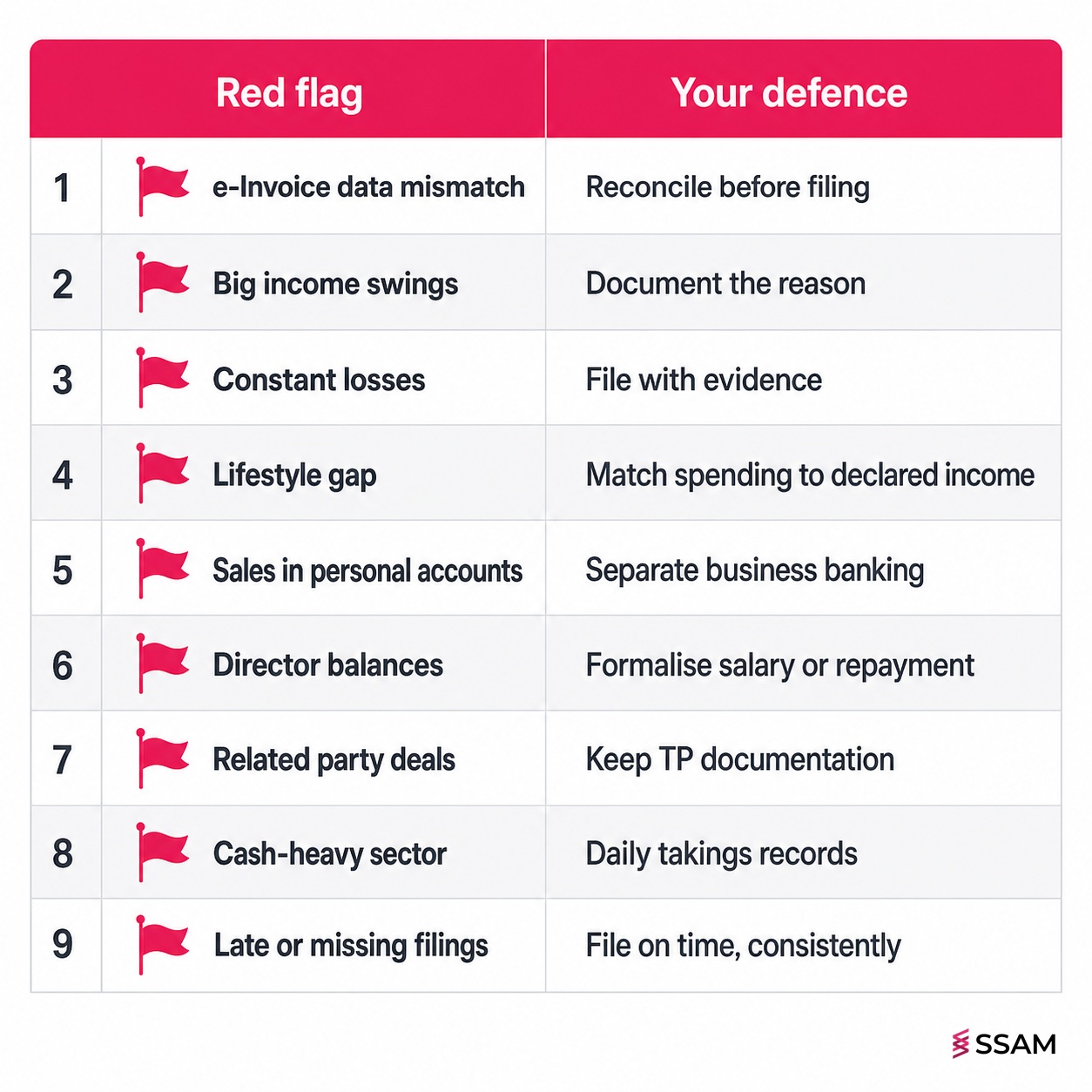
The most common LHDN tax audit triggers are data mismatches between your returns and third-party records, significant swings in income or expenses, businesses reporting constant losses, spending that does not match declared income, and late or missing submissions. Related party transactions without documentation and cash-heavy industries also attract attention.
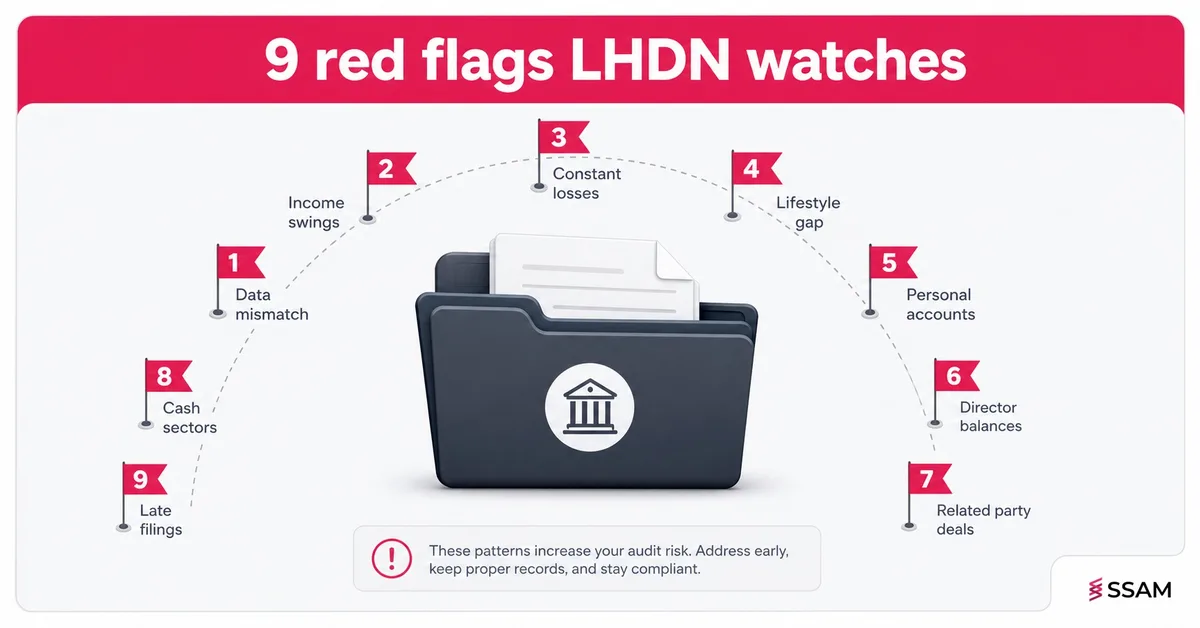
The 9 Red Flags LHDN Watches
1. e-Invoice and Third-Party Data Mismatches
The modern trigger that outranks all others. LHDN cross-checks your reported figures against e-Invoice records, bank data, supplier filings, CP58 statements and customs declarations. Data matching through e-Invoice checks has already surfaced RM1.4 billion in unreported income. The era of being too small to notice is over, because the system flags mismatches automatically regardless of company size.
2. Significant Swings in Income or Expenses
Revenue that halves, margins that jump or expense categories that balloon year on year invite a closer look, especially when industry peers show no similar movement. Genuine swings are fine, but be ready to evidence the story behind them.
3. Constant Losses While Still Operating
A business that loses money every year yet keeps trading raises an obvious question about unreported income or inflated costs. If you are loss-making, file properly and keep the evidence, as explained in our guide on why you must still file a tax return when your business makes a loss.
4. Lifestyle That Outruns Reported Income
The pattern owners share most often sounds like this: someone buys a property or luxury car largely in cash, and a letter arrives asking for years of filings. Asset purchases, travel and spending visible to LHDN through third-party data must be explainable by your declared income. If they are not, expect questions.
5. Business Sales Banked Into Personal Accounts
Routing customer payments through a personal account does not hide them. Bank data reaches LHDN through lawful channels, and undeclared deposits sitting next to declared business income are one of the quickest audits to justify. Keep every business ringgit in a business account.
6. Large or Long-Standing Amounts Owing to Directors
A ballooning Amount Owing to Director balance suggests money moving between the company and its owner without salary, dividend or repayment discipline. LHDN can reclassify informal drawings as income. Our article on the tax risks of an advance to director explains what that reclassification costs.
7. Related Party Transactions Without Documentation
Intercompany sales, loans, rent and fees are visible in your accounts, and missing transfer pricing paperwork turns them into easy findings. Start with our complete guide to transfer pricing in Malaysia if your group trades with itself.
8. Cash-Heavy Industries and Sector Sweeps
Restaurants, retail, construction and similar sectors face periodic industry-wide attention because cash leaves weaker trails. You cannot change your industry, but disciplined daily takings records and POS data blunt the risk.
9. Late, Missing or Inconsistent Submissions
Repeated late filings, skipped returns and figures that contradict earlier submissions all mark a file as unreliable. Informant tip-offs are the wildcard on top: disgruntled staff, ex-partners and competitors do report businesses, and LHDN acts on credible information.
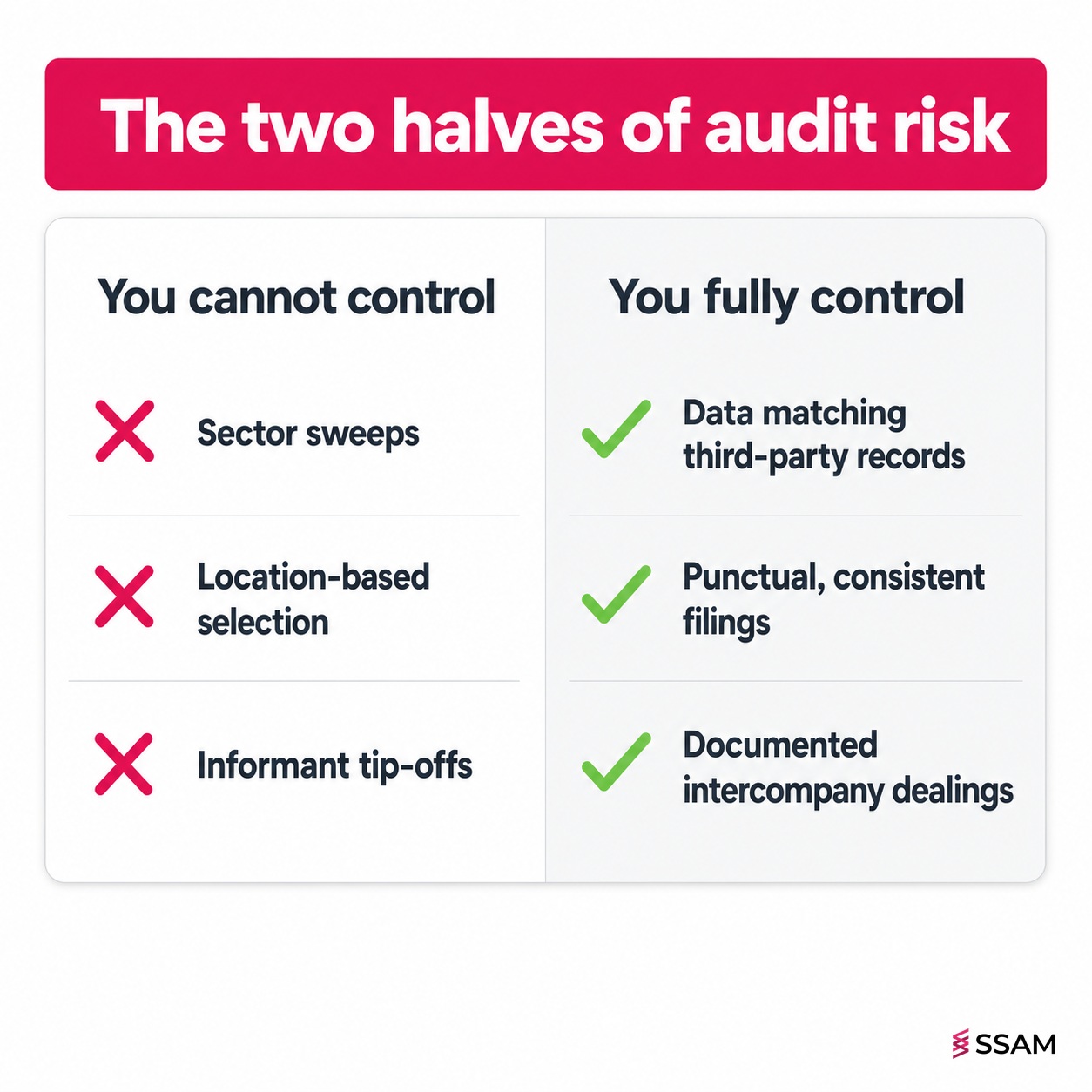
What You Can and Cannot Control
Be realistic about the two halves of the risk equation. You cannot control sector sweeps, location-based selection or a tip-off from someone with a grudge. You fully control the rest: whether your data matches third-party records, whether your filings are punctual and consistent, and whether your intercompany dealings are documented. A business that controls the controllable rarely produces findings even when it is selected, and knowing the difference between a routine tax audit and a tax investigation tells you when a case has moved beyond routine.
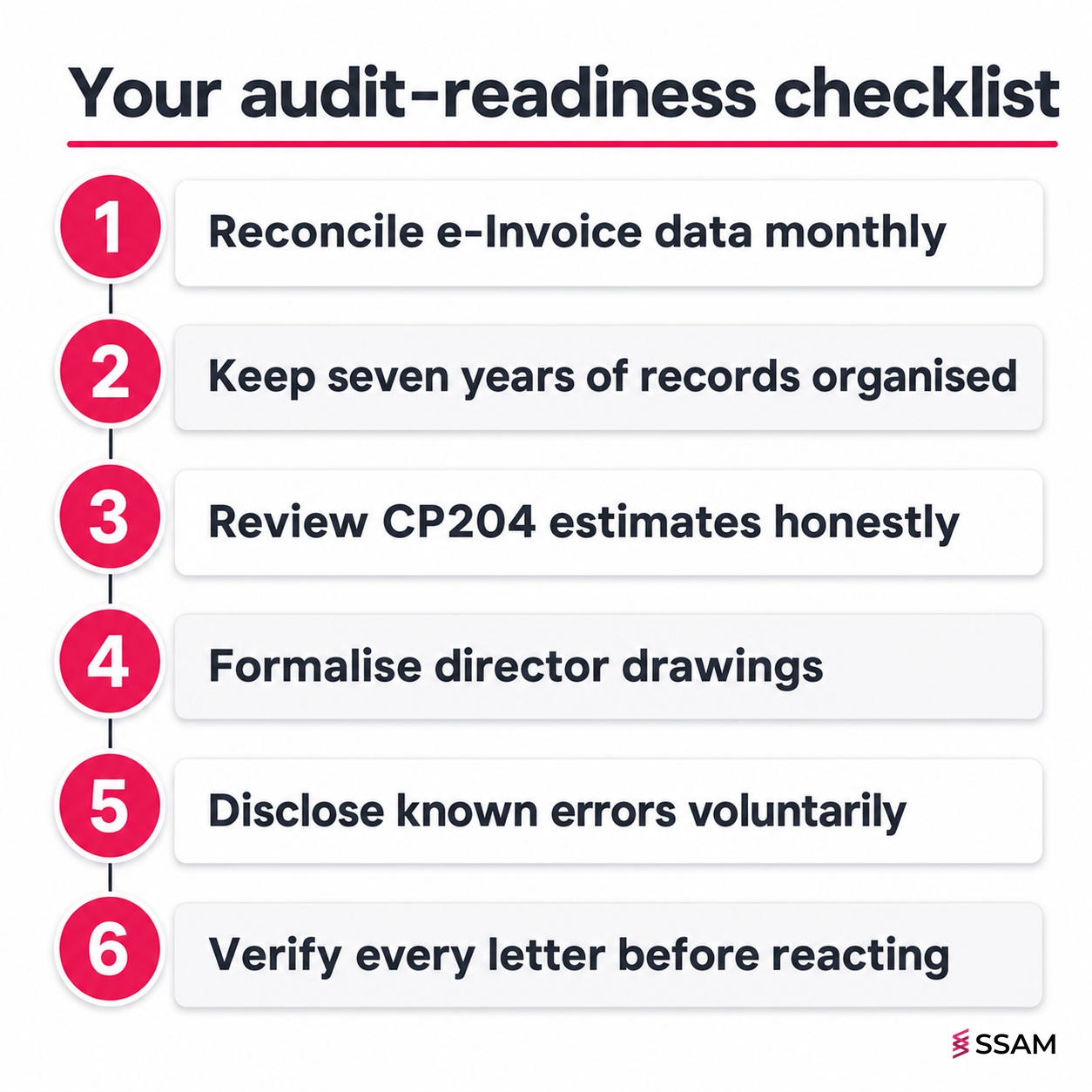
Your Audit-Readiness Checklist
- Reconcile e-Invoice data to your ledger monthly. Mismatches you catch first are corrections, not findings.
- Keep seven years of records organised, following the system in our guide to LHDN's 7-year lookback.
- Review your CP204 estimates honestly. Repeated sharp revisions are a signal, as covered in our CP204 tax estimate guide.
- Formalise director drawings into salary, dividend or a documented loan with repayment.
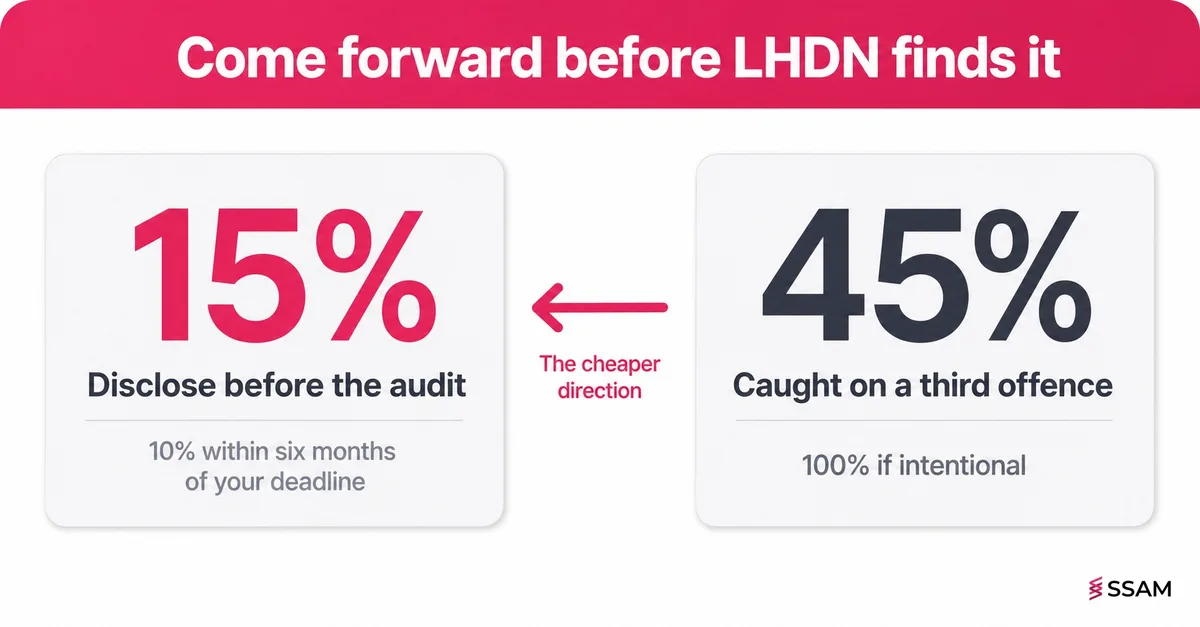
- Fix known errors through voluntary disclosure before selection happens. Our guide to voluntary disclosure to LHDN explains the reduced penalty rates.
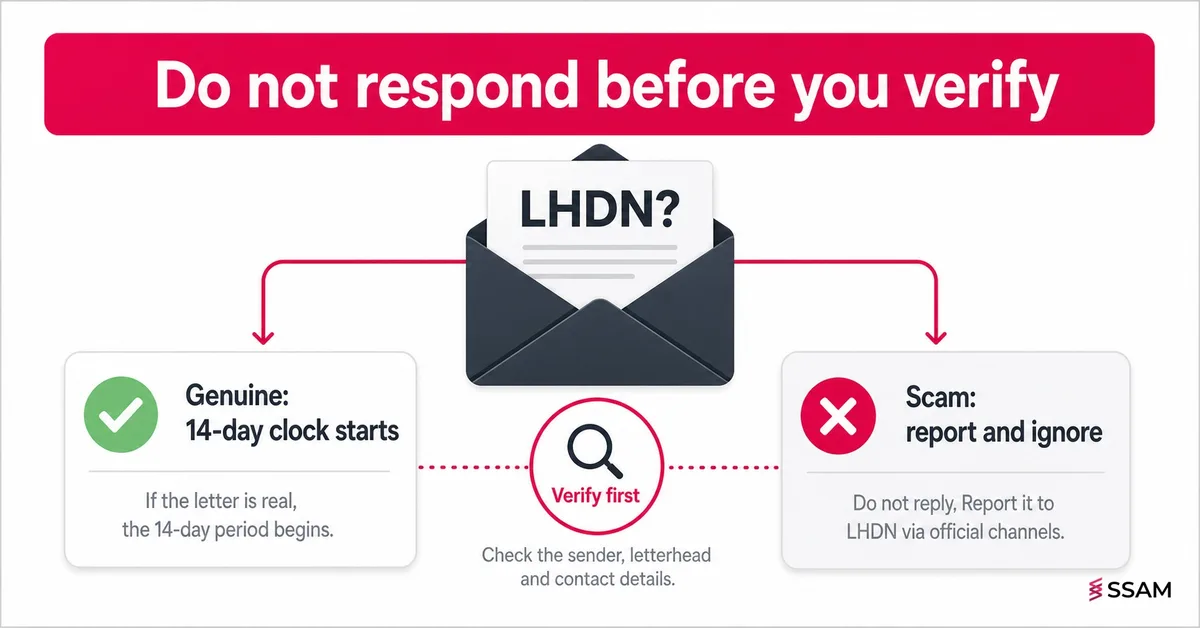
- Verify any letter before reacting. Scammers exploit audit fear, so check whether an LHDN letter is genuine or a scam through official channels first.
If several flags feel uncomfortably familiar, a quiet review now is worth far more than a defence later. SSAM, a MOF licensed tax agent with 40 years of experience and more than 1,000 clients, reviews audit exposure, cleans up records and handles LHDN correspondence. Speak to SSAM or WhatsApp the team for a risk check.
Frequently Asked Questions About Audit Triggers
Is LHDN audit selection random?
Mostly no. Cases are selected through computerised risk analysis, third-party information and industry or location focus under the 2025 framework. Random selection exists, but data-driven selection dominates.
Does reporting a loss mean I will be audited?
Not automatically. One bad year with clean records is normal business. Losses year after year while operations continue is the pattern that raises the risk score.
Can LHDN see my personal bank account?
LHDN can obtain bank information through lawful channels and can request statements during an audit. Business income banked personally is discoverable, so separation of accounts is the safe practice.
Do informant reports really trigger audits?
Yes. LHDN acts on credible third-party information, and tip-offs from former employees or business partners are a recognised selection source alongside data analysis.
How do I lower my audit risk quickly?
Reconcile your e-Invoice data, file everything on time, separate business banking, document related party dealings and correct known errors through voluntary disclosure before an audit begins.
Data Sources / References
- LHDN, Tax Audit Framework on Income Tax and Employer (15 March 2025): https://www.hasil.gov.my/media/wgpombsp/20250315_tax-audit-framework-on-income-tax-and-employer.pdf
- PwC, Stay audit-ready: A guide to tax audits in Malaysia: https://www.pwc.com/my/en/perspective/tax/231027-stay-audit-ready-tax-guide.html
The information in this article is provided for general informational purposes only and does not constitute tax, accounting, financial or legal advice. Tax laws change frequently and may not apply to your situation. Always consult a qualified professional before acting on any information here.