

Key Takeaways
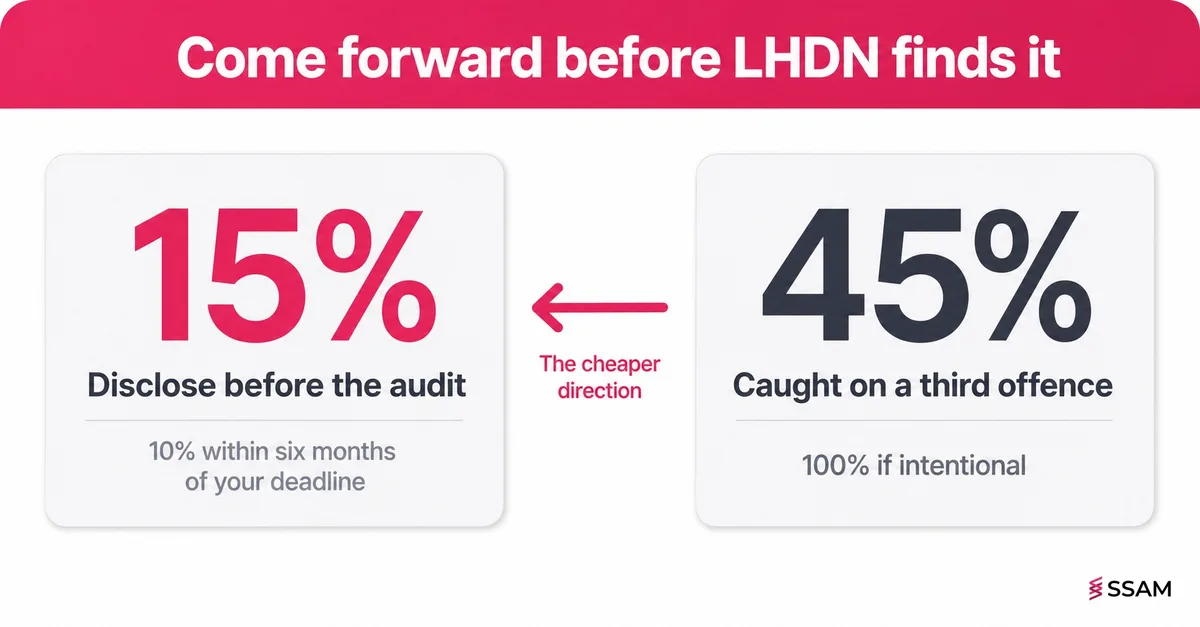
- Voluntary disclosure to LHDN caps the penalty at 15% of the undercharged tax, or 10% within six months of your return deadline.
- Disclosure only counts as voluntary if it lands before LHDN's audit action begins.
- The SVDP amnesties are over. The 2026 programme covers stamp duty only, so income tax disclosure runs under the standing framework.
- Prior-year income is assessed in its correct year, and there is no time bar where fraud or wilful default is involved.
- Waiting is the expensive option, because unpaid tax keeps attracting increases while the exposure compounds.
A voluntary disclosure to LHDN is the decision most owners circle around for months: surrender now at a known cost, or wait and hope the letter never comes. The anxiety is understandable and the maths is not close. Disclosure before an audit caps the penalty at 15%, while being caught can cost 45%, 100% for intentional errors, or worse. This guide explains how disclosure works today, what happens to the years you can no longer document and how to do it properly. For owners who want the review handled quietly, SSAM's tax audit services in Kuala Lumpur begin with a confidential look at the exposure.
What Is Voluntary Disclosure to LHDN?
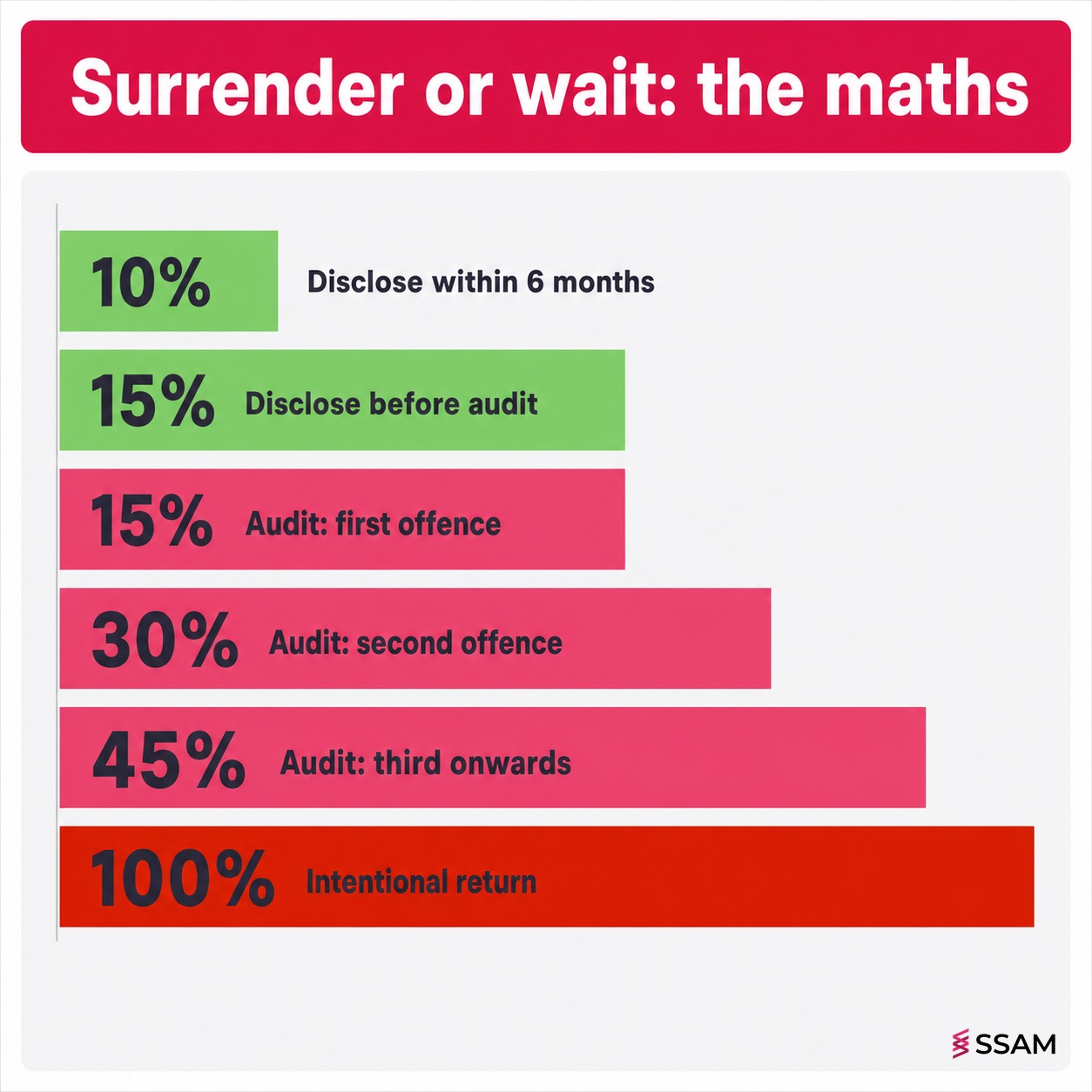
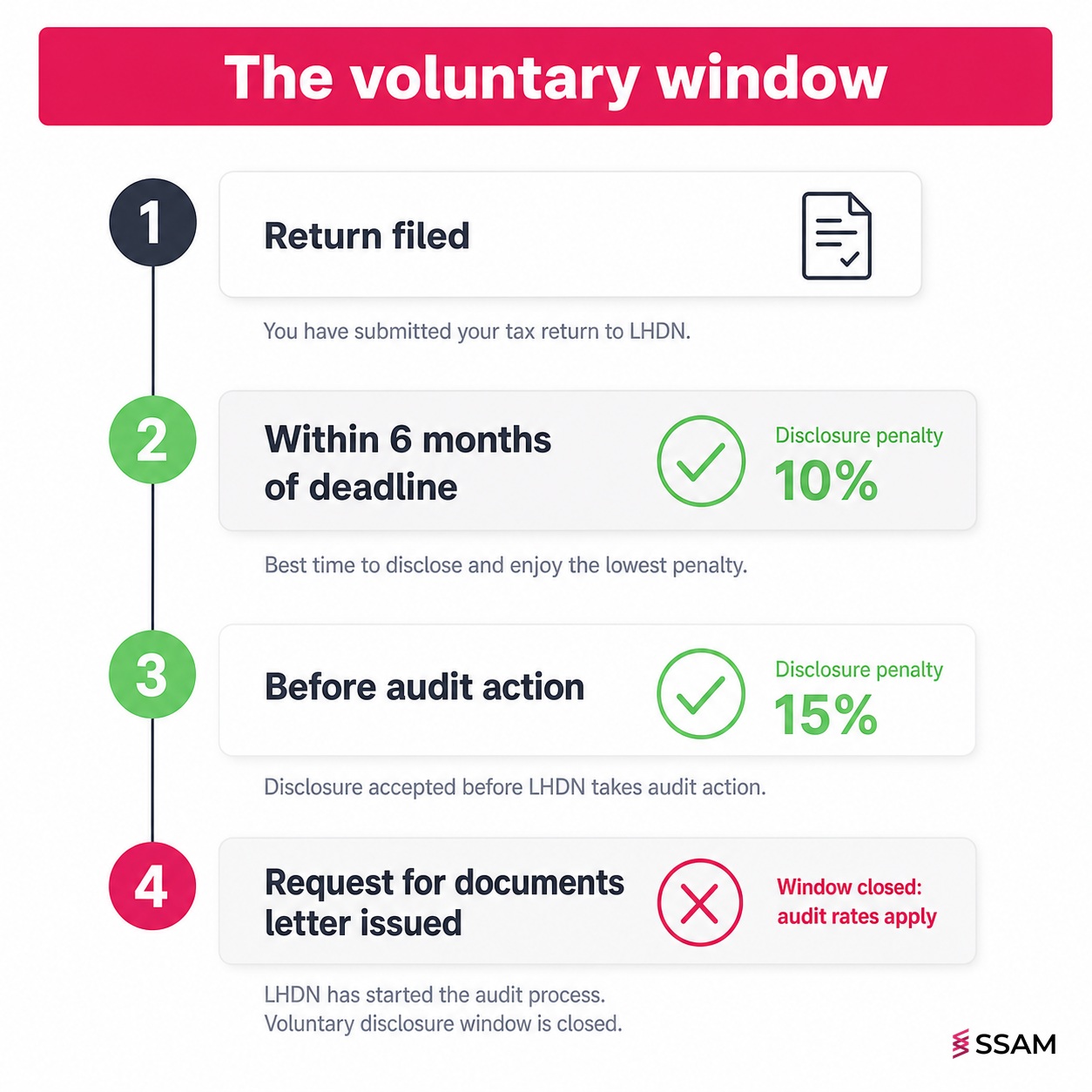
Voluntary disclosure is coming forward to correct your own tax position before LHDN begins audit action against you. Under the current Tax Audit Framework, a voluntary disclosure attracts a penalty of 15% of the tax undercharged, reduced to 10% where the disclosure is made within six months of your return filing deadline.
That is the entire pitch in two numbers. The same error found through an audit lands in the tiers described in our guide to LHDN tax audit penalties, and the process that finds it is described in our complete guide to a tax audit in Malaysia.
Surrender or Wait: The Real Penalty Maths
Set the two futures side by side:
| Scenario | Penalty on undercharged tax |
|---|---|
| Voluntary disclosure within 6 months of the return deadline | 10% |
| Voluntary disclosure before audit action | 15% |
| Audit finding, first offence | 15% |
| Audit finding, second offence | 30% |
| Audit finding, third offence onwards | 45% |
| Intentionally incorrect return | 100% |
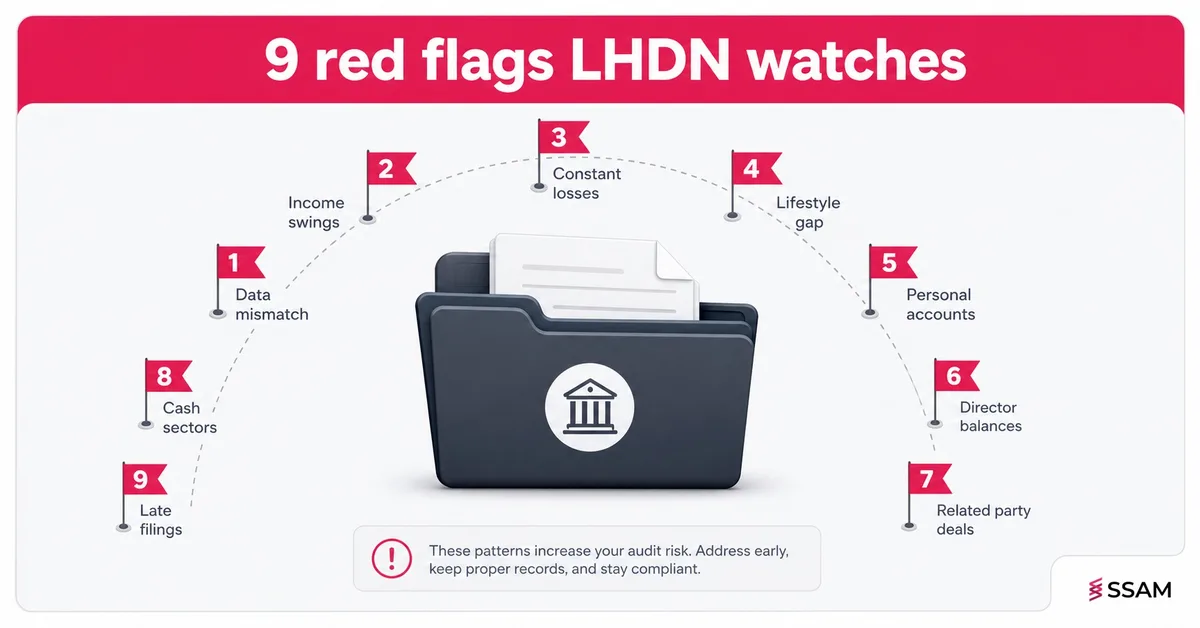
Waiting also carries a quiet cost that owners underestimate. LHDN is not deliberately letting your penalties pile up before calling you in. The truth is simpler: unpaid tax attracts increases once due, your risk score rises as data accumulates, and every e-Invoice mismatch and third-party record adds to the audit triggers already flagging your file. The exposure grows on its own while you wait, and evasion territory carries prosecution risk explained in our comparison of a tax audit vs tax investigation.
Who Qualifies and When It Counts as Voluntary
Timing defines everything. A disclosure is voluntary only if it reaches LHDN before the commencement of audit action, which the framework marks as the date of the Request for Documents and Information Letter. Once that letter exists, the same admission becomes an audit finding at audit rates.
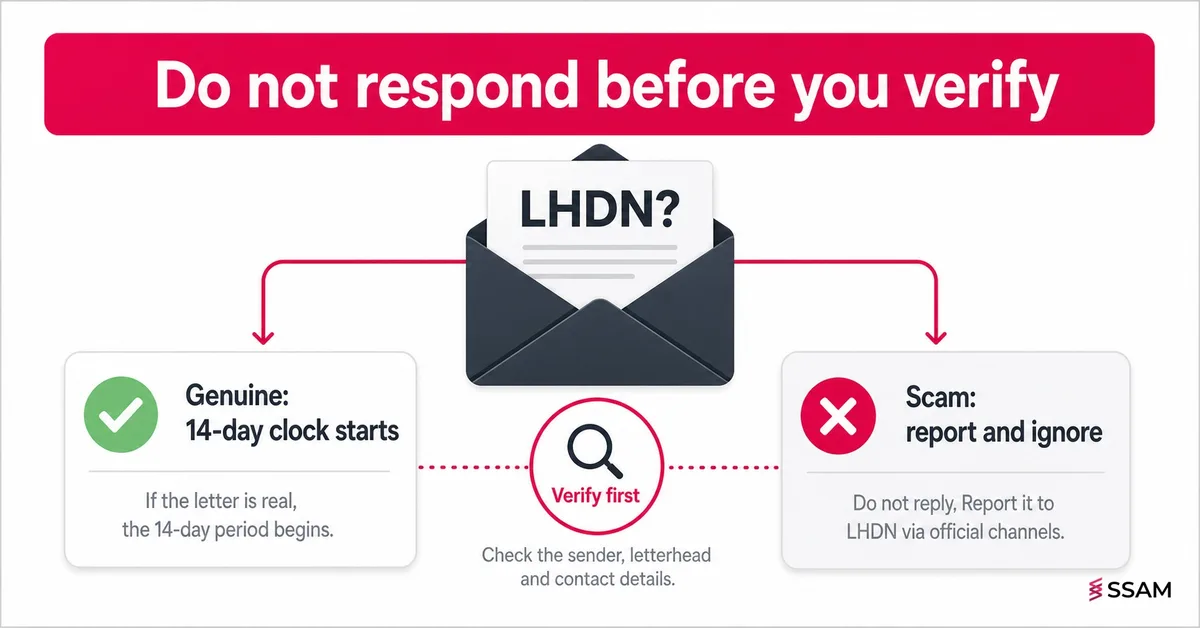
For employer matters such as unremitted PCB or late Form E, the disclosure must be made in writing to the relevant LHDN director before employer audit action begins. Either way, the disclosure covers taxpayers who have filed returns and need to correct them, and new taxpayers regularising their position submit outstanding returns directly. And if a letter does arrive before you act, verify it through official channels first using our guide on whether an LHDN letter is genuine or a scam, because scammers exploit exactly this anxiety.
The Amnesties Are Over: What Applies in 2026
Search results on this topic are full of expired offers, so here is the current position. The Special Voluntary Disclosure Programme 2.0, which accepted disclosures at 0% penalty, ended on 31 May 2024. The SVDP announced for 2026 covers stamp duty only, waiving late-stamping penalties for instruments executed between 1 January 2023 and 31 December 2025 where the duty is paid between 1 January and 30 June 2026.
For income tax, there is no amnesty window to wait for. Disclosure runs under the standing framework at 15% or 10%, which remains dramatically cheaper than an audit finding. Transfer pricing corrections have their own prescribed disclosure form under the current framework, covered in our guide to the LHDN transfer pricing audit.
How Many Years Back Must You Declare?
Declare every year you know is wrong. Prior-year income disclosed now is assessed in its correct year of assessment under the law, not lumped into the current year. Record-keeping obligations run seven years, most audits reach back three years and up to five, and there is no time bar at all where fraud or wilful default is involved, so old years are not automatically safe years.
Practical guidance on organising what you still have sits in our piece on LHDN's 7-year lookback.
Disclosing When Old Records Are Gone
The hardest cases involve years that can no longer be documented: banks purge statements after roughly seven years, platforms close accounts and counterparties disappear. Missing records do not make disclosure impossible. They change the method:
- Gather what still exists. Bank archives on request, statutory filings, invoices, agreements and platform payout histories often reach further back than expected.
- Reconstruct on a reasonable basis. Where figures cannot be evidenced, estimate them from the nearest documented years, known margins and lifestyle-consistent income levels.
- Document the methodology. Write down every assumption and source so the workings show honest best effort rather than guesswork.
- State the basis openly in the disclosure. A transparent estimate invites adjustment. A hidden one invites suspicion.
This reasonable-basis approach is exactly where professional workings earn their fee, because credibility of method is what LHDN evaluates when the paper trail runs out.
Step-by-Step: Making the Disclosure
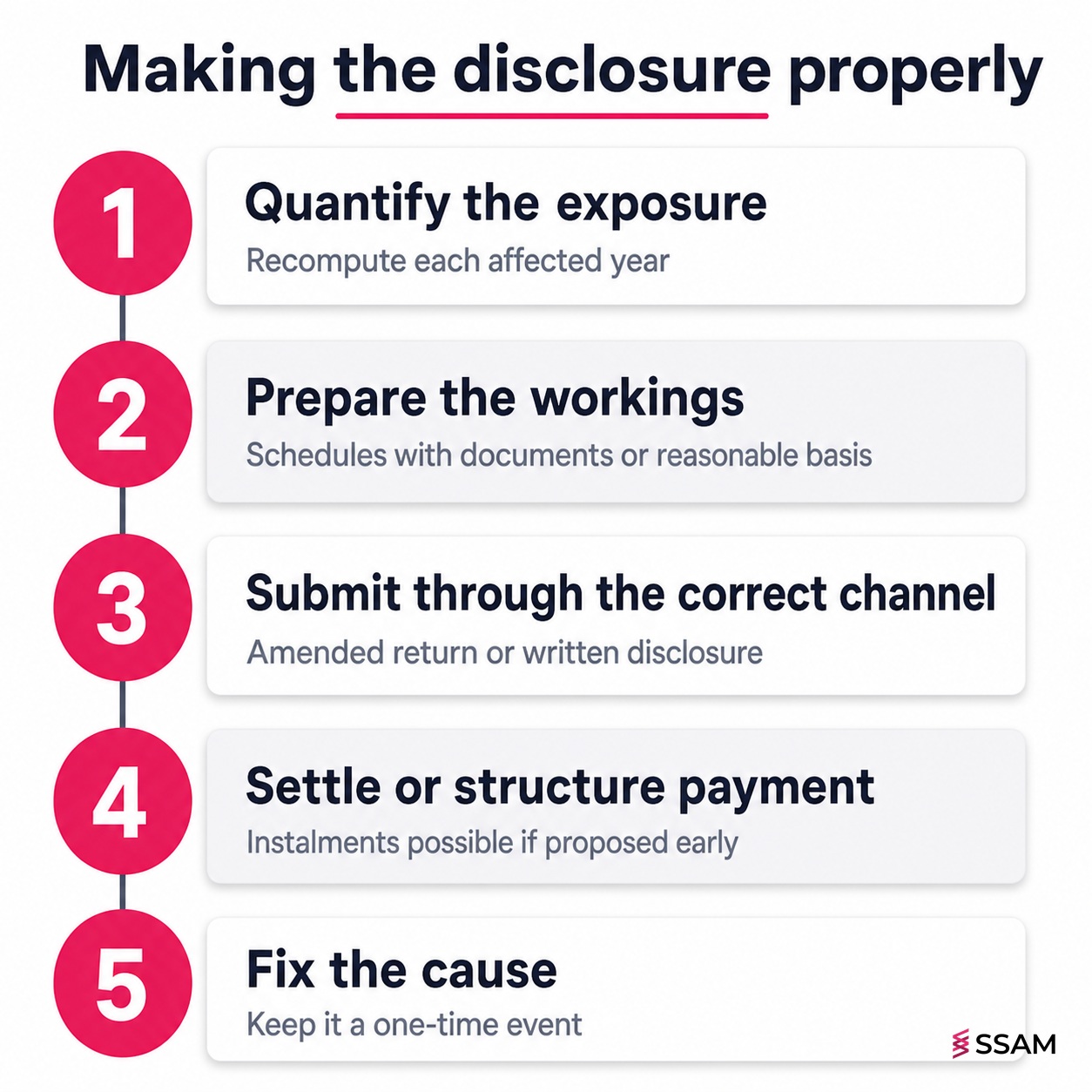
- Quantify the exposure. Recompute the affected years properly: understated income, overclaimed expenses, the tax undercharged and the penalty at 15% or 10%.
- Prepare the workings. Clean schedules per year of assessment with supporting documents or the documented reasonable basis.
- Submit through the correct channel. Depending on your situation this means an amended return within the permitted window or a written disclosure with workings to the office handling your file. Transfer pricing cases use the prescribed voluntary disclosure form.
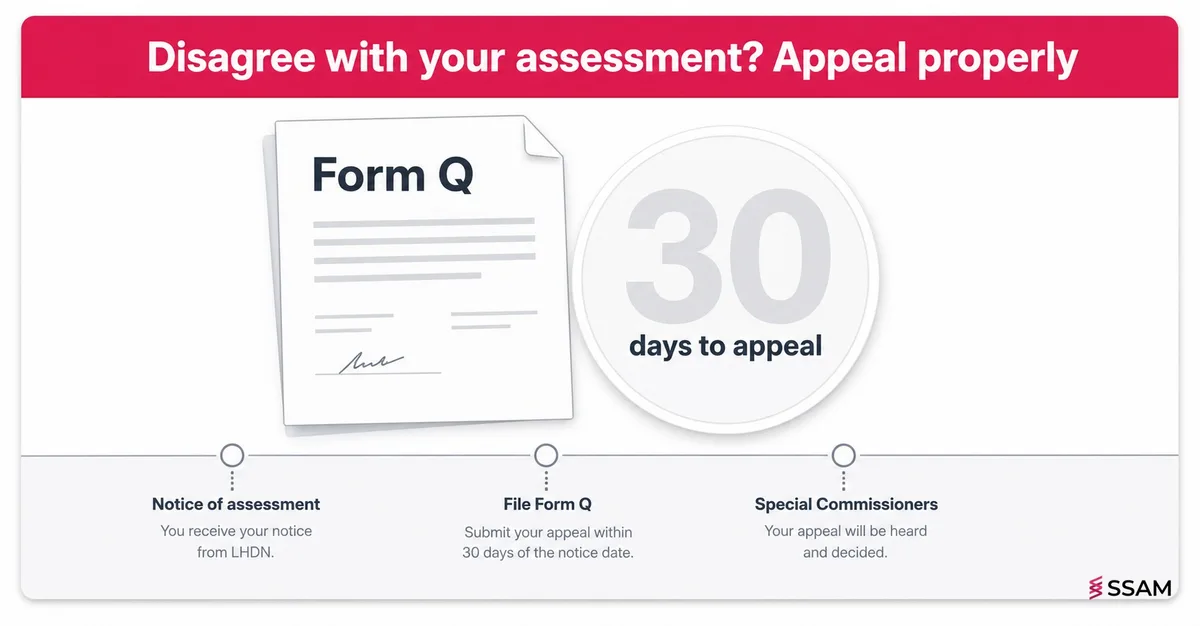
- Settle or structure the payment. Pay the tax and penalty, or approach LHDN early about instalments with a realistic schedule. If the resulting assessment contains something you genuinely dispute, the formal route in our guide on how to appeal an LHDN tax assessment remains open.
- Fix the cause. Close the gap that created the error, whether bookkeeping, e-Invoice reconciliation or payroll documentation, so the disclosure stays a one-time event.
When Not to Disclose Without Advice
Disclosure is usually the right move, but three situations deserve professional eyes before anything is submitted. Where the exposure spans many years or entities, the quantification itself needs care. Where the conduct could be read as wilful evasion rather than error, the framing of the disclosure matters enormously. And where a disclosure in one area could reasonably prompt questions in others, you want the full picture assessed first, quietly and under advice.
None of this argues for waiting. It argues for disclosing properly. SSAM reviews exposure confidentially, prepares disclosure workings and negotiates payment terms as a MOF licensed tax agent with 40 years of experience and more than 1,000 clients. Speak to SSAM or WhatsApp the team before the window closes on its own.
Frequently Asked Questions About Voluntary Disclosure
What penalty applies to a voluntary disclosure?
15% of the tax undercharged when made before audit action begins, and 10% where the disclosure is made within six months of your return filing deadline.
Is there still a tax amnesty in Malaysia?
Not for income tax. SVDP 2.0 ended on 31 May 2024, and the 2026 programme covers stamp duty only. Income tax disclosures now run under the standing framework rates.
Will disclosing trigger a wider review of my file?
Disclosure does not exempt the disclosed years from verification, and LHDN can review any file. What disclosure reliably changes is the penalty rate and your standing as a cooperative taxpayer, which also weighs into penalty discretion.
What if I no longer have records for the affected years?
Disclose using a documented reasonable basis: reconstruct from bank data and surviving documents, estimate transparently from the nearest evidenced years and state your assumptions in the workings.
Can I disclose after receiving an audit letter?
You can still cooperate and correct, but it no longer counts as voluntary. Once the request-for-documents letter is issued, findings are penalised at audit rates, which is why timing decides everything.
Data Sources / References
- LHDN, Tax Audit Framework on Income Tax and Employer (15 March 2025), section 7 on voluntary disclosure: https://www.hasil.gov.my/media/wgpombsp/20250315_tax-audit-framework-on-income-tax-and-employer.pdf
- EY, Updated tax audit frameworks: https://www.ey.com/en_my/technical/tax-alerts/updated-tax-audit-frameworks
- LHDN, SVDP 2.0 Frequently Asked Questions: https://www.hasil.gov.my/media/vlqppdvc/4-faq-svdp-20_22082023.pdf
- Baker McKenzie, Malaysia: Stamp Duty Late Payment Penalty Waiver (Jan 2026): https://www.bakermckenzie.com/en/insight/publications/2026/01/malaysia-stamp-duty-late-payment-penalty-waiver
The information in this article is provided for general informational purposes only and does not constitute tax, accounting, financial or legal advice. Tax laws change frequently and may not apply to your situation. Always consult a qualified professional before acting on any information here.