

Key Takeaways
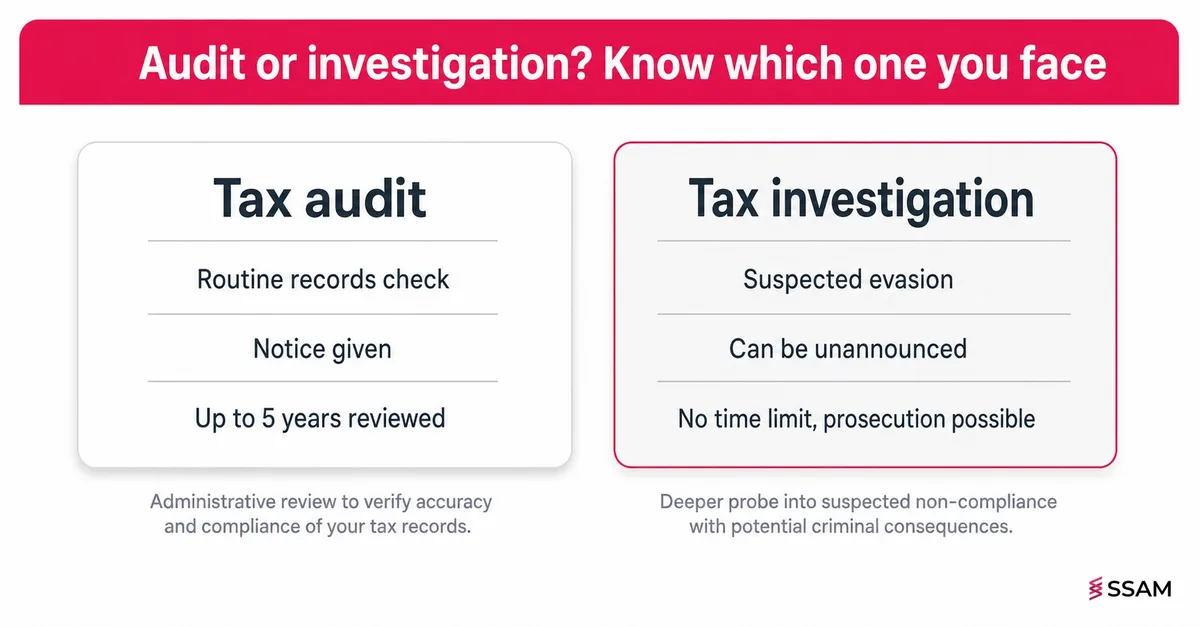
- A tax audit is a routine records check with advance notice. A tax investigation targets suspected evasion and can begin unannounced.
- Audits usually cover up to 3 years of assessment and are capped at 5. Investigations face no time limit where fraud or wilful default is suspected.
- Audit findings carry penalties of 15% to 45% of undercharged tax. Investigations can end in prosecution, fines and up to 3 years imprisonment plus a 300% special penalty.
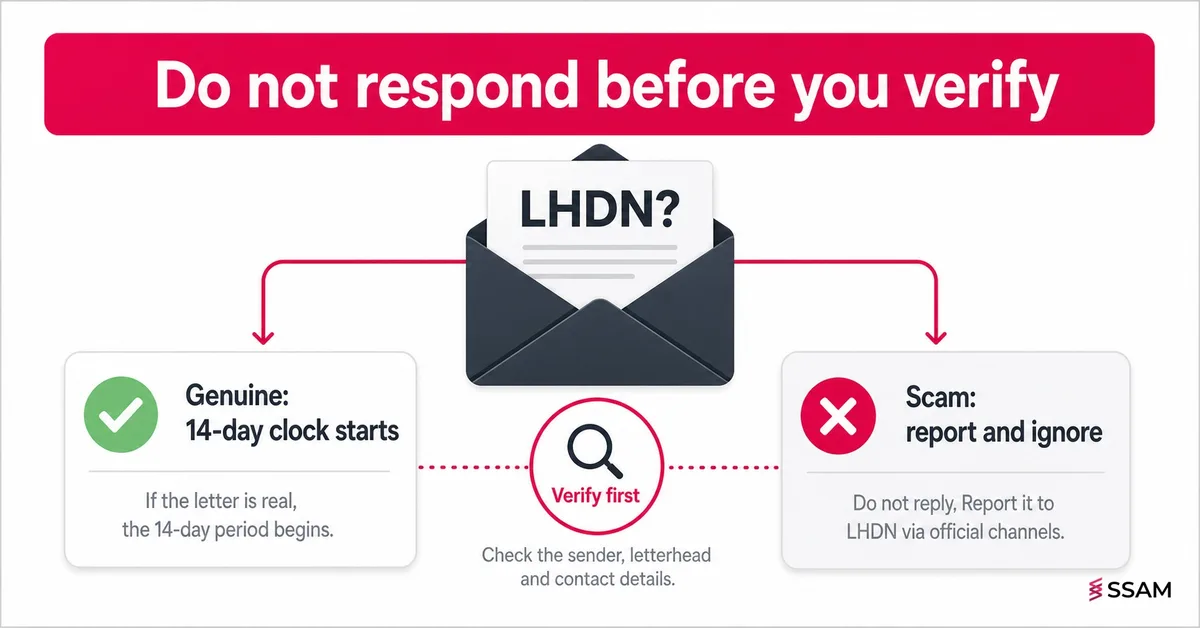
- Verify any letter through official channels before responding, because scammers imitate both processes.
- Keep receipts, not just bank statements. Auditors ask for source documents and officer strictness varies.
The difference between a tax audit vs tax investigation in Malaysia is the difference between a routine check-up and a police case. Both arrive as official LHDN contact, both demand documents, and both make owners nervous. But the stakes, the process and the correct response are very different. This guide gives you the quick answer, a full side-by-side comparison and a plan for each scenario. And if official contact has already landed on your desk, SSAM's tax audit specialists in Kuala Lumpur handle both situations for clients.
Tax Audit vs Tax Investigation: The Quick Answer
A tax audit is a routine examination of your records to confirm the tax you reported is correct, always with written notice and a document deadline. A tax investigation is launched when LHDN suspects deliberate tax evasion. It can start unannounced, gathers evidence for possible prosecution and carries far heavier consequences.
Most LHDN contact is an audit, which is the standard compliance activity under the self-assessment system explained in our complete guide to a tax audit in Malaysia. Investigations are the exception reserved for suspected evasion.
How the Two Processes Compare Side by Side
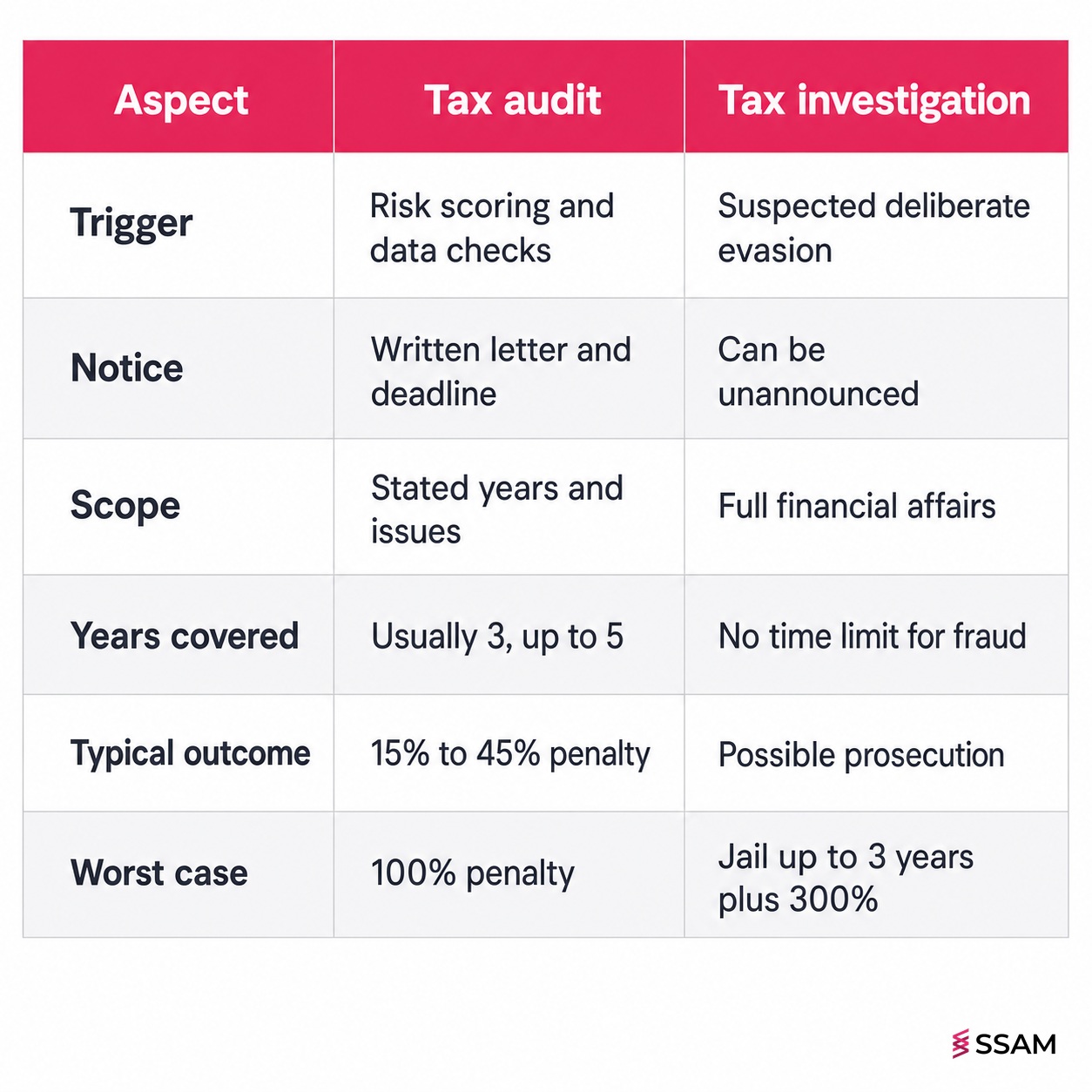
| Aspect | Tax audit | Tax investigation |
|---|---|---|
| Trigger | Risk scoring, data mismatches, routine selection | Reasonable suspicion of deliberate evasion, supported by credible information |
| Notice | Written letter with document list and deadline | Can begin with an unannounced visit |
| Scope | Specific years and issues stated in the letter | Full financial affairs, including related persons |
| Years covered | Usually 3 years of assessment, up to 5 | No time limit where fraud or wilful default is suspected under subsection 91(3) |
| Typical outcome | Adjustment plus penalty of 15% to 45% of undercharged tax | Assessments plus possible prosecution under Section 114 |
| Worst case | 100% penalty for intentionally incorrect returns | Fine of RM1,000 to RM20,000, up to 3 years imprisonment, plus a 300% special penalty |
The penalty mathematics behind the audit column is broken down in our guide to LHDN tax audit penalties.
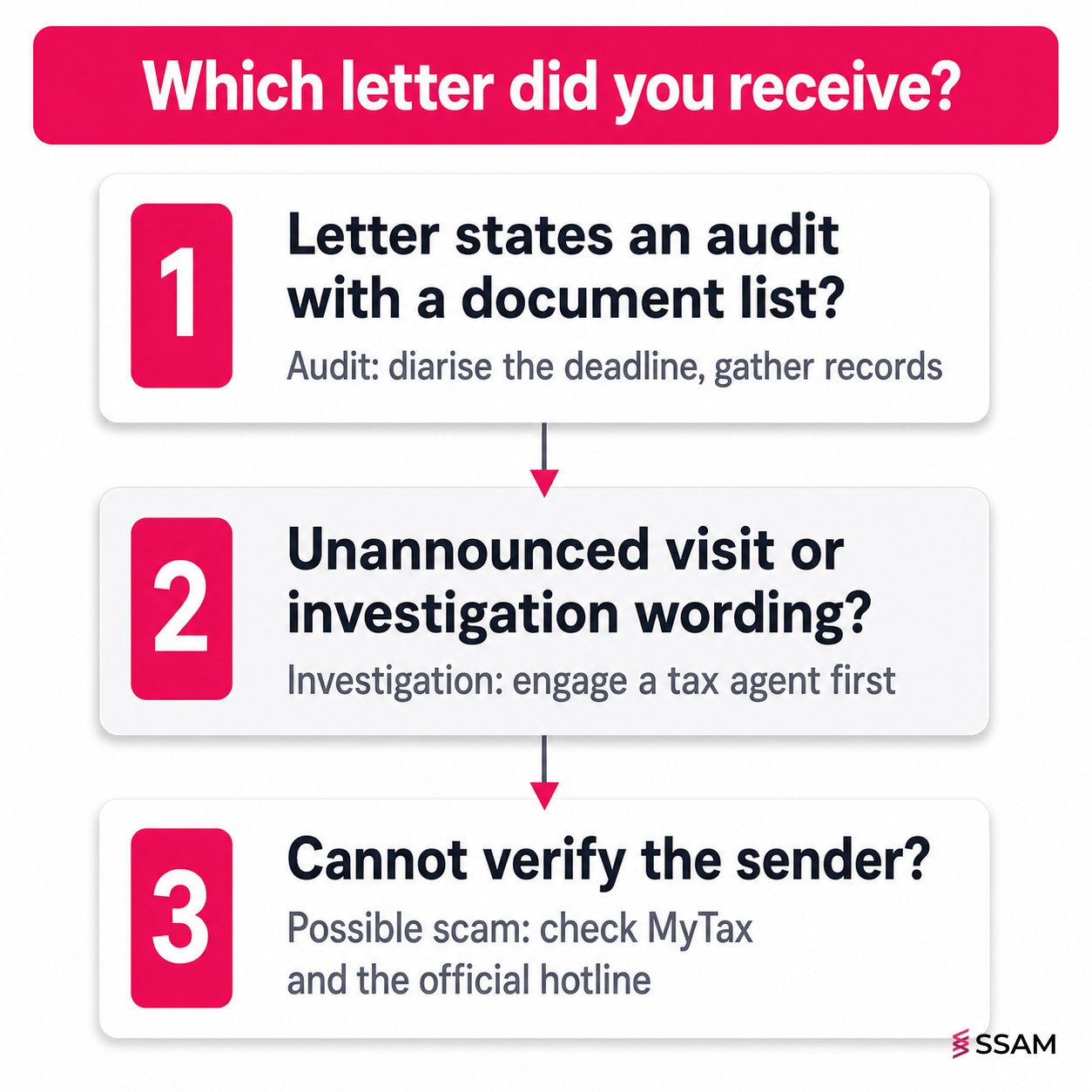
Which Letter Did You Receive?
Read the letter before you panic. Three questions usually settle it:
- Does it state an audit under the Income Tax Act with a document list and deadline? That is an audit. Diarise the deadline and start gathering records.
- Did officers arrive without warning, or does the letter reference an investigation? Treat it as an investigation and contact a licensed tax agent before answering substantive questions.
- Is it real at all? Scammers imitate both letters and phone calls. Verify through your MyTax account or the official LHDN hotline before paying anything or sharing details. Our guide on whether an LHDN letter is genuine or a scam walks through the checks in order.
How an Audit Escalates Into an Investigation
The two processes are connected. An audit can escalate when the findings suggest something deliberate rather than careless:
- Evidence of falsified invoices, fabricated expenses or a second set of records.
- Income deliberately routed away from the books, such as sales banked personally.
- Obstruction, destroyed documents or repeated refusal to cooperate.
Escalation changes everything: the years open up, the tone shifts from verification to evidence gathering, and prosecution enters the picture. This is why honest cooperation during an audit matters, and why known errors are better fixed through a voluntary disclosure to LHDN before any process begins.
Surprise Visits: What Investigators Can and Cannot Do
Under the Tax Investigation Framework, effective 1 January 2020, investigations can begin without notice. Officers may visit premises, examine and take possession of records, and obtain evidence and documents from related persons, including banks and business partners. Because offences under sections 112, 113 and 114 are listed as serious offences under the anti-money laundering law, LHDN can also act to freeze, seize and forfeit assets obtained from proceeds of tax evasion in serious cases.
What officers cannot do is remove your rights. You are entitled to identify the officers, to professional representation and to confidentiality of your information. Say so calmly, call your tax agent and do not sign statements you do not understand.
What Documents Each Process Demands
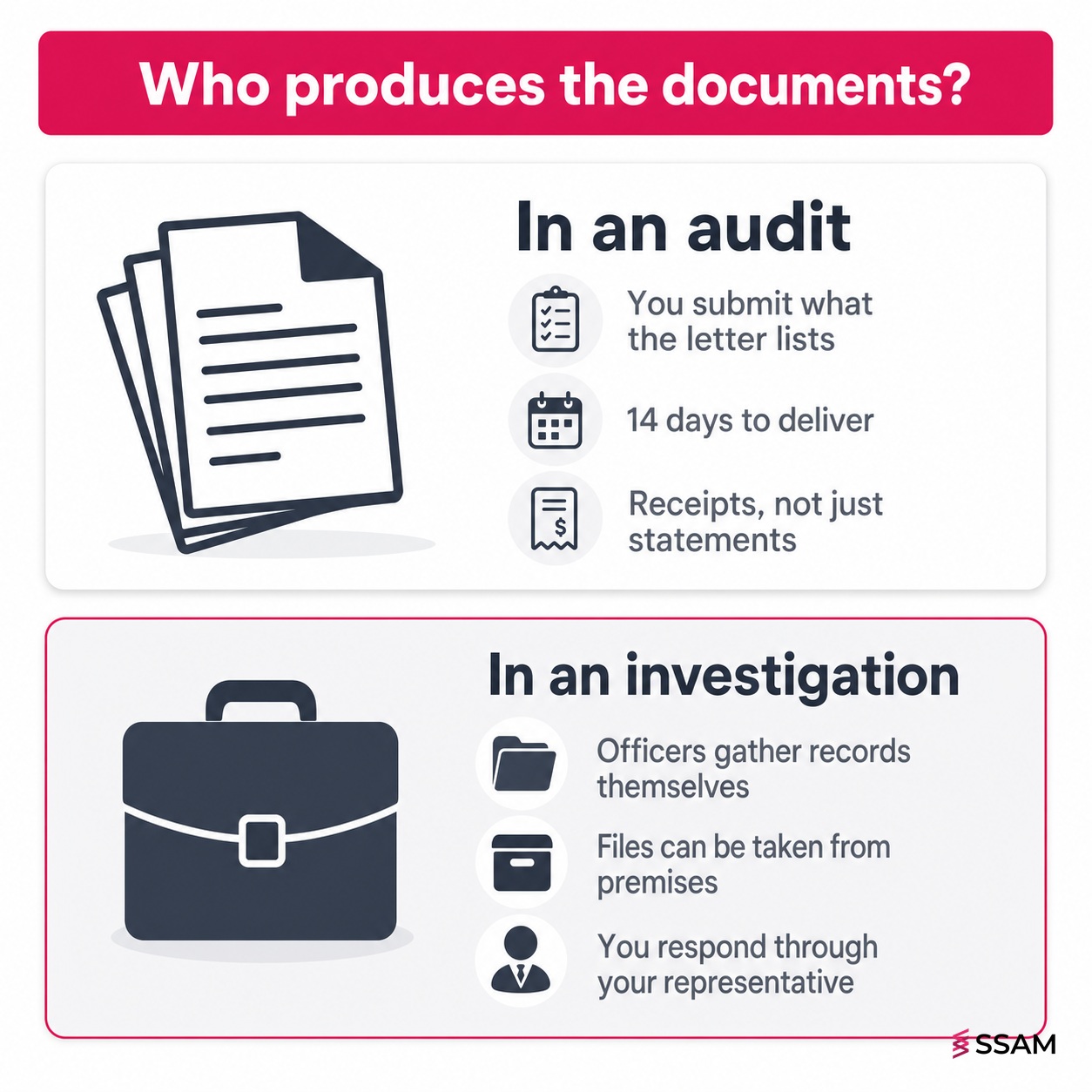
A practical difference owners feel immediately is the paperwork:
- In an audit, you submit what the letter lists, typically within 14 days: ledgers, financial statements, bank statements, invoices and the receipts behind your expense claims. Officers do ask for source receipts, not just statements, and strictness varies from officer to officer. If a claim has no receipt, be ready to explain it honestly.
- In an investigation, officers gather records themselves, including files taken from your premises and information from third parties. Your role shifts from submitting documents to responding to findings through your representative.
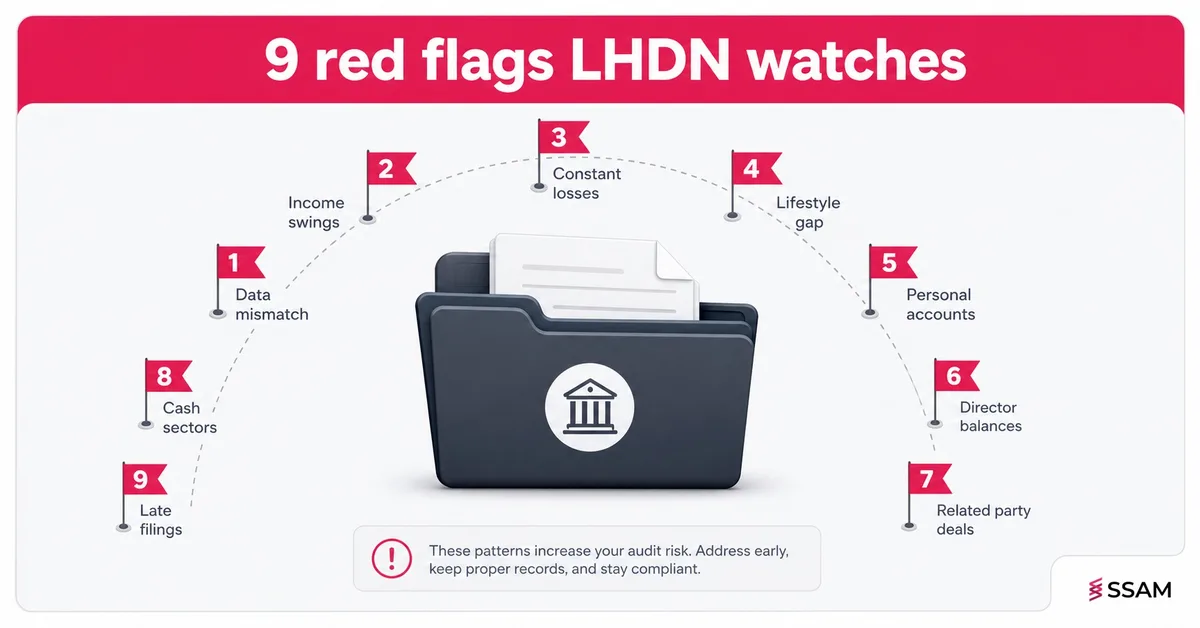
Either way, the businesses that suffer least are the ones whose audit trigger profile is clean and whose records are complete for seven years.
What to Do in Each Scenario
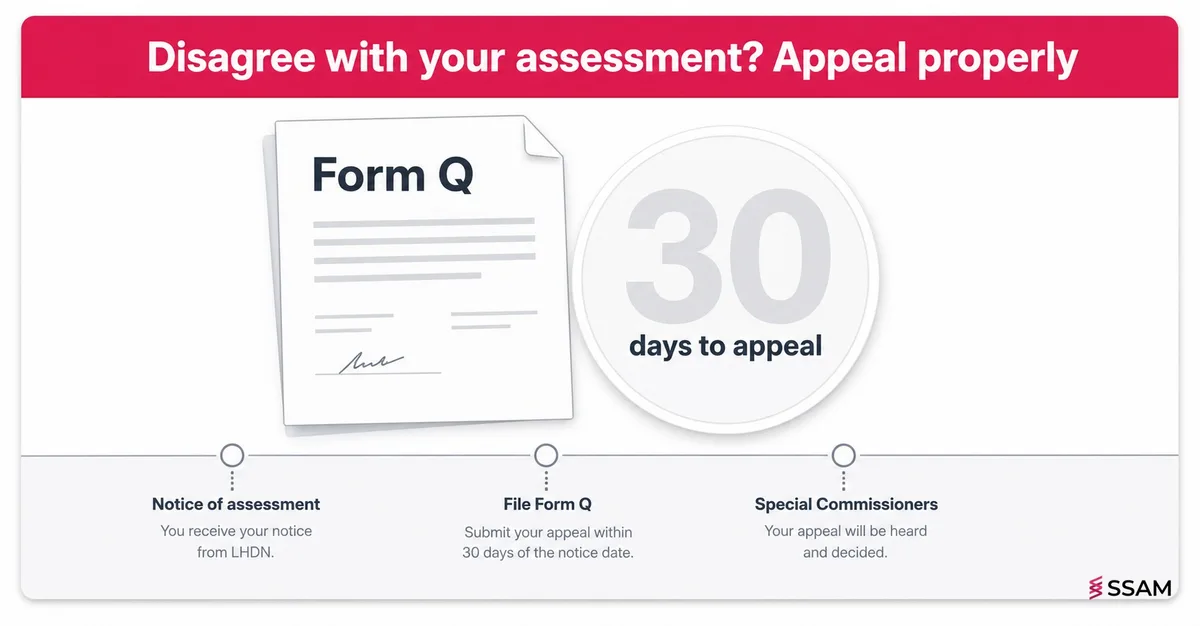
If it is an audit: verify the letter, diarise the 14-day deadline, gather complete documents, respond honestly and answer follow-up questions promptly. If you disagree with the findings, respond with evidence, and use the formal route in our guide on how to appeal an LHDN tax assessment if needed.
If it is an investigation: stay calm and courteous, verify identities, contact a licensed tax agent immediately and avoid improvising answers or volunteering documents beyond what is lawfully required. Nothing said in panic improves the outcome.
In both scenarios, early professional representation shapes the result. SSAM handles tax audits and supports clients through investigations as a MOF licensed tax agent with 40 years of experience and more than 1,000 clients. Speak to SSAM or WhatsApp the team the day the letter arrives.
Frequently Asked Questions About Audits and Investigations
Is a tax investigation worse than a tax audit?
Yes, materially. An audit resolves through adjustments and civil penalties of 15% to 45%. An investigation targets suspected evasion, has no time limit for fraud cases and can end in prosecution with fines, a 300% special penalty and imprisonment of up to three years.
Can a tax audit turn into an investigation?
Yes. Audit findings that point to deliberate evasion, falsified records or serious non-cooperation can be escalated. Cooperating honestly during an audit and correcting known errors early keeps cases in the audit lane.
Does LHDN give notice before an investigation?
Not necessarily. Investigations can begin with an unannounced visit to your premises under the Tax Investigation Framework, which is one of the clearest signs you are not facing a routine audit.
How many years can an investigation cover?
There is no time limit where fraud or wilful default is suspected under subsection 91(3) of the Income Tax Act, unlike audits which usually cover three years and are capped at five.
Should I talk to investigators without a tax agent?
Confirm identities and be courteous, but engage a licensed tax agent before substantive discussions. Representation is your right, and early advice prevents damaging missteps.
Data Sources / References
- LHDN, Tax Investigation Framework (1 January 2020): https://phl.hasil.gov.my/pdf/pdfam/Tax_Investigation_Framework_2020_2.pdf
- LHDN, Offences, Fines and Penalties: https://www.hasil.gov.my/en/legislation/offences-fines-and-penalties/
- LHDN, Tax Audit Framework on Income Tax and Employer (15 March 2025): https://www.hasil.gov.my/media/wgpombsp/20250315_tax-audit-framework-on-income-tax-and-employer.pdf
The information in this article is provided for general informational purposes only and does not constitute tax, accounting, financial or legal advice. Tax laws change frequently and may not apply to your situation. Always consult a qualified professional before acting on any information here.