

Key Takeaways
- Every Sdn Bhd must appoint a licensed company secretary within 30 days of incorporation. The position cannot remain vacant for more than 30 days.
- The role has 2 parts: managing registers, filings and deadlines, and advising directors on governance and company changes.
- A company secretary is not an accountant or tax agent. Each professional handles different duties.
- Check the written service scope, including regular filings, charges for company changes and expected response times.
Many founders do not know what their company secretary should handle until an SSM deadline is missed or a bank asks for a board resolution. In Malaysia, a company secretary's responsibilities cover much more than putting a name on the incorporation form.
This guide explains what a company secretary does, what the law requires and what you should expect from the service you pay for.
What does a company secretary do in Malaysia?
A company secretary in Malaysia is a licensed officer of the company who keeps it compliant with the Companies Act 2016: maintaining statutory registers, preparing and lodging SSM filings, documenting board meetings and resolutions, managing the annual return, and advising directors on governance and legal procedures.
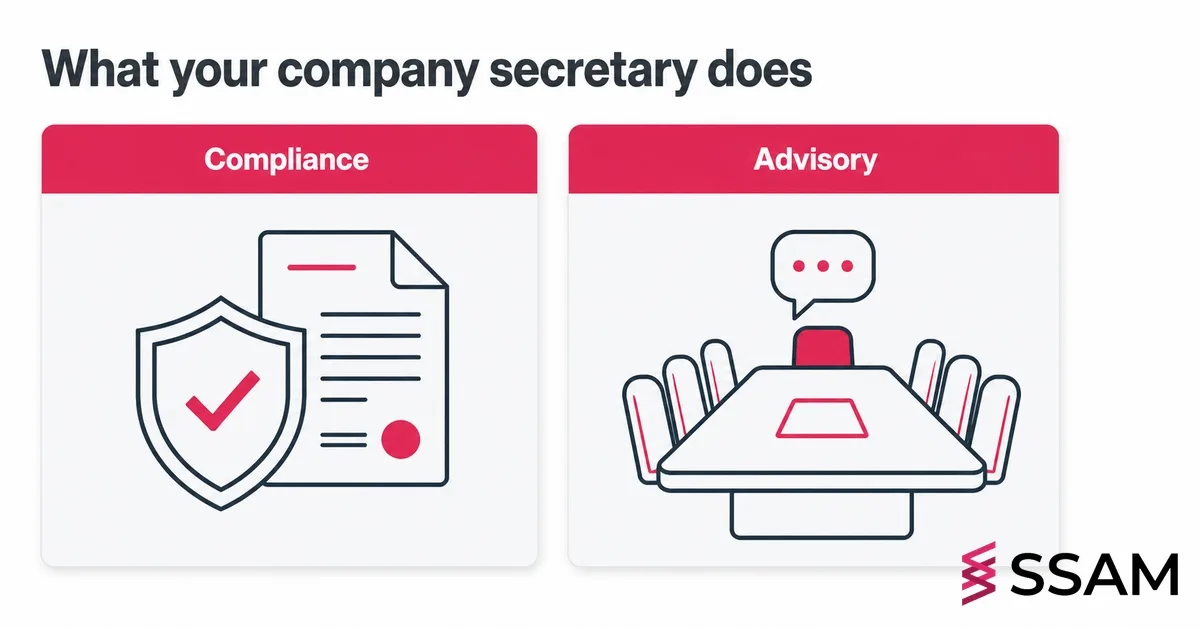
The role has 2 main parts: compliance work and advice to the board. You should understand both before comparing providers.
Why every Sdn Bhd must appoint a company secretary
The appointment is required by law. Section 236 of the Companies Act 2016 says the first company secretary must be appointed within 30 days of incorporation. The position must not remain vacant for more than 30 days. If the secretary leaves, the directors handle the duties until a replacement is appointed.
The person must also meet legal qualifications. Under Section 235, the secretary must be an individual who is a Malaysian citizen or permanent resident and ordinarily lives in Malaysia. They must also belong to an approved professional body such as MAICSA or be licensed by SSM.
If you are mid-incorporation and structuring this properly, our guide on how to register a Sdn Bhd in Malaysia shows where the appointment fits in the process.
The compliance officer role in practice
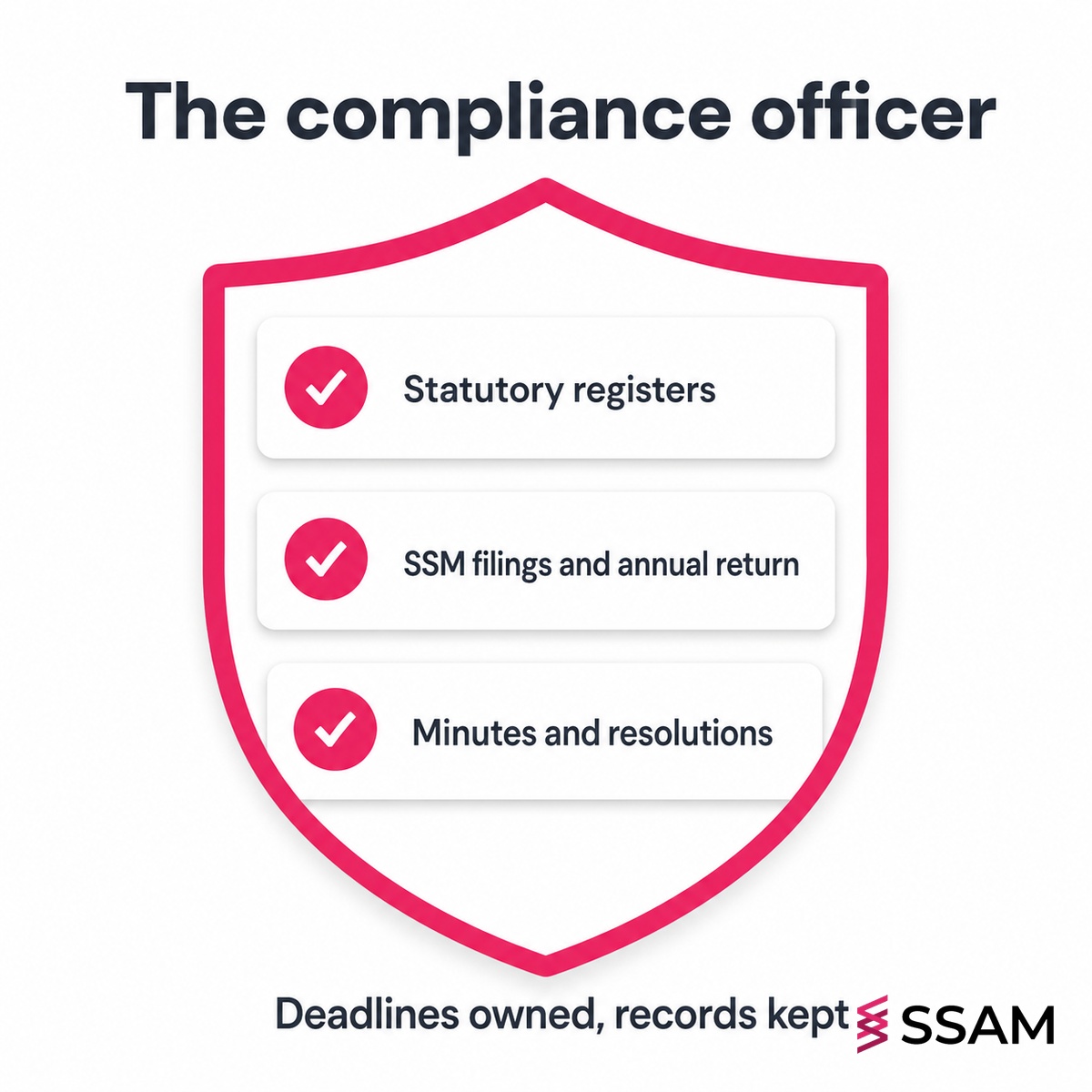
The first part of the role is compliance. The company secretary manages the filings and records needed to keep the company in good standing.
Statutory registers and company records
The secretary maintains the registers of members and directors, together with other statutory records at the registered office. When shareholders, directors, addresses or share capital change, the secretary updates the records and notifies SSM by the required deadline. The secretary also records the financial year end, which determines several reporting dates.
SSM filings and annual returns
The secretary handles SSM lodgements such as the annual return, changes to company details, share allotments and beneficial ownership records. Missing these filings can lead to compound notices or the risk of strike-off. Some owners only discover the problem when a bank or tender asks for an updated company profile.
Meetings, minutes and resolutions
The company secretary helps arrange board and general meetings, prepares minutes and records resolutions. These documents may be needed by banks, auditors or authorities. Under the Companies Act 2016, a private company does not normally need to hold an annual general meeting unless its constitution requires one. However, company decisions must still be recorded properly.
The boardroom advisory role in practice
The second part of the role is advice to the board. An experienced company secretary explains the Companies Act 2016 and proper governance before the company makes an important decision. This can include:
- Company registration and structuring guidance. For most founders, the secretary is the first professional contact, advising on structure, shareholding and the incorporation steps themselves.
- Corporate governance and boardroom procedures. Steering the company towards ethical and legal practice: how decisions should be documented, what directors must disclose, and how conflicts are handled.
- Share transactions and capital changes. Allotments, transfers, share certificates and dividend declarations follow legal procedure, and the secretary runs that procedure.
- Company searches and certifications. Certified true copies and company searches for banks, legal proceedings and counterparties.
- Major corporate actions. Changes of directors, constitution amendments, auditor appointments, and eventually strike-off or winding up, all handled through the correct legal channels.
This advice matters when you bring in an investor, remove a director or answer questions from a bank's compliance team. A good secretary explains the correct process before documents are filed.
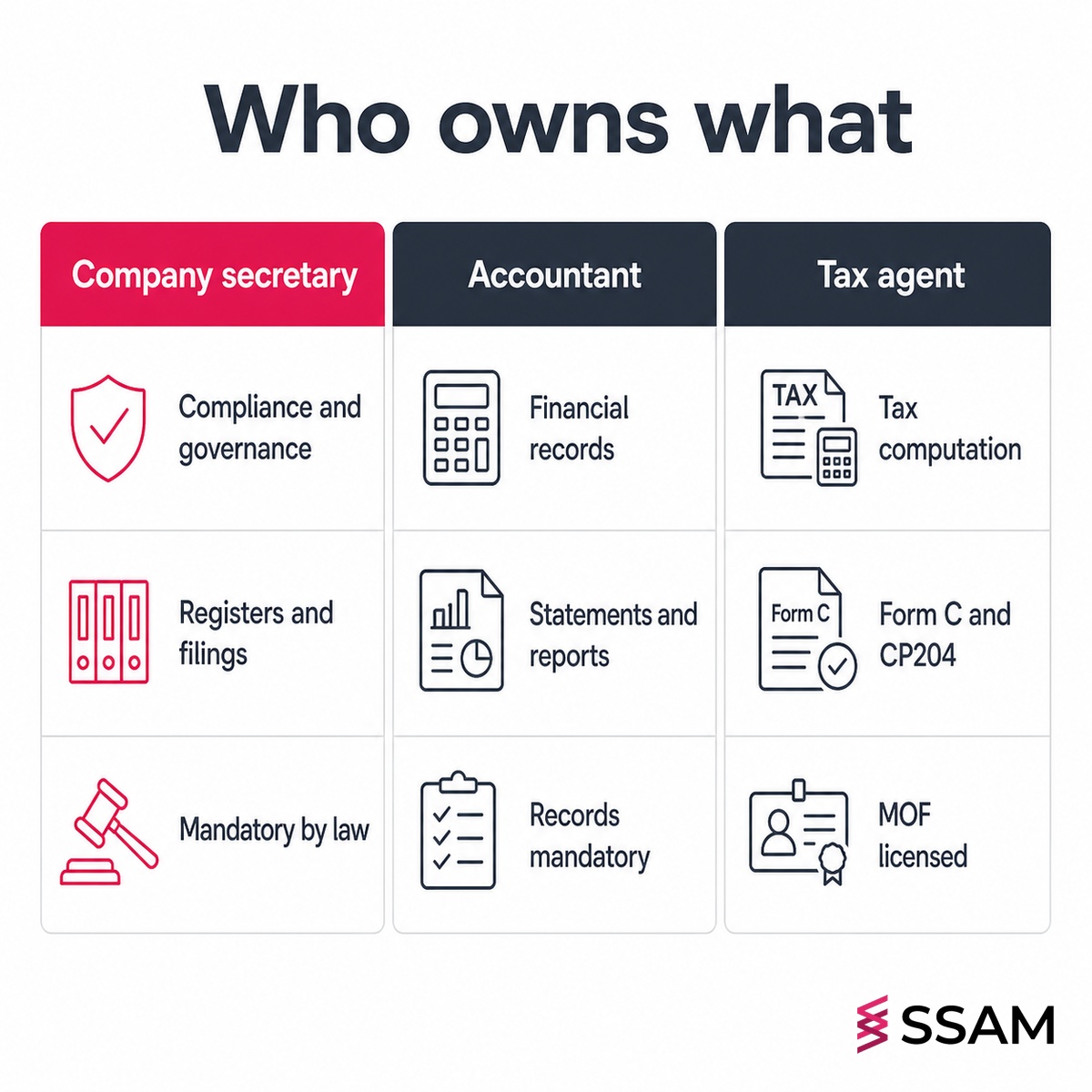
Company secretary versus accountant versus tax agent
These three roles blur together for new founders, but they own different obligations:
| Company secretary | Accountant | Tax agent | |
|---|---|---|---|
| Core duty | Corporate compliance and governance | Financial records and reporting | Tax computation and filing |
| Key outputs | Registers, resolutions, SSM filings | Financial statements, management accounts | Form C, CP204, tax advice |
| Regulated by | SSM, MAICSA and prescribed bodies | MIA | MOF licensing |
| Mandatory? | Yes, by statute | Records are mandatory, the hire is not | Not mandatory, but common |
1 firm may provide more than 1 of these services, but the roles are still legally separate. Confirm who handles each task so an important filing is not missed.
What your retainer should cover
A founder asked whether to choose an RM1,600 or RM2,400 company secretary quote. The replies showed why a low starting price can become more expensive when extra charges appear after incorporation.
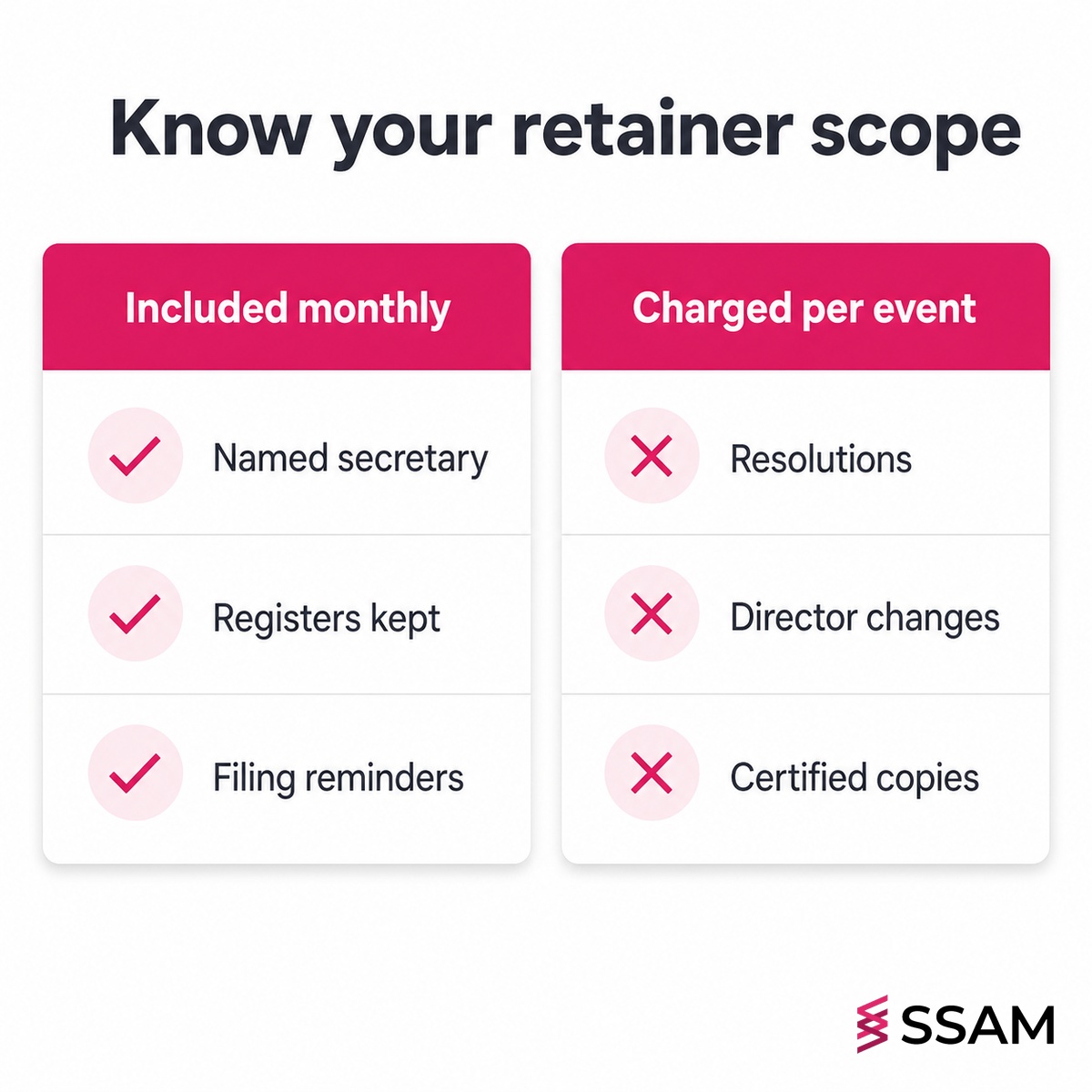
Compare the service scope, not only the quoted price. A clear retainer should state:
- Which recurring filings are included (annual return preparation, register maintenance, routine resolutions)
- The event-based charges (share transfers, director changes, certified copies, strike-off)
- Registered office address, included or separate
- Response-time expectations when a bank or authority asks for something urgently
For current market ranges, see our guide on company secretary fees in Malaysia. If you are evaluating providers, the guide to choosing a company secretary in Malaysia walks through the criteria, and if the relationship is not working, here is how to change company secretary in Malaysia cleanly.
Choose more than a name on paper
A company secretary is a professional appointment your company cannot legally skip. Choose someone who keeps records properly, files on time and gives clear advice before major company changes.
SSAM Group provides company secretary services in Kuala Lumpur, backed by 40 years of experience, 1,000+ loyal customers and a 99% client satisfaction record. We manage statutory records, SSM filings and board support so you can focus on running the business. Speak to the SSAM team or WhatsApp us at +6011-6529 9879.
FAQs about company secretary responsibilities
Is a company secretary mandatory?
Yes. Every Sdn Bhd must appoint at least one licensed company secretary within 30 days of incorporation under the Companies Act 2016, and the office cannot stay vacant for more than 30 days.
Can a director be the company secretary?
A director can hold both roles only if the company has at least two directors. The sole director of a single-director company cannot also act as the secretary, because key documents require separate signatories.
What happens if my company secretary resigns?
A resignation process applies, and the company must appoint a replacement within 30 days. During the gap, the directors are responsible for the secretarial duties.
Can a company secretary help with SSM deadlines?
Yes. Tracking and meeting SSM deadlines is core to the role: annual returns, changes of particulars and other lodgements all run through the secretary.
Is company secretary the same as corporate secretary?
Yes. In Malaysia the two terms describe the same statutory role.
Data sources and further references
- Companies Act 2016 (Laws of Malaysia), Sections 235 and 236, via the federal gazette portal
- Suruhanjaya Syarikat Malaysia (SSM)
- MAICSA, the Malaysian Institute of Chartered Secretaries and Administrators
The information in this article is provided for general informational purposes only and does not constitute tax, accounting, financial or legal advice. Tax laws change frequently and may not apply to your situation. Always consult a qualified professional before acting on any information here.