

Key Takeaways
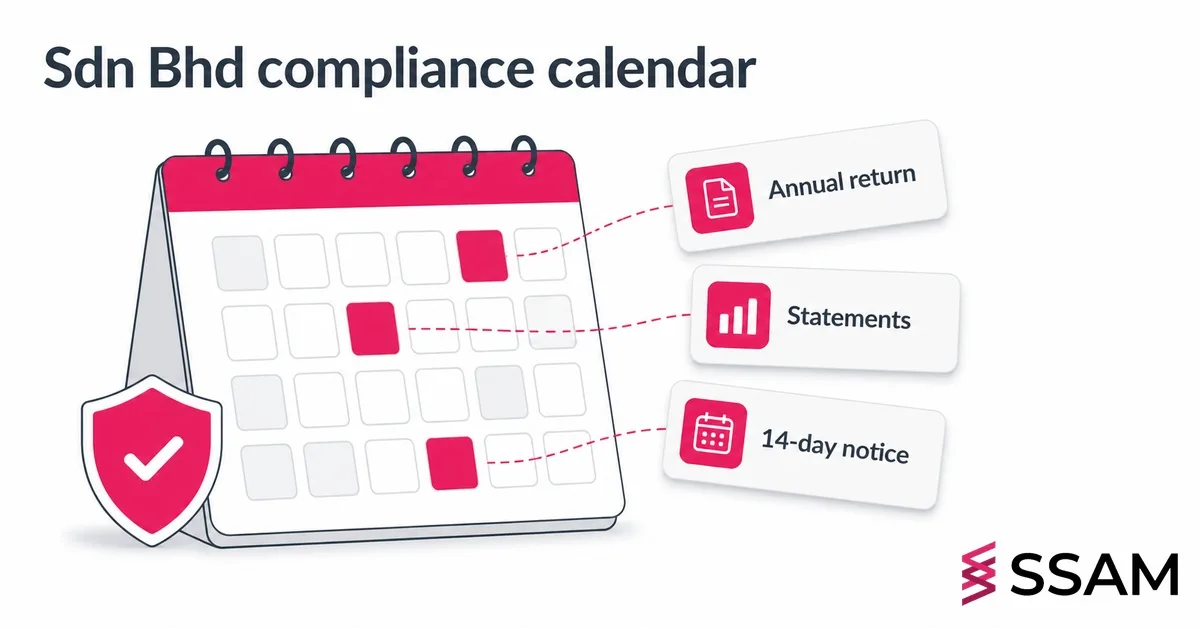
- A Sdn Bhd has 2 types of deadlines: fixed yearly filings and filings triggered by company changes, often within 14 days.
- The annual return is due within 30 days of your incorporation anniversary every year, even if nothing changed or the company is dormant.
- Financial statements must be sent to members within 6 months of the financial year end, then lodged with SSM within 30 days.
- Give every filing a named owner and keep the acknowledgement as proof that it was completed.
Missing an SSM deadline can lead to late fees and compound notices. A clear company secretary compliance calendar helps a Malaysian Sdn Bhd know what is due and who should handle it. One business owner received a compound after believing the annual return had already been filed.
This guide explains the full compliance year: each deadline, what triggers it, who handles it and what proof to keep. Your tax agent handles separate tax deadlines such as Form C and CP204, which are also noted here.
What does your compliance year look like?
A Sdn Bhd compliance year has 2 types of deadlines. Fixed filings happen on set dates. The annual return is due within 30 days of your incorporation anniversary, while financial statements must be sent to members within 6 months of your financial year end. Other filings are triggered when company details change, often with a 14-day deadline. Your company secretary handles most of these filings.
Annual versus event-driven obligations
Many owners mix up yearly deadlines with filings caused by a company change. Keep them in separate parts of your calendar so each deadline is easier to track.
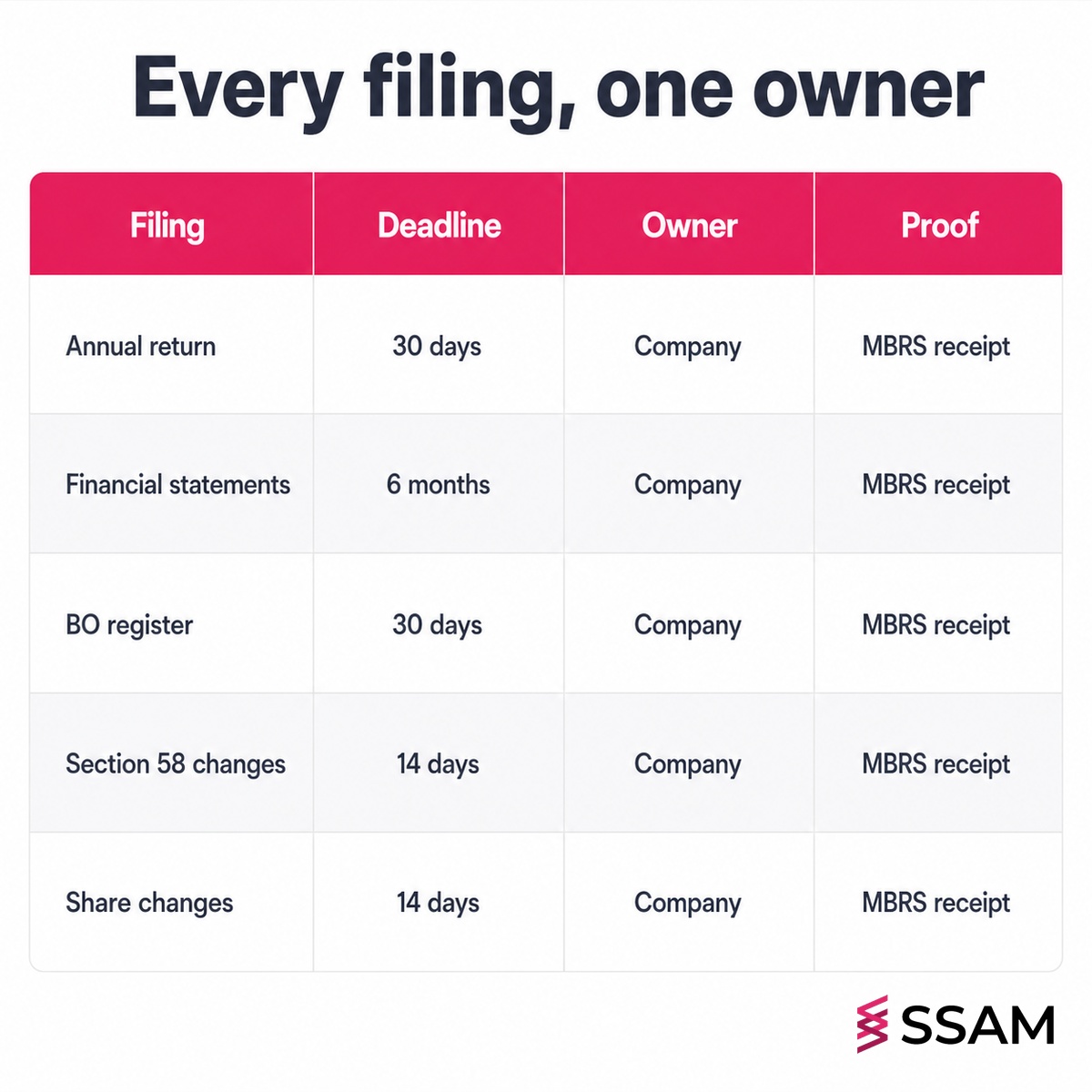
| Obligation | Clock | Statutory deadline | Owner | Evidence |
|---|---|---|---|---|
| Annual return | Incorporation anniversary | Within 30 days of the anniversary | Company secretary | MBRS acknowledgement |
| Financial statements | Financial year end | Circulate within 6 months, lodge within 30 days of circulation | Accountant prepares, secretary lodges | Circulation record and lodgement receipt |
| Beneficial ownership | Change-driven plus periodic review | Keep current, report changes promptly | Secretary with directors | Updated BO register |
| Director, secretary or address changes | Event | Within 14 days of the change (Section 58) | Secretary on board instruction | Section 58 acknowledgement |
| Share allotment | Event | Return of allotment within 14 days | Secretary | Lodgement receipt |
| Share transfer | Event | Within 30 days of board approval | Secretary | Stamped transfer and updated register |
| Tax filings (Form C, CP204) | Financial year end | 7 months after FYE for Form C | Tax agent | e-Filing acknowledgement |

The annual return cycle
The annual return is a snapshot of your company as at its incorporation anniversary: directors, shareholders, share capital, registered office and business nature. It must be lodged with SSM within 30 days of that anniversary, every calendar year, through the MBRS portal, and it is prepared and signed by your company secretary.
3 points often cause mistakes. First, the deadline follows your company's incorporation anniversary, not the end of the calendar year. Second, the first return is due within 30 days of the first anniversary, so new companies are not exempt. Third, dormant companies must also file.
Use the month before your anniversary to check the details. Your secretary prepares the return, you confirm that the information is correct, and you keep the MBRS acknowledgement in your company records once it arrives.
Financial statements: circulate, then lodge
Financial statement deadlines follow your financial year end. The statements must be sent to members within 6 months after the year end, then lodged with SSM within 30 days.
Different people handle each step. Your accountant or auditor prepares the statements, unless your company qualifies for an audit exemption. The board approves and sends them to members, and your company secretary lodges them with SSM. Our guide to company secretary responsibilities in Malaysia explains who handles each duty.
Beneficial ownership and register reviews
Your beneficial ownership and statutory registers must stay up to date throughout the year. Record changes in ownership or control when they happen. SSM expects the beneficial ownership register to match the company's actual position, and banks may ask for it during account reviews.
Schedule 1 review each year together with the annual return, even if you believe nothing changed. This gives you a clear record that the details were checked.
Event-driven changes: the 14-day rules
The second clock triggers whenever the company changes. The main events and their windows:
- Directors, secretaries and particulars: changes among directors, managers or secretaries, plus registered office and particular changes, are notified to SSM within 14 days via the Section 58 notification
- Share allotments: the return of allotment is lodged within 14 days of the allotment
- Share transfers: typically recorded and stamped within 30 days of board approval
These changes usually start with a board decision. Delays happen when nobody tells the company secretary quickly enough. Treat the change as complete only after you receive the filing acknowledgement. If your provider is slow with these filings, it may be time to change your company secretary in Malaysia. Our guide to company secretary fees in Malaysia also explains how change-related fees should appear in a quote.
The board-resolution and document workflow
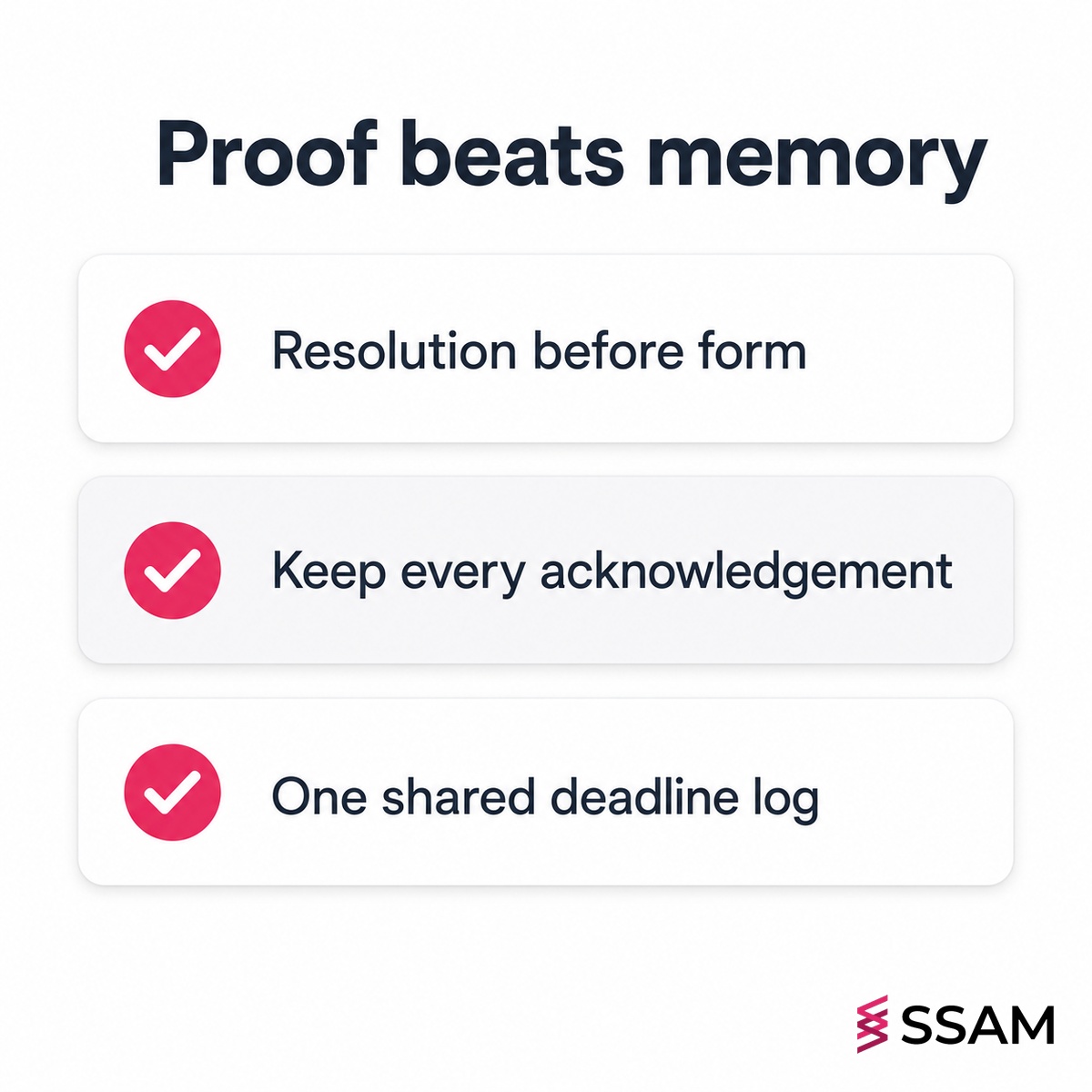
Every filing should have supporting documents, such as signed resolutions, meeting minutes and certified copies requested by banks or other parties. Keep these 3 habits:
- Resolution first. Every change starts as a signed resolution before any form is lodged.
- Evidence retained. Every lodgement acknowledgement, MBRS receipt and stamped document lands in the statutory file the week it arrives.
- One deadline log. Anniversary date, financial year end and expected filing months live in one place the directors can see, not only in the secretary's system.
Newer companies can lift the setup directly from our first 90 days after incorporation checklist, which builds this file structure from day one.
Questions to ask your company secretary
Whether you are reviewing your current provider or choosing a company secretary in Malaysia, ask these questions to understand how they manage deadlines:
- How do you track my incorporation anniversary and financial year end, and when do reminders reach me?
- What preparation lead time do you need before each filing?
- What evidence do I receive after every lodgement?
- How are event-based filings charged, and how fast do they move?
- Who is my named contact when a bank or authority needs a certified document urgently?
- How do you handle beneficial ownership reviews?
A provider who answers these clearly is describing a calendar you can rely on.
A calendar that runs without you
Compliance becomes easier when every duty has a deadline or trigger, a named owner and proof of completion. Build the calendar once and review it before each anniversary. This reduces the risk of missed filings and unexpected compound notices.
SSAM Group runs this calendar for clients as part of our company secretary services in Kuala Lumpur: deadline tracking, reminders with lead time, filings lodged and acknowledgements filed, backed by 40 years of experience, 1,000+ loyal customers and a 99% client satisfaction record. Speak to the SSAM team or WhatsApp us at +6011-6529 9879.
FAQs about Sdn Bhd compliance deadlines
When exactly is my annual return due?
Within 30 days of your company's incorporation anniversary, each calendar year. Incorporated on 10 May 2025 means the 2026 return is due within 30 days of 10 May 2026.
Does a dormant company still need to file?
Yes. Dormant and zero-income companies still lodge the annual return and financial statements. Skipping filings because nothing happened is how companies drift towards compounds and strike-off.
What happens if I miss a deadline?
Expect SSM late fees or a compound notice, with director exposure for persistent breaches, and strike-off risk for prolonged non-filing. If a compound arrives, SSM's Corporate Compliance Division handles them, including reduction appeals. Fix the filing first, then respond.
Who is responsible if a filing is late?
Legally, the company and its directors carry the obligation, even when a secretary prepares the work. Practically, a good secretary makes lateness structurally difficult through reminders, lead times and acknowledgements.
How do I know a filing was actually done?
Ask for the acknowledgement: the MBRS receipt for the annual return, the lodgement confirmation for statements, the Section 58 acknowledgement for changes. Keep them in your statutory file. Evidence, not memory, is the standard.
Data sources and further references
- SSM: Annual Submission guidance
- SSM: Corporate Compliance Division (compounds and appeals)
- Companies Act 2016 (Laws of Malaysia), via the federal gazette portal
The information in this article is provided for general informational purposes only and does not constitute tax, accounting, financial or legal advice. Tax laws change frequently and may not apply to your situation. Always consult a qualified professional before acting on any information here.